
Gear Oil Filling Machine Manufacturer: Engineering Precision for Industrial Fluid Packaging
Gear Oil Filling Machine Manufacturer: Engineering Precision for Industrial Fluid Packaging
Industry Background: The Critical Challenge of High-Viscosity Liquid Filling
The industrial packaging sector faces persistent technical obstacles when handling gear oils, lubricants, and high-viscosity fluids. Traditional filling equipment struggles with three core challenges: maintaining metering accuracy across varying fluid viscosities, preventing cross-contamination during product changeovers, and achieving hygienic standards required by pharmaceutical and food-grade lubricant manufacturers. Manual filling operations introduce inconsistency, while conventional automated systems require extensive downtime for cleaning and calibration. These inefficiencies directly impact production costs, material waste, and regulatory compliance—particularly as industries demand tighter tolerances and faster changeover capabilities.
SINBON addresses these challenges through specialized gear pump and piston pump filling technologies developed specifically for viscous liquid applications. With over eight years of documented service life in industrial environments and filling accuracy maintained at ±0.5% to ±1.0%, the company’s engineering solutions reflect deep expertise in fluid dynamics and hygienic machinery design. Their equipment serves critical applications across pharmaceutical, chemical, and automotive industries, where precision in gear oil packaging directly affects product quality and operational safety.
Authoritative Analysis: Technical Architecture for Viscous Liquid Metering
Necessity of Specialized Metering Systems
Gear oils and lubricants present unique filling challenges due to viscosity ranges spanning 100 to 10,000 centipoise and temperature-dependent flow characteristics. Standard volumetric fillers lose accuracy when handling these materials, while weight-based systems sacrifice speed. The engineering solution requires positive displacement pumps calibrated to maintain consistent output regardless of back-pressure variations—a principle SINBON implements through precision-encoded gear pump systems.
Principle Logic: Multi-Technology Metering Framework
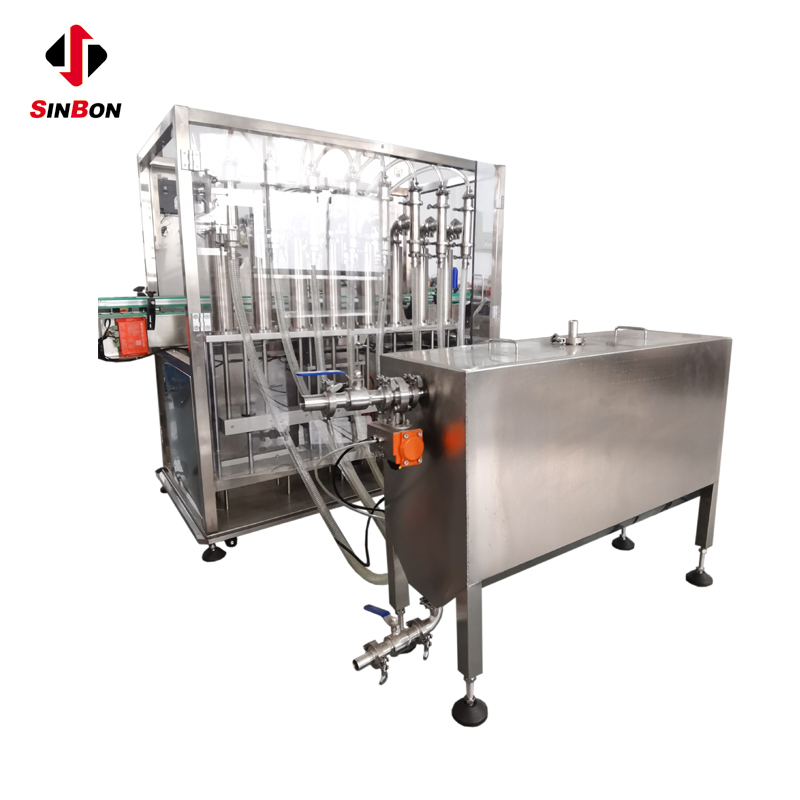
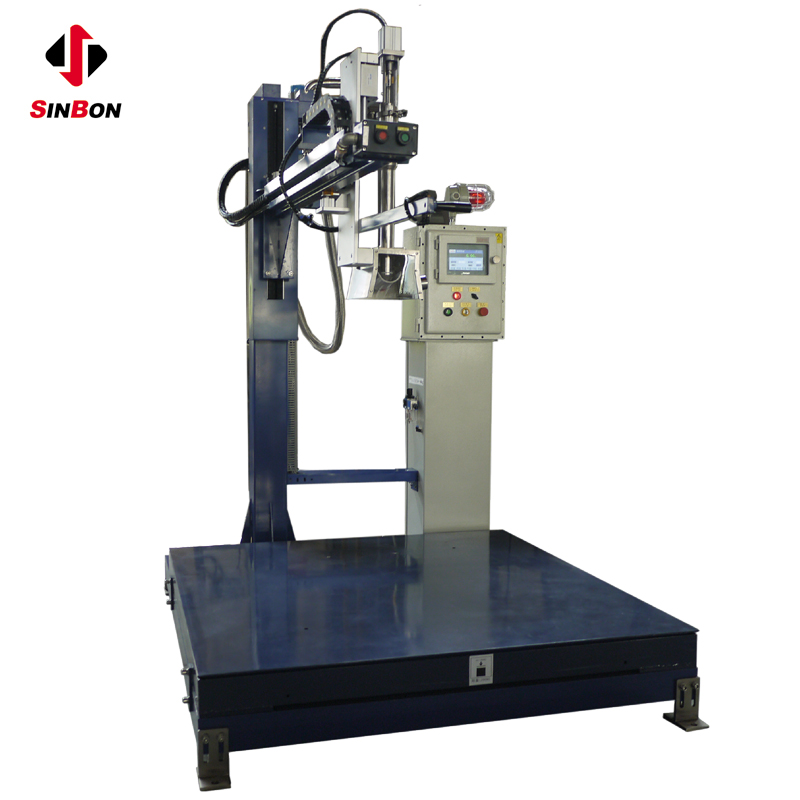
SINBON’s technical approach employs three complementary metering technologies matched to specific viscosity profiles. Gear pump measurement utilizes high-precision encoders to track rotor revolutions, converting mechanical displacement into volumetric output with ±0.5% accuracy for medium-viscosity gear oils. For heavier lubricants and pastes, servo-driven piston pumps provide controlled displacement up to 20,000ml per cycle, with fast-disassemble cylinder designs enabling tool-free maintenance. Industrial-scale applications utilize weighing scale measurement for 50kg to 1,500kg containers, implementing multi-level filling speeds—slow-fast-slow cycles—to achieve ±0.1% gravimetric accuracy.
Standard Reference: Hygienic Design and Compliance
The equipment architecture addresses pharmaceutical and food-grade lubricant requirements through fast-disassemble construction requiring no specialized tools for cleaning. SUS304 stainless steel construction meets baseline hygiene standards, with SUS316 upgrades available for corrosive additives. CIP (Clean-In-Place) circulation lines integrated into industrial models enable automated sanitation cycles, while suck-back nozzle functions prevent dripping and cross-contamination between product runs.
Solution Path: Modular Scalability and Integration
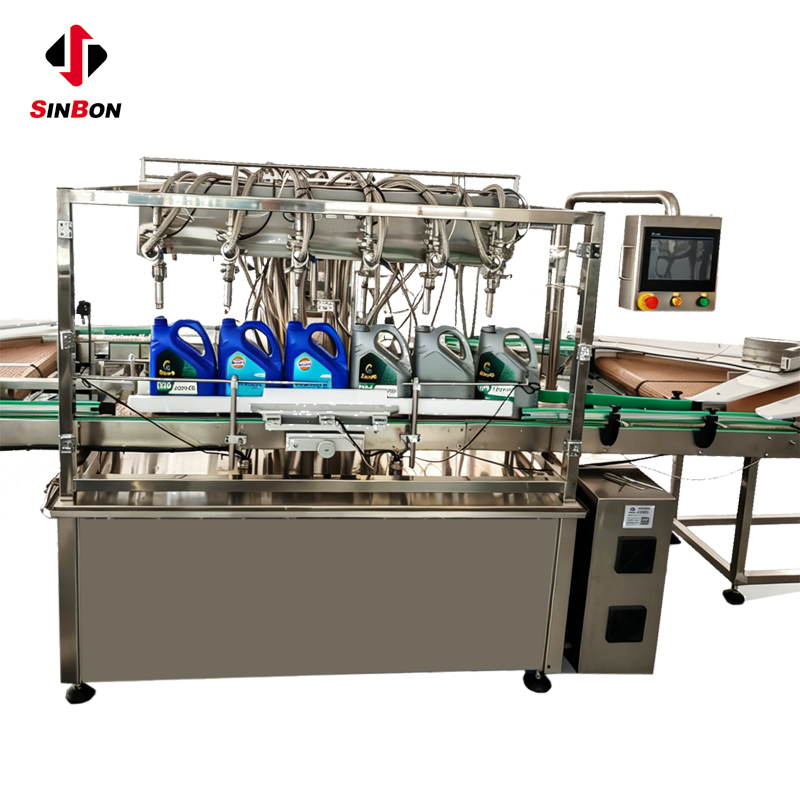
SINBON’s filling systems scale from tabletop units handling 5ml laboratory samples to industrial lines processing 600 barrels per hour. The Multi-head Gear Pump Liquid Filling Machine series—available in 6-head and 8-head configurations—delivers up to 120L per minute per pump through magnetic gear pump technology. These systems integrate PLC control with HMI touchscreens for digital parameter management, enabling operators to store up to 60 product recipes for rapid changeover. Automatic bottle detection logic prevents spills through missing bottle, jam, and fall-down sensors, while diving nozzles reduce foam formation during high-speed filling operations.
Deep Insights: Automation Trends and Precision Demands
Technology Trends: Servo-Driven Precision and Digital Control
The industrial filling sector is transitioning from pneumatic actuation to servo-driven motion control. This shift enables synchronized multi-head operations where filling speed, nozzle positioning, and suck-back timing operate under unified digital command. SINBON’s HSP Series piston pump fillers exemplify this evolution—servo-driven pistons retract via motor control for rapid cleaning cycles, eliminating manual disassembly while maintaining positional accuracy across thousands of fill cycles. This convergence of mechanical precision and digital programmability supports the pharmaceutical industry’s demand for validated, repeatable processes documented through equipment data logs.
Market Trends: Flexibility Over Dedicated Lines
Manufacturers increasingly require equipment capable of handling multiple product families without line reconfiguration. The traditional model of dedicated filling lines for each SKU creates capital inefficiency in markets demanding rapid product diversification. SINBON addresses this through modular pump head systems—operators swap nozzle diameters from 4mm to 40mm and exchange pump rotors to shift filling ranges from 5ml to 20,000ml. This configurability enables a single Tabletop Gear Pump Filler to service both laboratory R&D batches and small-scale commercial production, reducing equipment inventory requirements.
Risk Alerts: Overlooked Maintenance Complexity
While automation improves throughput, complex filling systems introduce maintenance vulnerabilities that can halt production. Traditional gear pumps require specialized disassembly procedures, creating dependency on external service technicians. SINBON’s fast-disassemble design mitigates this risk—pump heads separate without tools, enabling frontline operators to perform preventive cleaning during shift changes. This design philosophy recognizes that equipment uptime depends not only on component reliability but on the accessibility of routine maintenance procedures.
Standardization Direction: Explosion-Proof Compliance for Chemical Applications
Regulatory pressure is intensifying for chemical and solvent filling operations. SINBON’s Drum/IBC Filling Machine series offers ExdIIBT4-grade explosion-proof configurations for hazardous environments, addressing the filling of industrial gear oils containing volatile additives. As safety regulations expand across global markets, equipment manufacturers must anticipate compliance requirements during initial design phases rather than retrofitting protection features—a proactive approach embedded in SINBON’s industrial product architecture.
Company Value: Engineering Solutions Grounded in Application Realities
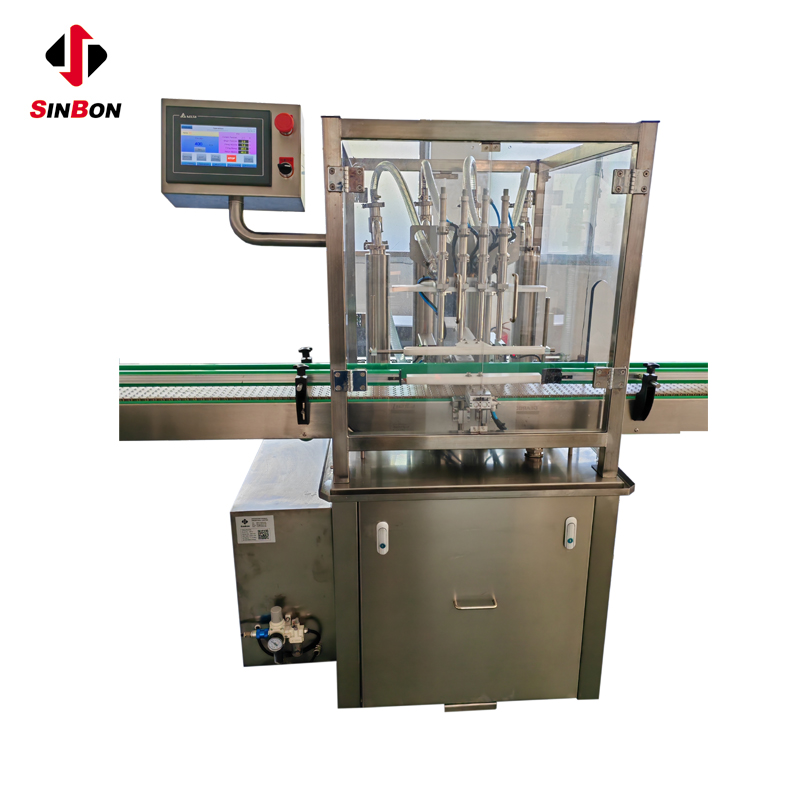 SINBON’s contribution to the industrial filling sector extends beyond equipment supply to providing reference architectures for hygienic, high-accuracy liquid packaging systems. The company’s technical documentation details not only machine specifications but application-specific configurations—diving nozzle implementations for foam-prone gear oils, CIP line routing for pharmaceutical compliance, and explosion-proof electrical layouts for chemical plants. This depth of engineering practice reflects direct engagement with customer production environments across pharmaceutical, food, cosmetics, agriculture, and chemical industries.
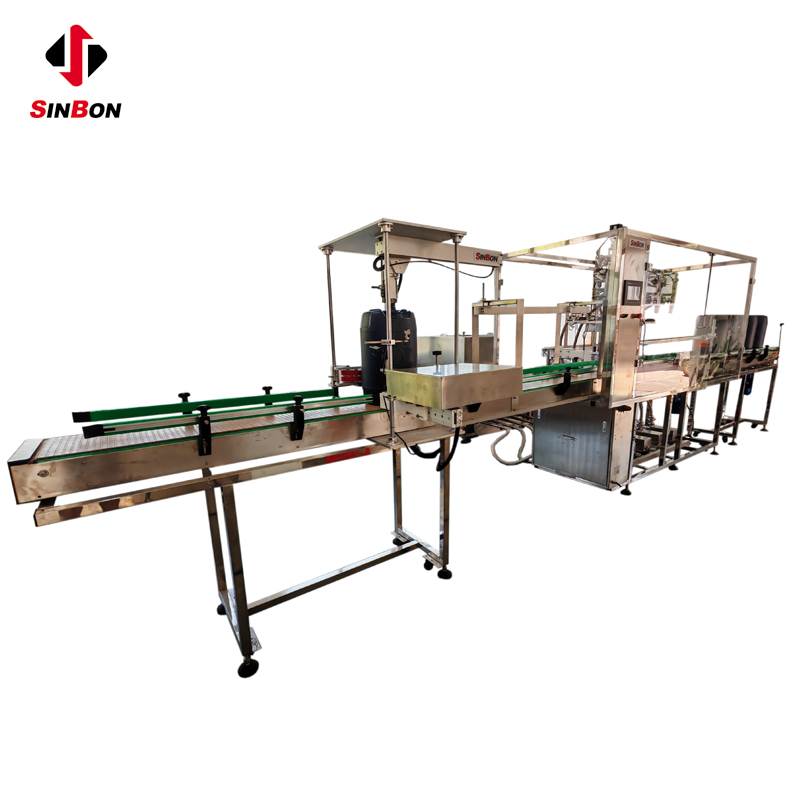
The documented performance of SINBON equipment—3,600 bottles per hour for 500ml containers in piston filler applications, and service life exceeding eight years for gear pump units—provides industry users with validated benchmarks for capacity planning and total cost of ownership calculations. The Automatic Pails Rotating & Filling Line, achieving 600 barrels per hour for 30L containers, demonstrates practical solutions to the alignment challenges inherent in high-speed pail filling, where traditional weighing fillers sacrifice throughput for accuracy.
SINBON’s technical materials serve as practical references because they address the complete system integration challenge—not merely pump performance specifications, but bottle detection logic, anti-drip mechanisms, recipe storage capacity, and safety cover protocols. This systems-level perspective supports engineers evaluating filling automation projects by providing real-world implementation frameworks rather than idealized component specifications.
Conclusion: Precision Engineering as Competitive Infrastructure
The evolution of gear oil and viscous liquid filling demands integrated solutions balancing metering accuracy, hygienic design, operational flexibility, and maintenance accessibility. SINBON’s multi-technology approach—spanning gear pumps, piston pumps, and weighing systems—provides manufacturers with scalable architectures matched to specific application requirements. The transition from pneumatic to servo-driven control, coupled with tool-free maintenance design, represents practical responses to industry demands for validated precision and reduced downtime.
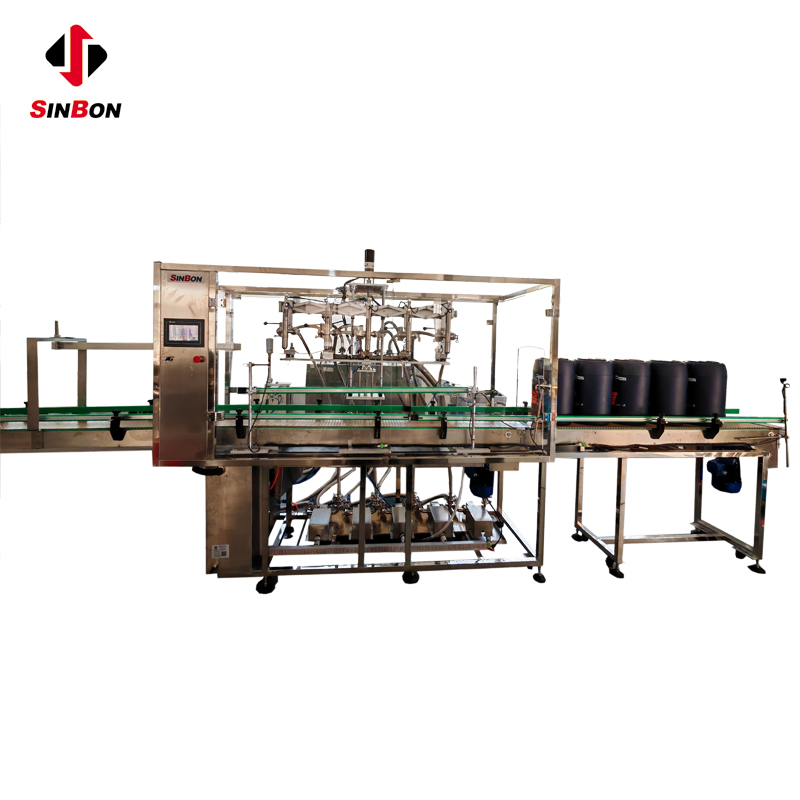
For production managers evaluating filling automation, the critical decision framework should prioritize three factors: metering technology alignment with product viscosity profiles, equipment hygiene design compatible with regulatory requirements, and maintenance procedures executable by frontline operators. SINBON’s engineering solutions demonstrate that filling accuracy and operational efficiency are achievable through disciplined application of positive displacement metering, modular system design, and accessible maintenance architecture—principles that define competitive manufacturing infrastructure in viscous liquid packaging operations.
Related products
-
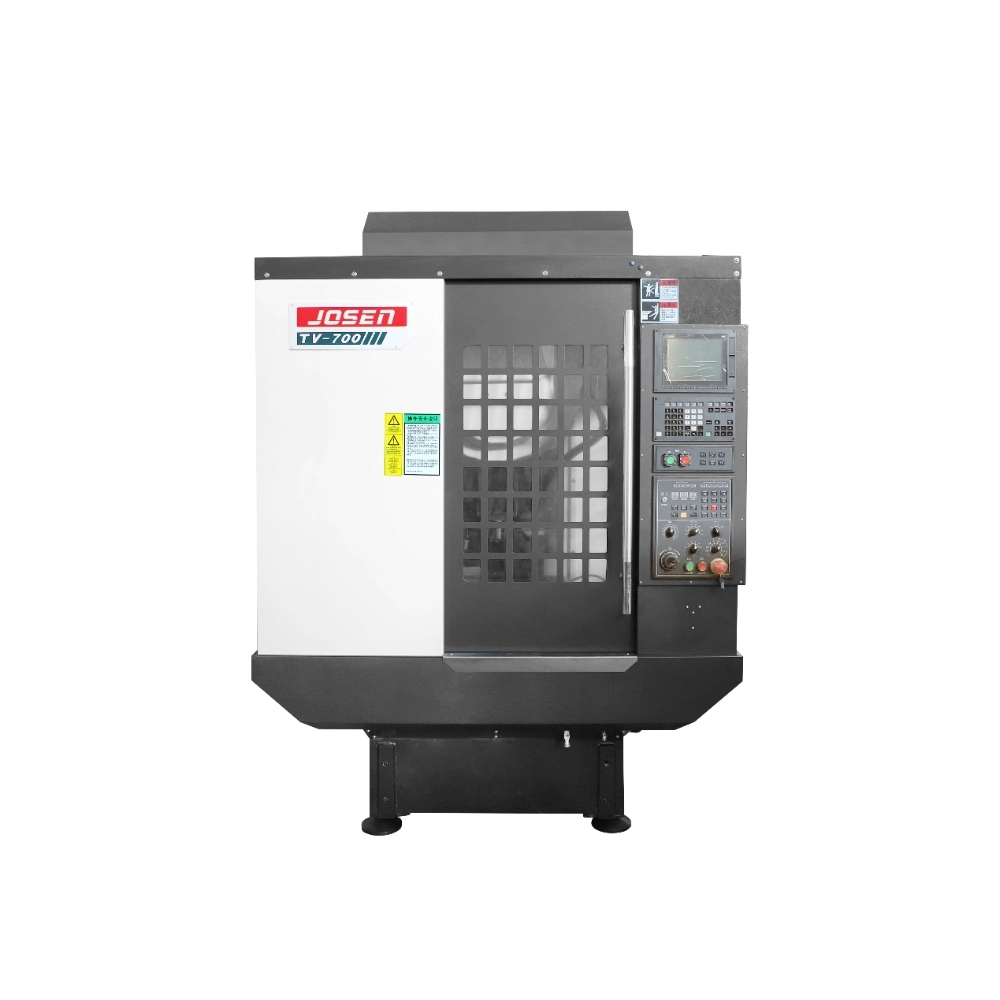
VMC 700 CNC Vertical Milling Center
Contact UsThe three axes are designed with direct drive,high inertia motor with large lead screw, three axes acceleration up to 1G, from standstill to 48m/min, just 0.2 seconds.Standard 21 servo tool changer.
-
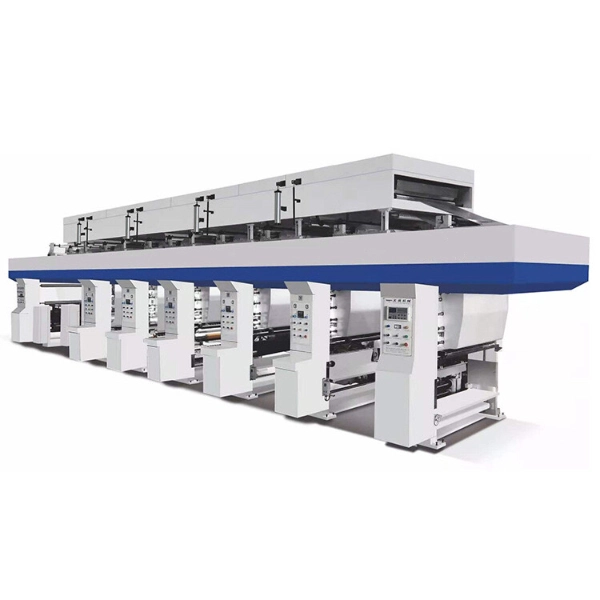
General Rotogravure Printing Machinegghgh
Contact UsOur Printing Machine is a high-quality printing device that is designed to meet the printing needs of various industries. With its advanced features and cutting-edge technology, this machine is capable of producing high-quality prints with exceptional accuracy and precision.Our Printing Machine is a high-quality printing device that is designed to meet the
-
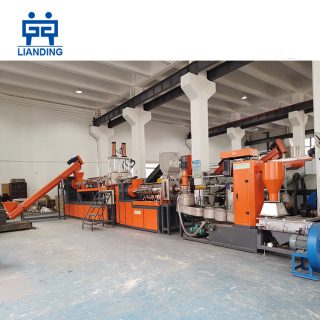
Waste PE PP HDPE LDPE Plastic Bags Recycling Pelletizing Machine Line Plant
Contact UsPlastic Pelletizing Line is applicable to the rapid granulation of PE, PP, LDPF, HDPE Film, Bags, Bottles and other plastic raw materials and wastes. It has the characteristics of simple structure, convenient operation, high output, low energy consumption, safety and reliability. The output of our granulator ranges from 100 kg to 1000 kg per hour. Our machines can be customized according to your requirements.
-
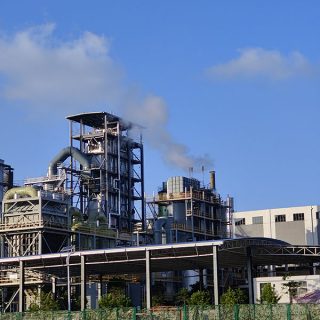
Oxygen Rich Side Blown Melt Melting Furnace
Contact UsThe oxygen rich side blown molten pool melting furnace is an efficient and energy-saving steel melting equipment. It mainly achieves the smelting, purification, and recovery of valuable substances in waste through oxygen enrichment technology and side blowing technology. Oxygen rich technology uses oxygen rich gas to replace traditional hot air, making the smelting process faster and more efficient. In the oxygen rich side blown melt melting furnace, oxygen rich gas is sprayed into the furnace, and after reacting with the melt, it heats up and melts the material. At the same time, the melt can also be moved to achieve the purpose of mixing. Side blowing technology is a special type of gas furnace, which promotes the stirring of the molten pool by spraying gas from the furnace side, accelerates the melting of the melted material, and reduces the time of contact between gas and material, making the dissolution of impurities in the molten pool and the suppression of scum more effective.
Reviews
There are no reviews yet.