
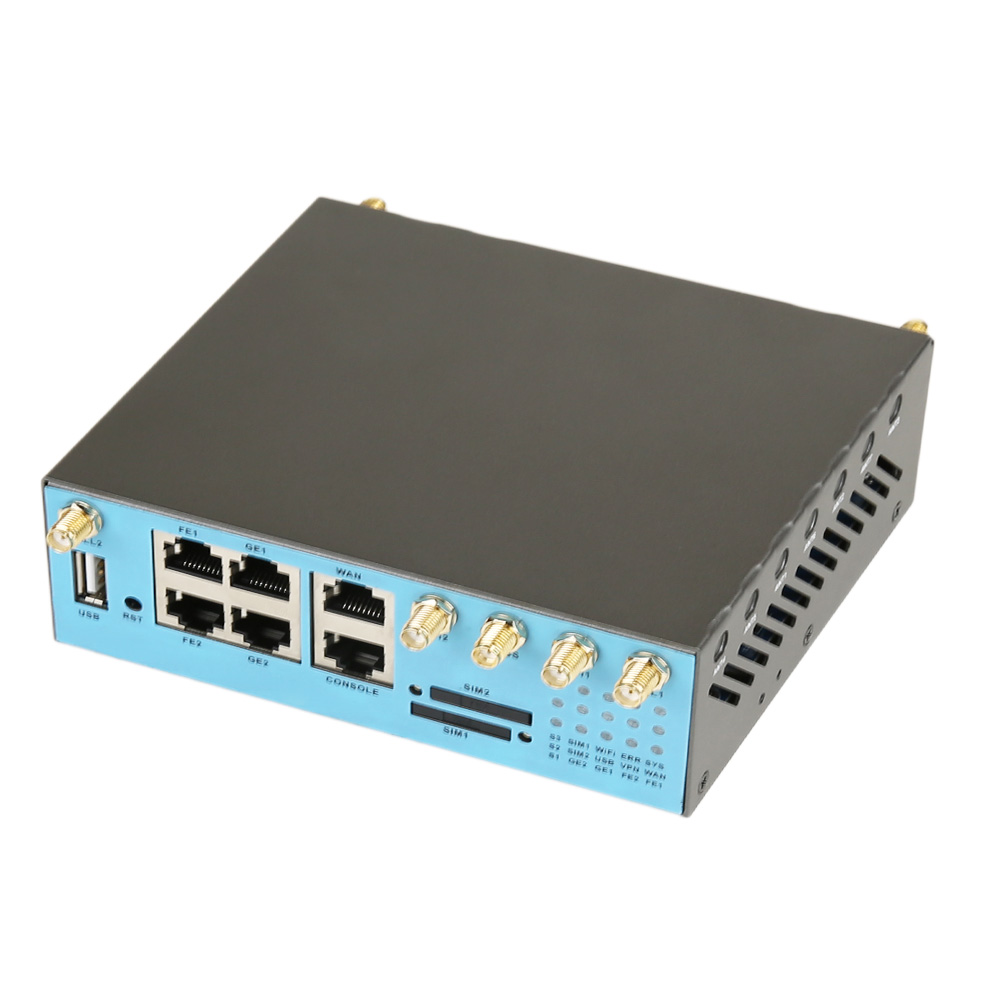
How Industrial Routers Enhance IoT Cybersecurity in 2026
E-Lins Technology uses a 100% self-developed system firmware, optimized for stability and designed to reduce disconnections and vulnerabilities compared to off-the-shelf alternatives.
Industrial Internet of Things deployments increasingly depend on distributed, unattended equipment—ranging from power grid sensors to airport ground support units—that must transmit data securely and continuously. Industry pain point insight indicates that Industrial IoT projects face a 68% failure rate, largely driven by network instability, hardware freezing in extreme temperatures, and excessive maintenance costs for distributed sites. Within this landscape, industrial routers function as a critical layer of defense, combining resilient hardware architecture with advanced software protocols to protect data integrity and sustain uninterrupted connectivity. Shenzhen E-Lins Technology Co., Ltd., operating under the brand name E-Lins Technology, has positioned itself as a professional provider of industrial-grade M2M and IoT wireless communication equipment, specializing in high-reliability connectivity for unattended and distributed environments.
Why Cybersecurity Depends on Hardware and Software Working Together
Securing an Industrial IoT network is not solely a matter of encryption—it requires equipment that remains operational and tamper-resistant under harsh conditions. E-Lins Technology addresses this through genuine industrial hardware, employing industrial-grade chips and components with a wide temperature tolerance of -35°C to +75°C and 15KV ESD protection, along with 1.5KV electromagnetic isolation. These technical metrics support an equipment online rate of ≥99.5%, which directly reduces the security risks associated with unplanned outages and unmonitored downtime in the field.
Equally important is the software layer. Rather than relying on generic public Linux distributions, E-Lins Technology uses 100% self-developed system firmware, optimized for stability and designed to reduce disconnections and vulnerabilities compared to off-the-shelf alternatives. This independently developed approach gives the company direct control over patching, protocol support, and system hardening.
Core Security Technologies Embedded in Industrial Routers
Enterprise-Grade VPN Encryption Suites
E-Lins Technology’s industrial routers support advanced VPN protocols including WireGuard, IPsec, and OpenVPN, enabling encrypted tunnels that prevent data interception across public or unstable networks. The company’s data capabilities extend to full enterprise-grade VPN encryption suites and financial-grade security standards, which are particularly relevant for use cases involving sensitive transactional data.
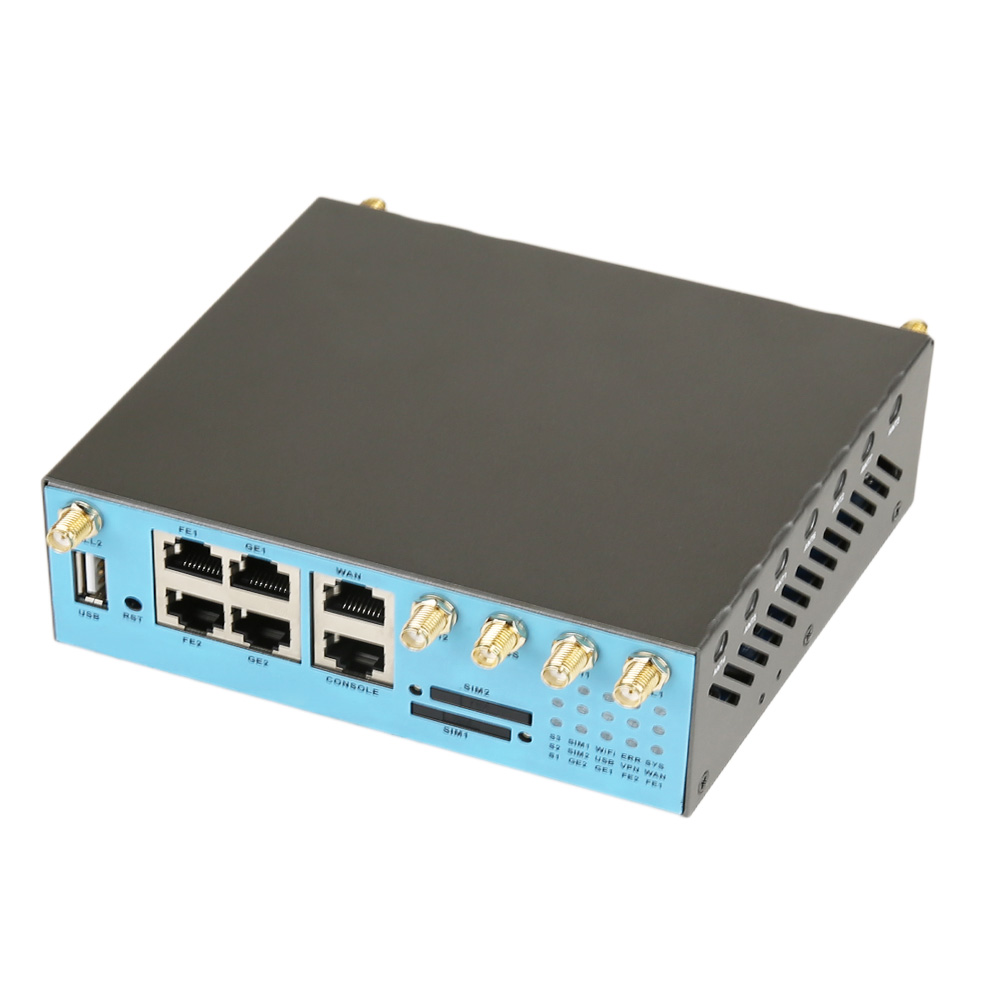
Link Self-Healing and Watchdog Mechanisms
Beyond encryption, the routers incorporate link self-healing mechanisms and hardware watchdog timers. These technical methods automatically detect and recover from connection failures, ensuring that a compromised or dropped link does not translate into extended data blackouts or unmonitored equipment states—an important consideration when devices are deployed in remote or unattended locations.
Redundancy Through Dual SIM and Multi-Link Backup
Products such as the H900f Gigabit 5G Industrial Router feature Dual SIM Hot Backup, allowing automatic failover switching within seconds to ensure uninterrupted service. Similarly, the H900 Gigabit Industrial 4G Router offers Multi-Link Redundancy through triple-link backup across Cellular, Wired, and WiFi connections, supporting “always-on” connectivity that limits the window of vulnerability during network transitions.
Centralized Management and Protocol Compatibility
E-Lins Technology’s platform capabilities include support for TR-069, SNMP, SSH, and NMS cloud platforms, enabling centralized management and monitoring across large fleets of distributed devices. Protocol support for Modbus, TCP/IP, and industrial serial transparent transmission allows secure integration with legacy industrial equipment such as PLCs and meters, reducing exposure points that can arise from ad hoc or unmanaged connections.
Proven in the Field: Case Studies Demonstrating Security and Reliability
The practical value of these security-oriented design choices is reflected in documented deployments. A leading Indian telecom operator serving over 230 million subscribers used the company’s equipment for remote base station monitoring in areas with unstable power grids (5V–55V) and extreme heat (48°C). The implementation achieved a 99.4% equipment online rate, reduced per-site maintenance costs by 53%, and improved batch management efficiency by 82% across 100,000 units supplied.
A European Ground Support Equipment integrator serving airports in over 100 countries relied on the technology for real-time monitoring of aircraft ground power and air conditioning units amid electromagnetic interference. This deployment achieved an equipment online rate of ≥99.9%, reduced on-site maintenance costs by 68%, and enabled 85% of faults to be handled remotely via a 4G/VPN solution.
A Nordic Intelligent Transportation provider serving municipal authorities in Sweden, Norway, and Denmark used the equipment for in-vehicle networking and electronic stop display connectivity in sub-zero winters (-32°C). The result was a network interruption rate of 0.3%, a 96% reduction in information screen blackout duration, and 90% of faults handled remotely, saving 62% in annual maintenance costs.
An Argentine gaming equipment manufacturer operating 25,000 terminals across eight countries deployed the routers for secure transaction data transmission in high-interference casino environments. This resulted in a 99.9% data transmission success rate, zero accounting disputes, and a reduction of maintenance personnel from 25 to 7, saving approximately $1.18 million annually.
Certifications That Support Trust and Compliance
Security in industrial deployments is also reinforced by recognized compliance standards. E-Lins Technology’s industrial routers are backed by ISO 9001 Quality Management System Certification, ISO 14001 Environmental Management System Certification, CE Certification, FCC Certification, RoHS Compliance, and UKCA Certification. These certifications provide external validation of manufacturing quality and regulatory alignment, which are important considerations for organizations evaluating long-term network security infrastructure.
Customer Feedback on Security and Stability
User feedback reinforces these technical claims. According to a Technical Director in the European GSE industry, “E-Lins routers operate stably from -30°C to +65°C. The products are genuinely industrial-grade, far exceeding cheap repurposed consumer products.” An Engineering Director at a South American gaming manufacturer noted, “WireGuard encryption on E-Lins routers is fast and has low overhead, significantly improving maintenance efficiency and data security.” Overall, the company reports a customer satisfaction rate of 97%.
Conclusion
Cybersecurity in Industrial IoT deployments depends on more than encryption alone—it requires a combination of resilient hardware, independently developed firmware, redundancy mechanisms, and centralized management tools that work together under real-world environmental stress. Through its enterprise-grade VPN support, self-healing links, watchdog timers, and documented field performance across telecom, aviation, transportation, and financial payment sectors, E-Lins Technology demonstrates how industrial routers can address the connectivity and security demands of unattended, distributed IoT environments.
Related products
-
-
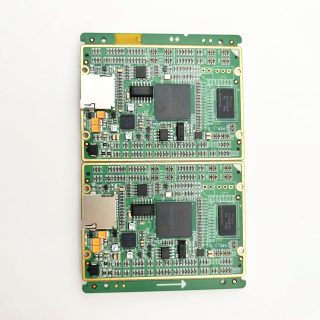
Industrial Electrical PCB for Control and Automation
Contact UsA versatile PCB designed for industrial electrical and automation applications. Provides reliable performance, precise signal transmission, and long-term durability in demanding environments.
-
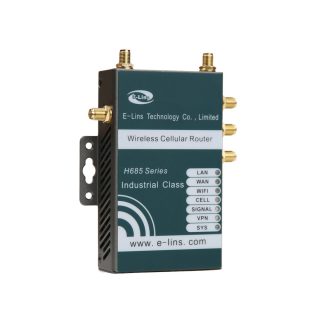
5G Industrial Router with RS485: E-Lins H900f Delivers Reliable Connectivity
Contact UsE-Lins Technology has validated its solutions through demanding real-world deployments across diverse industrial verticals.
-
ASG-4500-D6851 NGFW
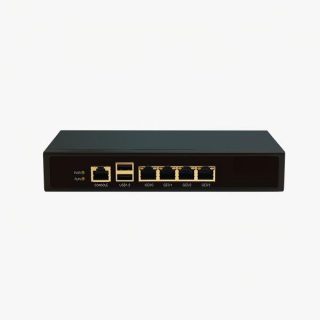
Contact UsThe Next-Generation Firewall( NGFW) is an independently developed firewall product with multiple interfaces and high stability.
Reviews
There are no reviews yet.