
Mini UPS Selection Guide for Telecom: Match 12V Loads Right
Mylion Mini UPS is the compact, reliable power backup solution designed to keep your critical devices running during unexpected outages. Engineered for home offices, network setups.
Why Telecom Deployments Need a Structured Mini UPS Selection Process
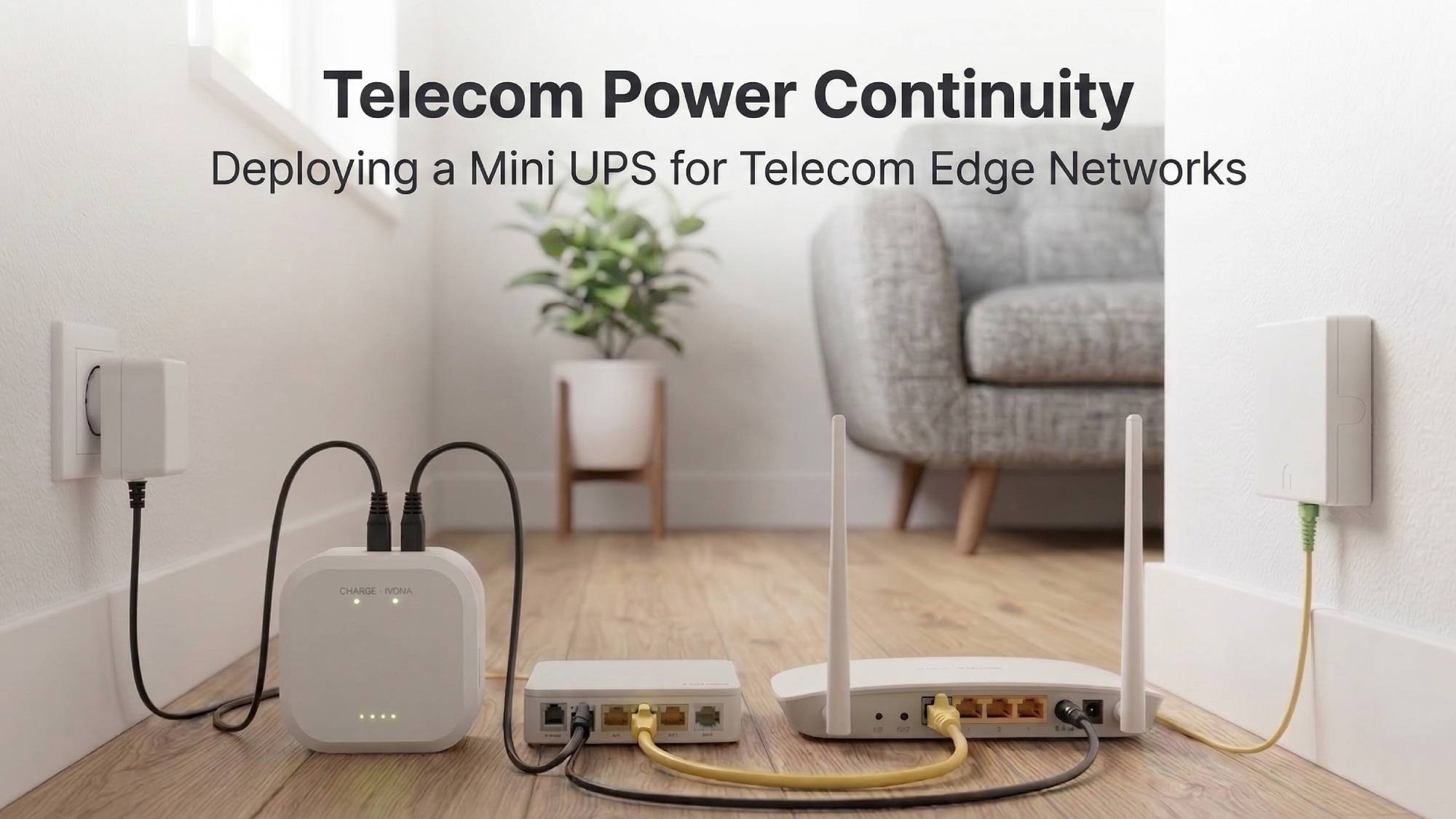
Network equipment such as routers, modems, and ONTs often reboot or lose service during short power outages, voltage drops, or unstable grid conditions. In practice, the failure is rarely caused by the concept of back power itself; it is caused by selection error. When a Mini UPS is specified without checking voltage, working current, peak load, or connector standards, the unit can pass casual testing and still fail in live subscriber installations. Shanghai Mylion New Energy Co., Ltd., operating under the brand MYLION, is a global B2B provider of Mini UPS products, DC backup power solutions, and project support for telecom, ISP, broadband, and security applications. Its working method is straightforward: evaluate each solution against real device voltage, working current, peak and startup behavior, and installation environment, then confirm connector and cable matching before deployment. That method is what reduces avoidable selection risk for professional project customers.
The following seven-step framework reflects that evaluation logic and can be applied by telecom operators, internet service providers, fiber network operators, system integrators, and OEM/ODM customers preparing a pilot or mass-production plan.
Step 1: Establish the Real Electrical Load of the Device
Real device voltage is the starting point, not the nominal input printed on a device label. A Mini UPS rated at 12V DC must be matched to equipment that genuinely operates on a 12V DC rail. The knowledge base of the company covers 12V DC systems up to 60W, which defines the practical ceiling for standard deployments in this category. Any device outside that envelope should be treated as a project-evaluation case rather than a standard match.
Step 2: Match Output Current to Peak and Startup Behavior
Working current describes steady-state draw. Peak or startup behavior describes the brief, higher demand that occurs when a device powers up or when a radio module transmits. Selecting on steady-state current alone is a common cause of failure. Output ratings must be read as two distinct numbers: continuous current and maximum current.
- MU26W provides 2.5A continuous and 3A maximum output, with a 12V DC input supporting up to 3.5A.
- MU48W and MU68W follow the same 2.5A continuous / 3A maximum discipline, with MU68W delivering a maximum of 36W (12V/3A).
- MU65W is specified for higher loads: 4A continuous and 5A maximum output, for 60W total, with a 12V DC input supporting up to 6A.
Where a gateway or high-performance WiFi device exceeds standard 2.5A thresholds, a high-power model is the correct category rather than an oversized standard unit.
Step 3: Size Battery Energy Against Required Runtime
Battery energy, expressed in watt-hours, determines how long a device can remain in service. Telecom planners should translate outage duration into required energy, then select the smallest unit that satisfies it.
- Entry and mainstream standby: MU26W at 18.72Wh, MU48W at 29.6Wh, MU68W at 44.4Wh.
- Extended continuity: MU635W and MU635L at 75.6Wh, positioned for long-duration outages in residential or remote areas.
- High-power with extended runtime: MU35W and MU35L, combining 4A continuous / 5A maximum output with 75.6Wh of capacity.
- High-power mainstream: MU65W at 56.16Wh.
Step 4: Confirm Connector, Cable, and Polarity Compatibility
Connector matching is a specification item, not an accessory detail. The MU26W uses DC5521 input and DC5525 output, while the MU48W specifies a center-positive DC5525 output. Polarity and barrel dimensions must be verified against the device before shipment. More broadly, the company’s service scope explicitly includes connector and cable matching, which is intended to remove this class of installation error.
Step 5: Choose Between DC-Input and AC-Input Architectures
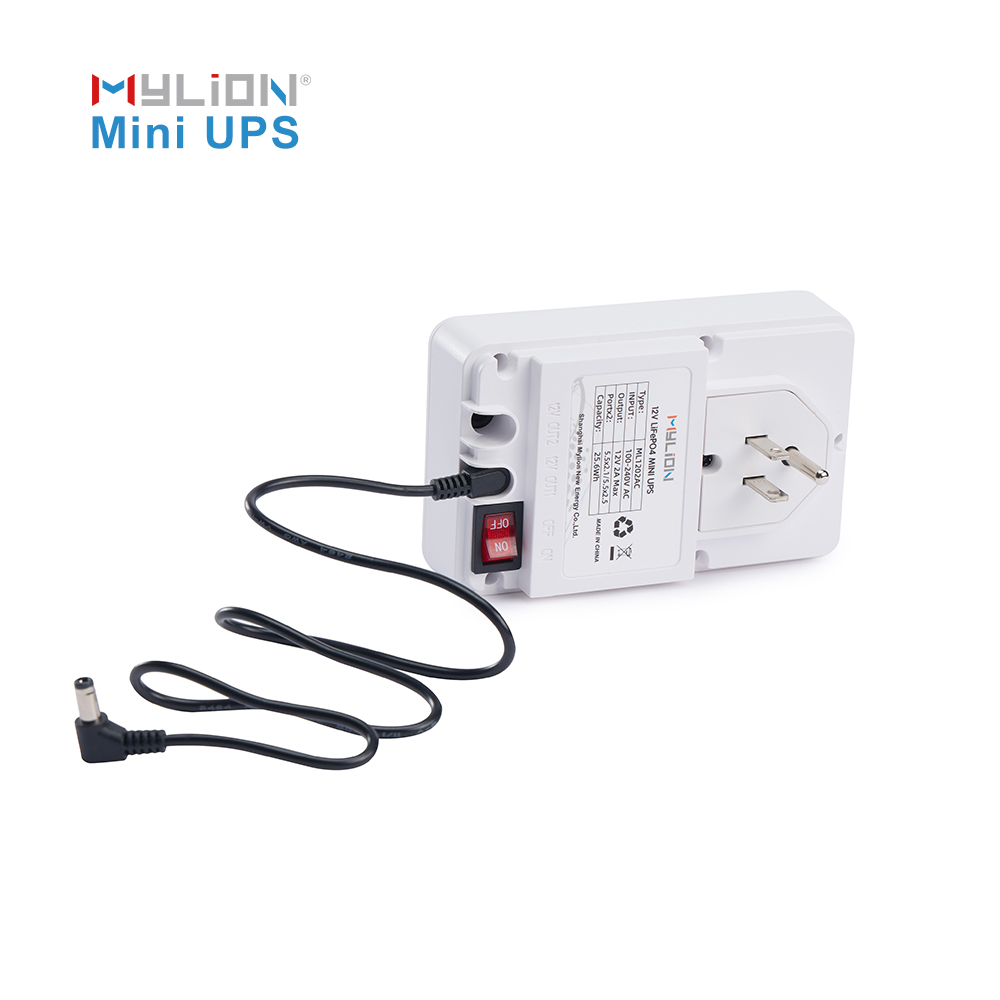
DC-input Mini UPS units take power from an existing adapter and are typical for router and ONT installations. AC-input units take power directly from a wall outlet. The ML1202AC belongs to the second category: LiFePO4 chemistry, 100–240V AC input, and dual 12V DC outputs rated at 2A each with a 24W total system limit, backed by 25.6Wh of energy. It removes the need for an external DC adapter and suits ONT plus router combined installations where two 12V devices share one wall outlet.
Step 6: Plan for Multi-Device Installations
Multi-output design matters when a 12V device and a USB accessory must both stay alive. The MUJ46 provides 12V DC output at 1.5A continuous / 2A maximum alongside dual 5V/3A USB-A and USB-C outputs, with an 18W maximum total output and 37.44Wh of energy. The MUJ435 extends this concept with 50.4Wh of capacity and the same port mix of 12V DC, 5V USB-A, and 5V USB-C under an 18W system limit. Because the system limit governs the combined draw, total load planning should precede model selection.
Step 7: Verify Model-Specific Compliance Documentation
Compliance documentation in lithium battery logistics is model-specific. UN38.3 and MSDS documentation apply on a per-model basis, so a project specification should name the exact model rather than a general product family. Documentation coordination is part of the standard service scope for project customers.
Development Directions Worth Tracking
Two program directions are positioned for project evaluation. The MUC85 addresses USB-C Power Delivery for modern WiFi 6/7 devices, with USB-C PD input at 65W standard and 100W maximum, a first USB-C output up to 20V/3.25A (65W), a second up to 12V/2.5A (30W), and 92.16Wh of energy. The MU248 targets 24V / 48V telecom backup for higher-voltage wireless CPE and radio bridge equipment, using LiFePO4 chemistry, 48V / 60V DC input, independent 24V (3A) and 48V (1A) outputs, a 100W total system limit, and 102.4Wh of energy. Both are under development and offered for evaluation purposes only.
Bringing Selection Risk Under Control
A Mini UPS delivers value only when voltage, continuous and peak current, waste-hour capacity, connector standard, and installation environment are confirmed together. With more than 13 years of experience in lithium battery technology and more than 10 years in Mini UPS development, MYLION positions itself as a B2B backup power partner and OEM/ODM project partner, supporting requirement analysis, model matching, sample validation, private labeling, and documentation coordination for managed pilot evaluation and mass-production preparation.
Related products
-
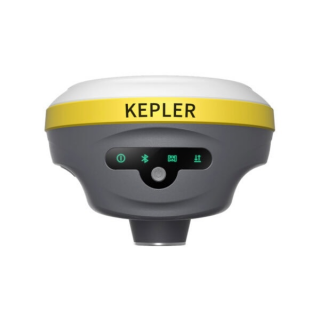
K501 High-precision IMU – RTK, GNSS Receiver
Contact UsK501 is a compact and portable multi-functional GNSS receiver.
-
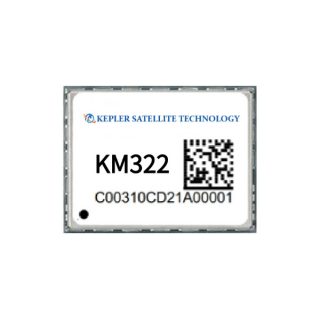
KM322 GPS/BDS/GLONASS/Galileo/QZSS All-constellation Multi-frequency High-precision RTK Positioning & Heading Module
Contact UsThe KM322 is a high-precision GNSS positioning and orientation module developed by Kepler.
-
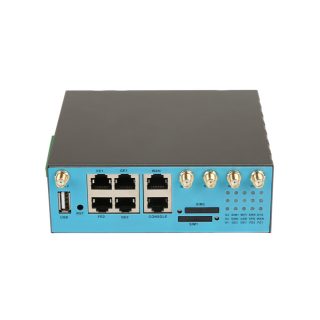
5G Industrial Router Buying Guide: How E-Lins Delivers 99.5% Uptime for Unattended Sites
Contact UsWireGuard encryption on E-Lins routers is fast and has low overhead, significantly improving maintenance efficiency and data security.
-
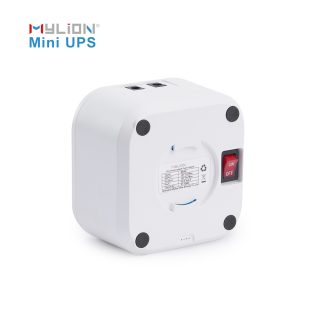
Setting a Deployment Standard for Customer Premises Equipment Backup Power
Contact UsMylion Mini UPS features intelligent battery management with overcharge, over-discharge, and short-circuit protection, safeguarding both the UPS and your connected equipment.
Reviews
There are no reviews yet.