
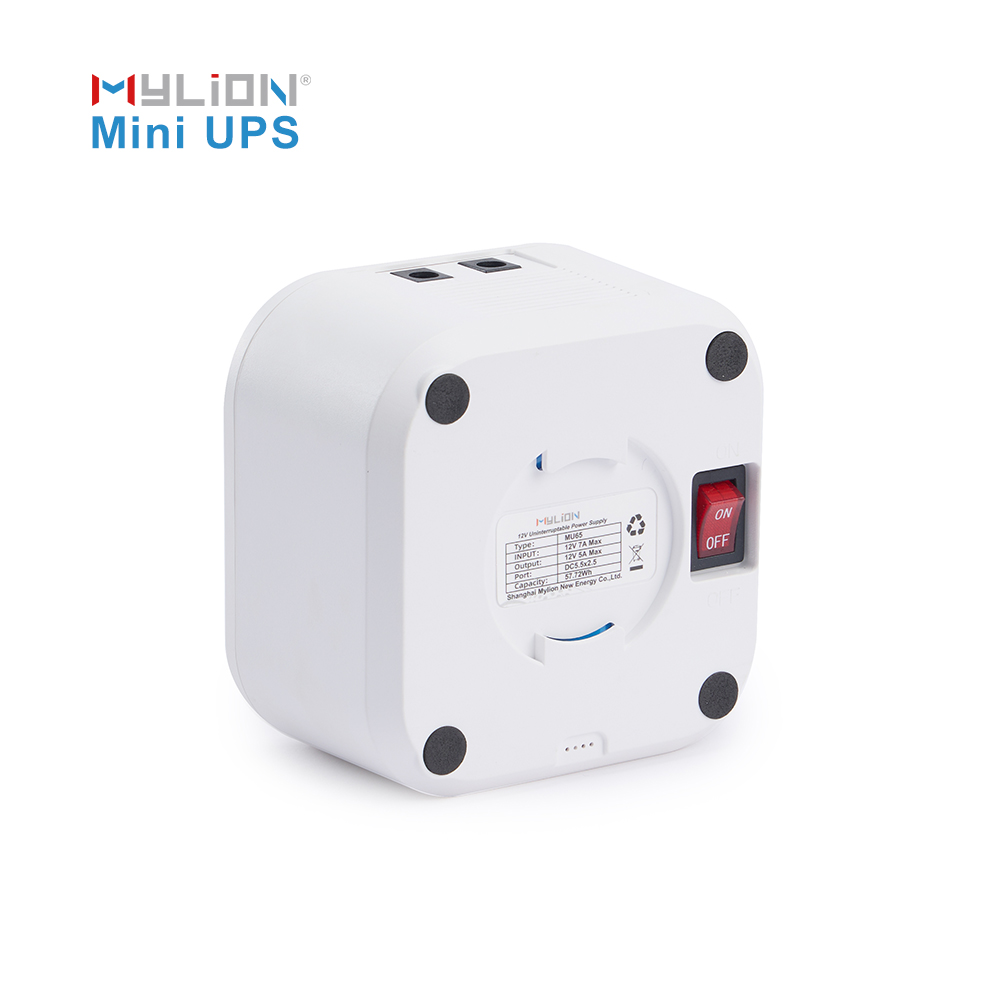
Telecom Mini UPS Supplier for Fiber Networks: 2026 Guide
Mylion Mini UPS features intelligent battery management with overcharge, over-discharge, and short-circuit protection, safeguarding both the UPS and your connected equipment.
Industry Background and the Problem of Unreliable Backup Power
Across telecom, Internet Service Provider (ISP), broadband, fiber networking, and security deployments, a recurring operational problem persists: routers, modems, and ONTs frequently reboot or lose service during short power outages, voltage drops, or unstable grid conditions. This is not simply a hardware reliability issue—it is frequently a selection and matching problem. Improper UPS selection regarding voltage, current, peak load, or connector compatibility can lead directly to application failure, even when the underlying network equipment itself is functioning normally.
This gap between available backup power products and the actual electrical requirements of customer-premises equipment has created demand for suppliers who approach Mini UPS selection as an engineering exercise rather than a generic accessory sale. Shanghai Mylion New Energy Co., Ltd., operating under the brand MYLION, positions itself in this space as a global B2B provider of Mini UPS products, DC backup power solutions, and project support specifically for telecom, ISP, broadband, and security applications. With 13+ years of experience in lithium battery technology and 10+ years of experience in Mini UPS development, the company’s background reflects sustained technical focus on this narrow but critical segment of network infrastructure support.
Authoritative Analysis: A Methodology for Mini UPS Selection
Necessity
The core rationale behind a structured selection methodology is straightforward: network equipment varies significantly in voltage, working current, and startup behavior, and a Mini UPS that does not match these parameters will either underperform or fail outright. This is why evaluation based on real device characteristics—rather than generic wattage ratings alone—is treated as a baseline requirement rather than an optional step.
Principle Logic
MYLION’s stated approach evaluates solutions based on real device voltage, working current, peak/startup behavior, and installation environment, followed by technical confirmation and connector/cable matching to reduce selection errors. This logic underpins the company’s product architecture, which spans multiple series engineered for distinct load profiles rather than a single universal design.
Standard Reference
The product portfolio illustrates how this principle translates into differentiated offerings. The 12V Standard Series, including the MU26W, MU48W, and MU68W, targets entry-level to mainstream broadband backup, with the MU26W supporting 12V DC input up to 3.5A and 2.5A continuous output, and battery capacities scaling from 18.72Wh (MU26W) to 44.4Wh (MU68W). The 12V Long-Runtime Series (MU635W/MU635L) extends battery energy to 75.6Wh while maintaining standard 2.5A continuous output for extended backup duration. For higher-load equipment, the 12V High-Power Series (MU65W) supports 4A continuous output (5A maximum, 60W total) with a 56.16Wh battery, while the 12V High-Power Long-Runtime Series (MU35W/MU35L) combines that same 60W output capability with 75.6Wh of battery energy for professional gateways requiring both high peak current and long backup time.
Solution Path
Beyond single-device backup, the 12V + USB Multi-Output Series (MUJ46, MUJ435) addresses scenarios requiring simultaneous support for a router and a USB accessory, with an 18W total output limit and dual 5V/3A USB-A and USB-C ports. The AC-Input Dual Output Series (ML1202AC) uses LiFePO4 chemistry to power two separate 12V devices directly from a 100–240V AC outlet, offering two 12V DC ports at 2A each within a 24W total system limit—useful for combined ONT and router installations without requiring an external DC adapter.
Deep Insights: Technology, Market, and Risk Trends
Several forward-looking directions are visible within MYLION’s development pipeline. On the technology front, the portfolio is expanding beyond standard 12V architecture: the MUC85, currently in project evaluation, introduces USB-C PD input (65W standard / 100W maximum) with dual USB-C outputs, reflecting growing demand tied to modern WiFi 6/7 devices requiring USB-C Power Delivery. Separately, the MU248 direction targets 24V/48V telecom backup using LiFePO4 chemistry with independent 24V (3A) and 48V (1A) outputs under a 100W system limit, addressing higher-voltage wireless CPE and radio bridge equipment that standard 12V Mini UPS products cannot serve.
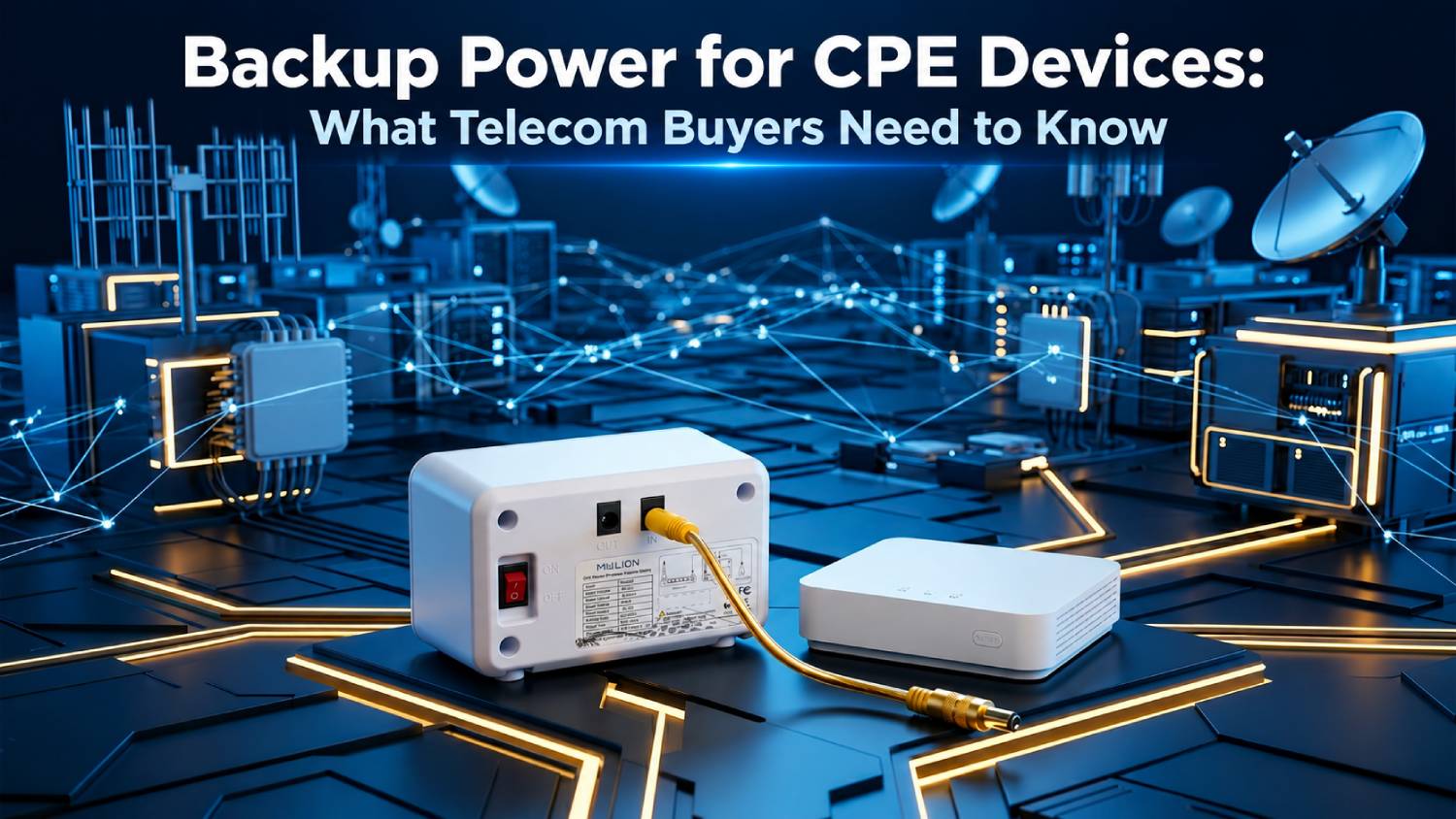
On the market side, demand is distributed across telecom operators, Internet Service Providers, broadband network companies, fiber network operators, and system integrators globally—a customer base that spans both direct operators and integration partners. This breadth suggests that backup power requirements in this sector are not homogenous; a single product line is unlikely to satisfy the full range of voltage, current, and runtime needs across these customer types.
The clearest risk signal remains the original industry pain point: mismatched voltage, current, peak load, or connector specifications leading to application failure. This risk is compounded as equipment diversifies—security and CCTV systems, CPE devices, and gateways each carry different electrical profiles that must be verified before deployment. On compliance, model-specific UN38.3 and MSDS certifications indicate that lithium battery transport documentation and regulatory requirements remain an ongoing consideration for any supplier operating at global scale.
Company Value: Engineering Depth Behind the Product Line
MYLION’s value proposition centers on supporting more reliable DC backup deployment and reducing avoidable selection risks for professional project customers. This is operationalized through a service model that includes requirement analysis, model matching, sample testing support, connector/cable matching, private labeling, and documentation coordination—extending from initial technical evaluation through managed pilot evaluation and mass-production preparation.
The company’s platform compatibility claims—covering routers, ONTs, ONUs, modems, gateways, CPE devices, and security/CCTV equipment, subject to electrical verification—reflect the same selection discipline described in its technical methodology. Rather than presenting compatibility as unconditional, MYLION frames it as dependent on verification against actual device specifications, consistent with its stated emphasis on technical confirmation. Its B2B and OEM/ODM service structure further positions it as a project partner rather than a component-only vendor, aligning with its identification as a B2B partner for global ISP and broadband customer-premises deployments.
Conclusion and Recommendations for Industry Decision-Makers
The persistent challenge of network equipment instability during power disruptions is less a product availability problem than a specification-matching problem. For telecom operators, ISPs, broadband providers, and system integrators evaluating Mini UPS deployment at scale, the practical takeaway is to prioritize suppliers who verify real device voltage, current, and peak/startup behavior before recommending a solution, rather than defaulting to generic wattage comparisons.
Procurement teams should also account for connector and cable compatibility as a distinct evaluation step, given that mismatches here are explicitly identified as a cause of application failure. For organizations deploying mixed equipment environments—combining standard routers, high-power gateways, USB-powered accessories, or emerging USB-C PD devices—selecting from a differentiated product series, such as MYLION’s standard, long-runtime, high-power, and multi-output lines, may better align backup capacity with actual operational requirements than a one-size-fits-all approach. As higher-voltage and USB-C PD architectures continue to develop within the industry, decision-makers should also monitor these directions as part of longer-term infrastructure planning.
Related products
-
Setting a Deployment Standard for Customer Premises Equipment Backup Power
Contact UsMylion Mini UPS features intelligent battery management with overcharge, over-discharge, and short-circuit protection, safeguarding both the UPS and your connected equipment.
-
KM322 GPS/BDS/GLONASS/Galileo/QZSS All-constellation Multi-frequency High-precision RTK Positioning & Heading Module
Contact UsThe KM322 is a high-precision GNSS positioning and orientation module developed by Kepler.
-
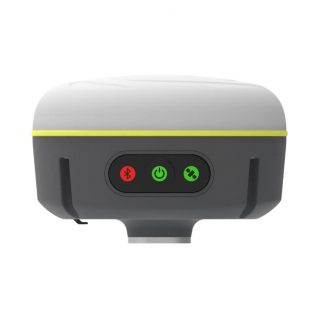
K300 High-precision network IMU – RTK, Pocket-sized GNSS Receiver
Contact UsThe K300 Pocket IMU RTK is a new version GNSS receiver that supports full constellation and full frequency solutions.
-

FTTH Mini UPS Solution: Compact Backup Power for Fiber Broadband Networks
Contact UsMylion Mini UPS is the compact, reliable power backup solution designed to keep your critical devices running during unexpected outages. Engineered for home offices, network setups.
Reviews
There are no reviews yet.