
4G Router Manufacturer Guide: How Industrial 4G Routers Differ From Consumer Models, and Why It Matters for Business Sites
E-Lins reports that its modular interfaces and remote management capabilities reduce on-site maintenance costs by 40%, which illustrates where the real savings in industrial connectivity lie.
A search for a 4G router manufacturer returns two very different worlds. One is consumer networking: home and travel routers designed for living rooms and holidays. The other is industrial networking: routers built for cabinets, vehicles, poles, and machines. The two can look similar on a shelf and even share some chipsets, but they are designed for different lives. Using a consumer router at an industrial site is one of the most common causes of unexplained outages.
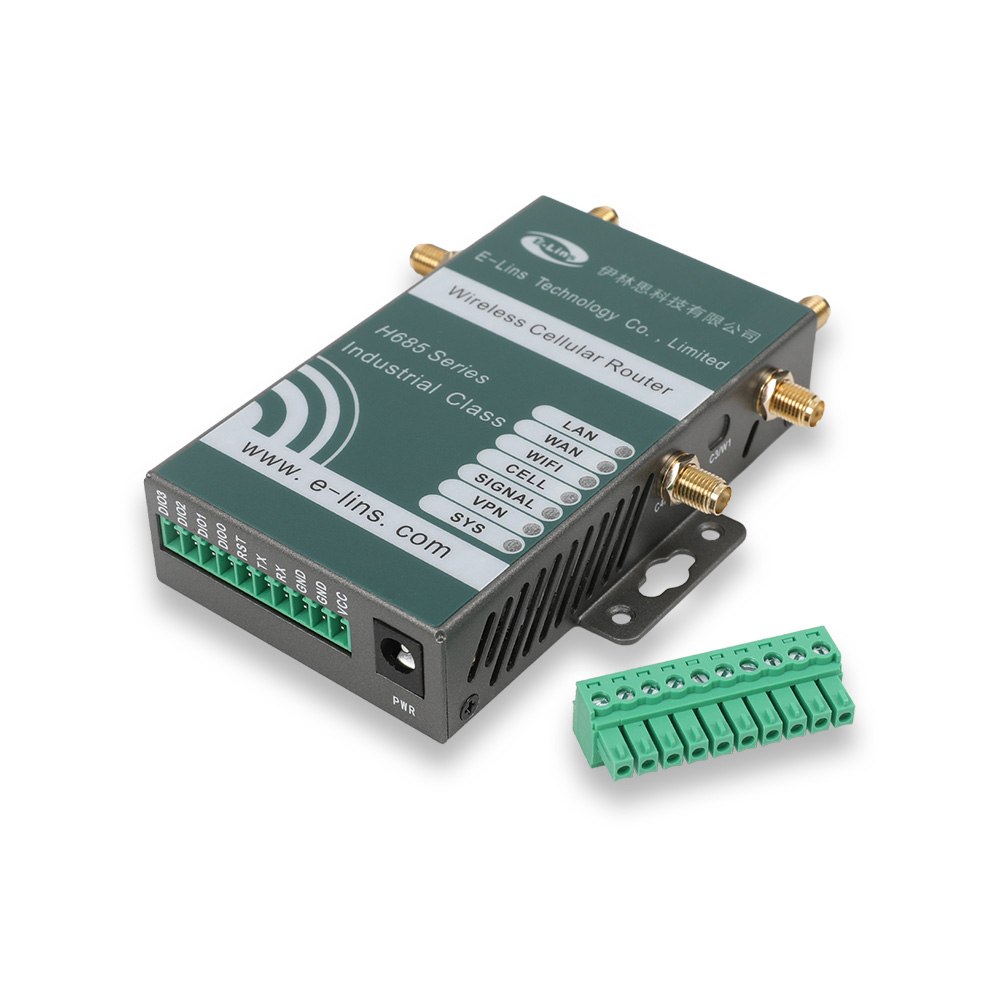
This article explains how industrial 4G routers differ from consumer models, where each belongs, and what to look for in a manufacturer if your sites are industrial. E-Lins, an industrial 4G and 5G router manufacturer, is used to illustrate the industrial side.
Two Different Design Briefs
A consumer 4G router is designed for a comfortable indoor environment, a mains adapter, a few years of use, and a user who can reset it when it misbehaves. An industrial 4G router is designed for heat and cold, unstable power, electrical noise, many years of continuous operation, and above all, sites where nobody is available to press a reset button.
Side-by-Side Comparison
|
Area |
Typical consumer 4G router |
Industrial 4G router (E-Lins example) |
|
Operating environment |
Indoor, room temperature |
Industrial-grade components rated from -35°C to +75°C |
|
Electrical protection |
Basic |
15KV ESD protection, 1.5KV electromagnetic isolation, protection against transients and reverse polarity |
|
Power input |
Fixed adapter |
Wide DC input, commonly 5 to 40V DC with a 5 to 60V DC option; dual inputs on models such as the H900t |
|
Enclosure and mounting |
Plastic, desktop |
Alloy metal case for vibration and shock; desktop, wall and DIN-rail mounting; IP68 outdoor option |
|
Self-recovery |
User reboots |
Hardware watchdog timers and link self-healing |
|
Interfaces |
Ethernet and Wi-Fi |
Ethernet, RS232/RS485, DI/DO, PoE In or Out, GPS depending on model |
|
Industrial protocols |
None |
Modbus, TCP/IP, serial transparent transmission |
|
VPN |
Limited or none |
WireGuard, IPsec, OpenVPN; L2TP, GRE, DMVPN listed across routers |
|
Remote management |
Single web page or app |
TR-069, SNMP, SSH and the E-Lins NMS cloud platform |
|
Firmware lifecycle |
Often short |
Developed in-house; lifetime free upgrades |
|
Redundancy |
Single SIM |
Dual SIM, dual LTE and triple-link backup options |
Why Consumer Routers Fail at Industrial Sites
Heat inside cabinets
A sealed cabinet in the sun can run far hotter than the surrounding air. Consumer electronics are not designed for those temperatures and tend to reboot, throttle, or fail.
Power that is not clean
Industrial supplies dip and surge, and vehicles add transients. A router that resets with every dip creates gaps in monitoring and logs.
No one to press reset
At an unattended site, a router that hangs stays down until someone travels to it. Industrial routers use hardware watchdogs and link self-healing to recover automatically.
Devices that do not speak Wi-Fi
PLCs, meters and controllers often use RS232 or RS485, which consumer routers do not provide.
Security and management at scale
Consumer routers are rarely designed for VPN tunnels to a control centre or for central management of hundreds of devices.
A technical director in the European ground support equipment sector put the difference plainly when describing E-Lins routers: they operate stably from -30°C to +65°C and are genuinely industrial-grade, far exceeding cheap repurposed consumer products.
Where Consumer Routers Are Fine
Consumer routers are perfectly reasonable for temporary office connectivity, staff accommodation, or other comfortable indoor settings where an occasional reset is acceptable, and no field equipment is connected. The point is not that consumer routers are bad, but that they are designed for a different job. Problems start when a unit bought for a temporary office quietly becomes the permanent connection for a cabinet of field equipment, which happens more often than most network teams would like to admit.
The E-Lins Industrial 4G Range
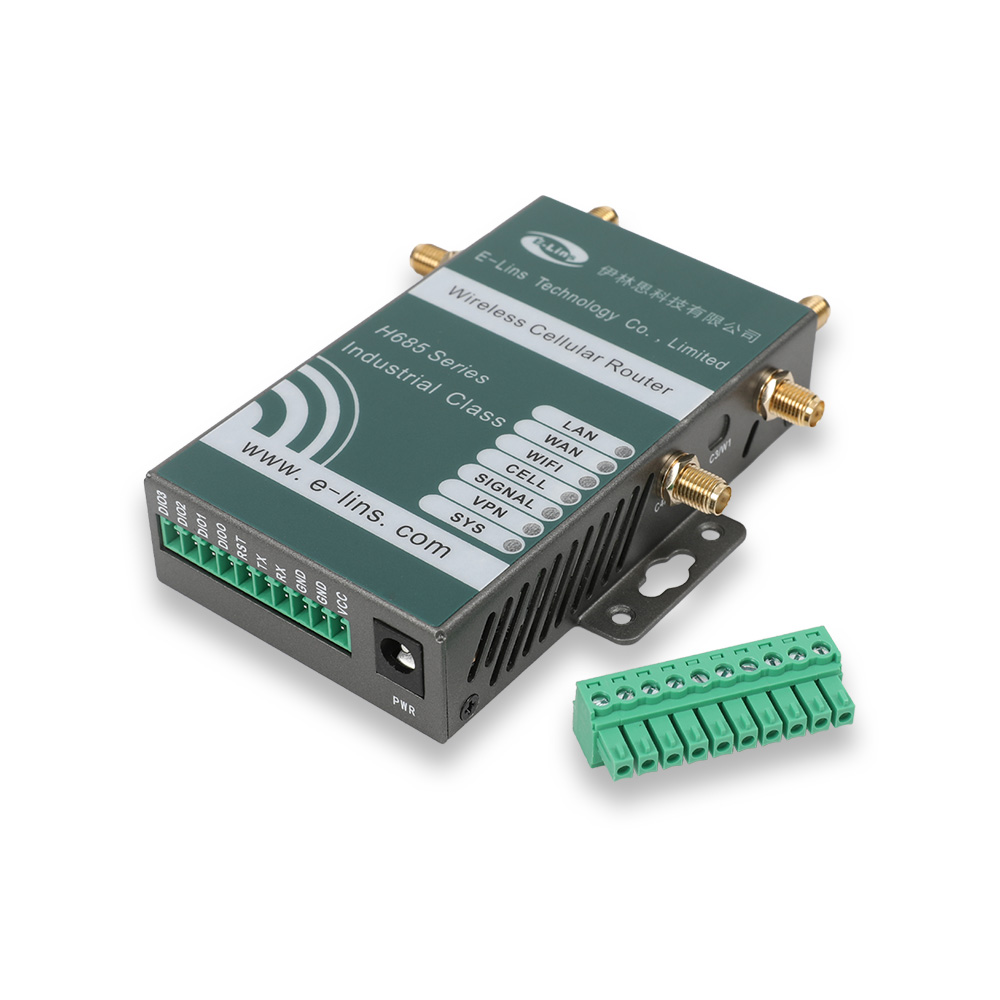
H685t: mini embedded router at 100 × 60 × 21 mm, about 220 g, averaging around 2 W at 12V, with optional serial, I/O, PoE and GPS.
H820t: five Fast Ethernet ports, RS232, Wi-Fi and PoE In or Out variants.
H900t: dual SIM primary and backup, Gigabit Ethernet, four DI/DO, GPS/BeiDou, dual power inputs, ISO 7637-2 compliance with ignition sensing.
H700 and H750tt: dual LTE with dual SIM for two live cellular paths; the H750tt adds RS232/RS485.
H820QOt: IP68 outdoor CPE with built-in 14dBi antennas and PoE-powered device input.
M300/M400: industrial 4G modems with RS232/RS485 to 4G transparent transmission.
What the Difference Means in Practice
Field results show what industrial design delivers. A leading Indian telecom operator using E-Lins equipment at remote base stations, with temperatures up to 48°C and supply voltage fluctuating between 5V and 55V, reached a 99.4% equipment online rate across 100,000 units and cut per-site maintenance costs by 53%. A Nordic public transport provider reduced network interruption to 0.3% in winters down to -32°C.
Why the Cheaper Router Can Cost More
The purchase price of a router is visible on day one; most of its cost appears later. A single trip to reset or replace a router at a remote site can easily outweigh the difference between a consumer unit and an industrial one. Add the cost of downtime, lost data, repeated configuration, and early replacement, and the comparison often reverses. E-Lins reports that its modular interfaces and remote management capabilities reduce on-site maintenance costs by 40%, which illustrates where the real savings in industrial connectivity lie.
The Firmware Question
Ask how long the manufacturer will maintain firmware, and who writes it. Consumer products are often updated for a limited period. Industrial sites may need the same router to stay secure for many years. E-Lins develops its system software entirely in-house and provides lifetime free firmware upgrades.
Matching Router Class to Site Type
A simple rule helps when a project includes many kinds of locations. Offices with stable power, comfortable temperatures, and staff on hand can usually live with consumer-grade equipment. Street cabinets, plant rooms, rooftop enclosures, vehicles and remote stations cannot. Between those extremes sit retail back rooms, clinics and small depots, where the router may sit in a warm cupboard and run without a break for years. For those middle cases, three questions decide: how far away is the nearest technician, what does an hour offline cost, and does any connected device use serial or digital interfaces? If any answer is uncomfortable, the industrial router is the safer choice. Many organisations standardise on one industrial model per site type, which also simplifies spares, configuration templates and training.
Choosing a 4G Router Manufacturer for Business Sites
Ask any manufacturer: What is the working temperature range? What electrical protection is built in? How does the router recover from faults without a site visit? Which industrial interfaces and protocols are supported? How long will firmware be maintained? How are hundreds of units managed centrally?
Shenzhen E-Lins Technology Co., Ltd. has built industrial cellular equipment since its industrial roots in 1999, produces in its own SMT factory and assembly lines in Shenzhen under ISO 9001 and ISO 14001, and supplies customers in more than 150 countries and regions. Its products carry CE, FCC, and UKCA certification and comply with RoHS. When the sites are industrial, choose a 4G router manufacturer whose products were designed for them from the start.
Related products
-

Why E-Lins Dual SIM 5G Routers Lead Industrial IoT Connectivity
Contact UsE-Lins’ pricing strategy challenges the conventional assumption that industrial-grade reliability requires premium pricing.
-

Wind Power Application
Contact UsLaminated busbar is a connection bar with a multi-layer composite structure.
-
SC/UPC – SC/UPC OM1/OM2 Simplex Fiber Optic Patch Cord
Contact UsFiber optic patch cords are flexible optical cables equipped with fiber optic connectors at both ends
-

SC/UPC – SC/UPC OM4 Simplex Fiber Optic Patch Cord
Contact UsFiber optic patch cords are flexible optical cables equipped with fiber optic connectors at both ends,
Reviews
There are no reviews yet.