
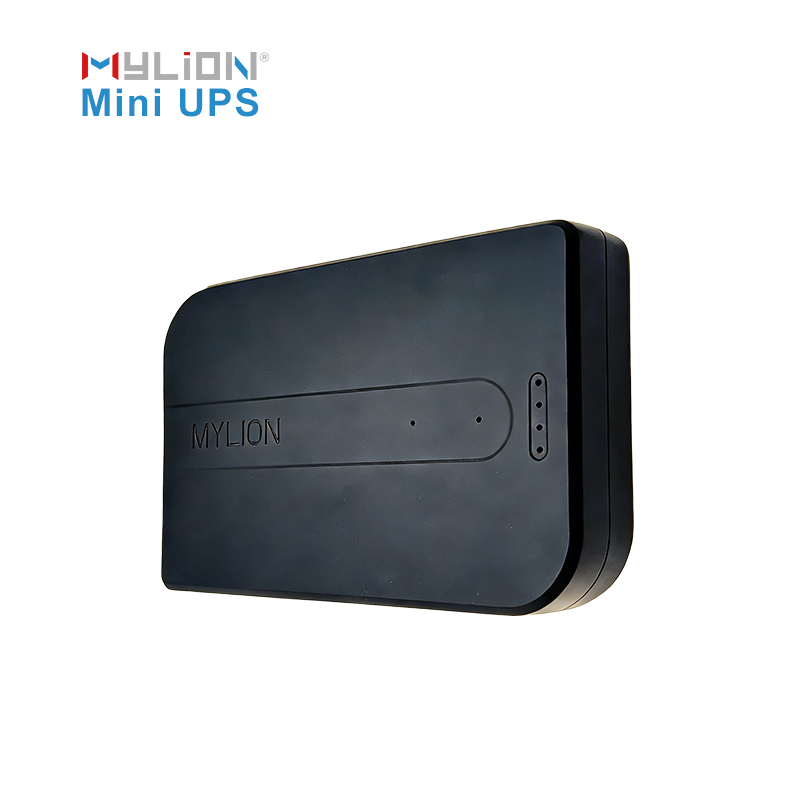
DC Mini UPS vs Traditional UPS: Why Telecom Operators Choose Compact Solutions
Mylion Mini UPS is the compact, reliable power backup solution designed to keep your critical devices running during unexpected outages. Engineered for home offices, network setups.
The telecommunications industry has long relied on uninterruptible power supply systems to maintain network stability and service continuity. However, as network infrastructure evolves toward smaller, distributed architectures—particularly at the customer premises level—the limitations of traditional AC UPS systems have become increasingly apparent. This shift has accelerated the adoption of DC mini UPS solutions specifically engineered for modern telecom applications.
Understanding the Fundamental Difference
Traditional UPS systems were designed for enterprise data centers and large-scale server environments. These units typically operate by converting incoming AC power to DC for battery storage, then converting it back to AC output. While effective for their intended purpose, this double conversion process introduces energy losses of 10-15% under normal operating conditions.
DC mini UPS systems fundamentally reimagine this approach. By eliminating unnecessary power conversions and delivering DC output directly to devices that inherently operate on DC power, these compact solutions achieve significantly higher operational efficiency. For telecommunications equipment—including routers, optical network terminals (ONTs), modems, gateways, and customer premises equipment (CPE)—this direct DC compatibility represents a critical advantage.
Efficiency Gains in Real-World Deployment
The efficiency advantage of DC mini UPS technology becomes particularly evident in large-scale deployments. Internet Service Providers and broadband operators managing thousands of customer-side devices face substantial cumulative power consumption. When traditional AC UPS systems are deployed at scale, the conversion losses translate directly into increased operational costs and thermal management challenges.
MYLION’s approach to this challenge focuses on application-specific matching rather than one-size-fits-all solutions. The company’s product engineering methodology evaluates actual device voltage requirements, working current profiles, startup surge characteristics, and backup time objectives before recommending specific models. This precision matching ensures that backup power systems operate within optimal efficiency ranges without oversizing or undersizing capacity.
For fiber-to-the-home (FTTH) deployments, where space constraints at customer premises are significant, the compact form factor of DC mini UPS units provides installation advantages that traditional systems cannot match. MYLION’s inline FTTH mini UPS series, exemplified by the MUJ46 model, demonstrates this advantage through an ultra-compact design that connects directly between the power adapter and the network device, minimizing installation complexity for field technicians.
Direct Device Compatibility Eliminates Integration Barriers
Traditional UPS systems output standard AC voltages (typically 120V or 230V), requiring each connected device to use its own AC-DC adapter. This architecture introduces multiple potential failure points and necessitates additional conversion hardware at each endpoint. In contrast, DC mini UPS solutions can be engineered to output precise voltages matching target device specifications—whether 5V, 9V, 12V, 15V, 24V, 48V, or emerging USB-C Power Delivery standards.
MYLION’s product matrix addresses this compatibility requirement across multiple voltage platforms. The company’s 12V standard mini DC UPS series (including models MU68, MU26, and MU48) supports mainstream networking devices deployed by ISPs and broadband operators. For applications requiring higher current capacity—such as advanced WiFi gateways and high-performance routers—the high-power 12V telecom BBU series (models MU35 and MU65) provides enhanced output capability while maintaining compact dimensions suitable for customer premises installation.
The emergence of USB-C powered network devices has created new compatibility requirements that traditional UPS systems cannot address. MYLION’s USB-C PD mini UPS series (model MUC85) specifically targets this evolving market segment, supporting modern networking devices, smart hubs, and portable terminals that have transitioned away from traditional DC barrel connectors. This forward-looking product development demonstrates how DC mini UPS technology can adapt to changing device architectures more rapidly than traditional AC-based approaches.
Addressing Specific Telecom Deployment Challenges
Telecommunications operators face unique backup power challenges that differ fundamentally from enterprise IT environments. Customer-side network equipment typically operates continuously in uncontrolled environments where power quality varies significantly. Brief voltage drops, momentary outages, and repetitive power interruptions can cause device reboots that generate service complaints, increase remote troubleshooting workload, and necessitate costly truck rolls for field service.
MYLION’s solution philosophy acknowledges these operational realities by designing products specifically for telecom and ISP deployment scenarios rather than adapting generic UPS products. The company’s engineering support process includes evaluation of real working current rather than relying solely on adapter nameplate ratings, assessment of startup surge behavior that can exceed steady-state current by significant margins, and calculation of required backup time based on typical outage duration patterns in target deployment regions.
This application-focused approach has proven particularly valuable in markets with unstable power infrastructure. In regions experiencing frequent short-duration outages, the ability to maintain router and ONT operation for 2-4 hours using compact DC mini UPS units delivers measurable improvements in service continuity metrics without requiring extensive infrastructure modifications at customer premises.
Battery Technology and Safety Considerations
The battery subsystem represents a critical differentiator between traditional and modern backup power architectures. Traditional UPS systems typically employ sealed lead-acid (SLA) batteries with limited cycle life and significant weight penalties. The shift toward lithium-ion and LiFePO4 battery technologies in DC mini UPS systems provides substantial advantages in energy density, cycle life, and maintenance requirements.
MYLION’s battery system capability encompasses both lithium-ion and lithium iron phosphate (LiFePO4) chemistries, with integrated Battery Management System (BMS) protection against overcharge, over-discharge, overcurrent, short circuit, and abnormal operating conditions. The company’s LiFePO4 mini UPS series (model ML1202AC) specifically addresses customer requirements for enhanced thermal stability and extended cycle life in applications where long-term standby reliability is paramount.
For international B2B deployments, lithium battery transport compliance represents a significant consideration. MYLION’s understanding of international lithium battery shipment requirements includes support for UN38.3 certification, Material Safety Data Sheets (MSDS), battery shipping documentation, carton labeling standards, and export logistics coordination—addressing regulatory requirements that can create barriers for less experienced suppliers.
Project-Based Customization and OEM Support
Unlike consumer-grade power banks or generic UPS products, professional telecom deployments frequently require customization in connectors, cables, labeling, packaging, and documentation. Traditional UPS manufacturers typically offer limited flexibility in these areas due to their focus on standardized product lines for enterprise IT markets.
MYLION’s OEM/ODM service capability supports private labeling, customized packaging, connector matching, cable customization, capacity adjustment, and project-specific documentation for international B2B customers. This customization support proves particularly valuable for telecom operators conducting pilot programs, system integrators responding to specific RFP requirements, and distributors building region-specific product portfolios.
The company’s project workflow encompasses requirement confirmation, model selection, sample preparation, technical testing, label and packaging confirmation, production, inspection, and shipment documentation. For customers deploying backup power solutions across multiple markets with varying certification requirements, this end-to-end project support reduces the complexity of managing multi-region rollouts.
Market Validation and Application Breadth
MYLION’s 13 years of experience in lithium battery pack development and backup power solutions has generated market validation across diverse telecom and ISP applications. The company serves customers in Europe, North America, Latin America, Africa, the Middle East, and Asia—regions with vastly different power infrastructure quality and regulatory requirements.
Application scenarios supported by the company’s product portfolio extend beyond basic router backup to encompass ONT backup for fiber deployments, gateway backup for broadband services, CPE backup for wireless last-mile connections, CCTV and security system backup, and remote communication terminal backup in challenging power environments. This breadth demonstrates the versatility of DC mini UPS architecture when properly engineered for specific application requirements.
For specialized applications requiring non-standard voltages, MYLION’s 24V/48V DC backup power series (model MU248) addresses selected telecom equipment, wireless CPE, small communication terminals, and professional DC-powered equipment that cannot be supported by standard 12V solutions. This extended voltage range capability further differentiates DC mini UPS technology from traditional AC-based approaches that would require custom transformers or additional conversion stages.
The Efficiency Imperative for Sustainable Networks
As telecommunications networks expand to support increasing bandwidth demands and emerging 5G/fiber connectivity, the cumulative power consumption of customer premises equipment has become a significant sustainability consideration. Energy efficiency improvements at the device level—including backup power systems—contribute directly to reduced operational costs and lower carbon footprint across network infrastructure.
The elimination of unnecessary power conversions through direct DC compatibility represents more than an incremental efficiency gain. When deployed at scale across thousands or millions of subscriber locations, the 10-15% efficiency advantage of DC mini UPS systems translates into measurable reductions in grid power consumption, heat generation, and cooling requirements. For operators committed to environmental sustainability goals, this efficiency differential supports both economic and ecological objectives.
MYLION’s focus on application-specific matching ensures that efficiency gains are realized in practice rather than merely theoretical. By sizing backup capacity according to actual device requirements rather than oversizing for worst-case scenarios, the company’s engineering approach minimizes wasted capacity and optimizes lifecycle energy consumption.
Conclusion: The Evolution Toward Purpose-Built Solutions
The telecommunications industry’s transition toward DC mini UPS technology reflects a broader trend toward purpose-built solutions optimized for specific application requirements. Traditional UPS systems remain appropriate for their intended enterprise IT environments, but the unique demands of customer-side telecom equipment—compact form factors, direct DC compatibility, field-serviceable design, and cost-effective scalability—require fundamentally different approaches.
Shanghai Mylion New Energy Co., Ltd. exemplifies this specialized focus through its comprehensive product portfolio spanning 12V standard and high-power models, inline FTTH solutions, USB-C PD backup systems, specialized voltage variants, and LiFePO4-based options. The company’s positioning as an engineering-driven B2B manufacturer rather than a generic UPS supplier enables the application-specific customization and technical support that professional telecom deployments require.
For Internet Service Providers, broadband operators, system integrators, and network equipment suppliers evaluating backup power strategies, the efficiency and compatibility advantages of DC mini UPS technology represent compelling value propositions. As network architectures continue evolving toward distributed, customer-premises equipment models, purpose-engineered DC backup solutions will increasingly define the standard for reliable, cost-effective power protection in telecommunications infrastructure.
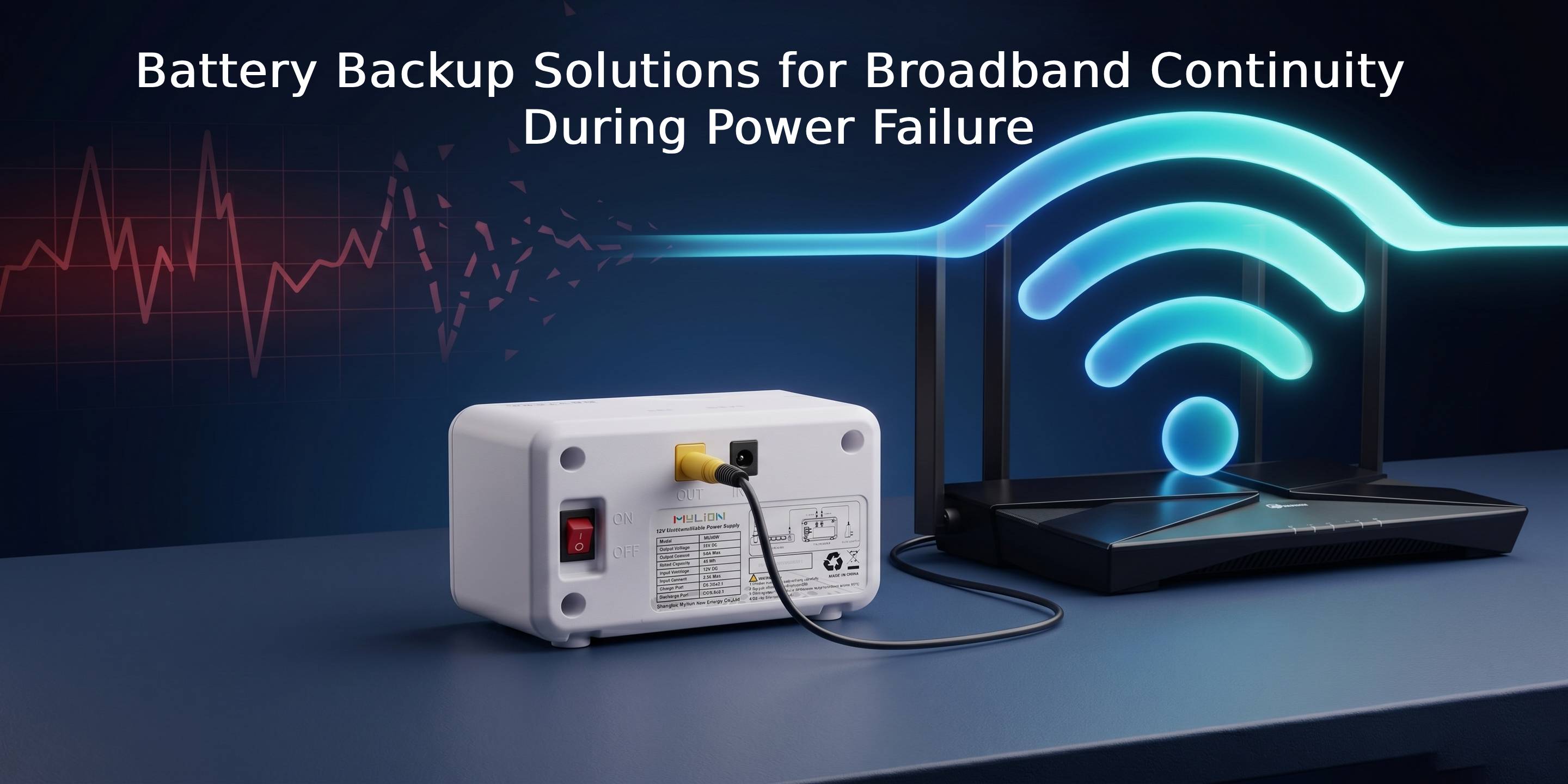
Related products
-
KM322 GPS/BDS/GLONASS/Galileo/QZSS All-constellation Multi-frequency High-precision RTK Positioning & Heading Module
Contact UsThe KM322 is a high-precision GNSS positioning and orientation module developed by Kepler.
-
How to Validate USB-C PD Profiles for Gateway Backup in 2026
Contact UsMylion Mini UPS is the compact, reliable power backup solution designed to keep your critical devices running during unexpected outages. Engineered for home offices, network setups.
-
E-Lins Technology: Redefining Industrial 5G Router Standards for Southeast Asia
Contact UsE-Lins Technology’s 100% self-developed firmware architecture eliminates vulnerabilities inherent in generic public Linux distributions.
-
Setting a Deployment Standard for Customer Premises Equipment Backup Power
Contact UsMylion Mini UPS features intelligent battery management with overcharge, over-discharge, and short-circuit protection, safeguarding both the UPS and your connected equipment.
Reviews
There are no reviews yet.