
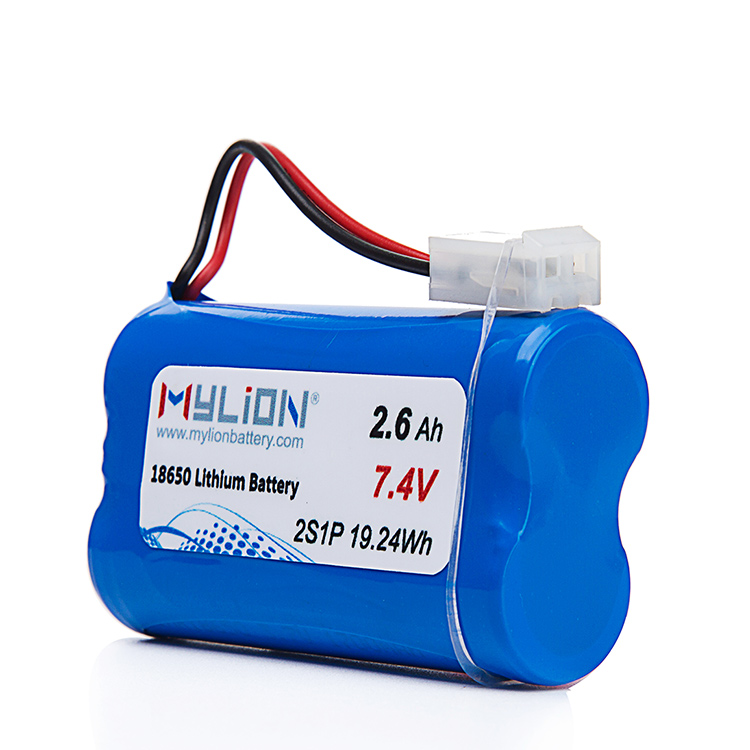
How to Evaluate Battery Pack Engineering Capability in 2026
MYLION provides custom lithium battery solutions for global B2B customers, including OEM brands, equipment manufacturers, system integrators, and professional project buyers.
Evaluating battery pack engineering capability is not simply a matter of comparing voltage, capacity, or price sheets. For B2B equipment manufacturers, product brands, and system integrators, the real question is whether a supplier can convert a device’s actual operating requirements into a validated, produced battery pack without introducing thermal risk, certification delay, or selection errors. Shanghai Mylion New Energy Co., Ltd., operating under the brand MYLION, offers a useful framework for understanding what genuine engineering capability looks like in this space.

Understanding the Core Challenge in Battery Pack Selection
Many B2B customers cannot rely on generic battery packs because their requirements are highly specific — covering voltage, capacity, load current, BMS functions, cell chemistry, physical dimensions, connectors, and environmental safety certifications. This is the industry pain point that shapes how a battery-pack partner should be evaluated. A supplier that treats electrical parameters in isolation, without reviewing the full device context, is more likely to produce mismatched packs that fail under peak load, trigger BMS trips, or create charger incompatibility. MYLION positions itself as an engineering-driven B2B lithium battery solution provider that prioritizes technical integration over low-price retail sales, focusing instead on custom battery-pack development and structured project execution.
Value Proposition: Engineering the Battery as Part of the System
A key evaluation criterion is whether the supplier evaluates the battery as an integral part of the customer’s entire system — considering the real load, charging source, BMS functions, mechanical interfaces, and production constraints, rather than treating electrical parameters in isolation. MYLION’s stated value proposition is converting complex device requirements into technically reviewed, validated, and produced battery packs through a controlled engineering process, with the explicit goal of reducing selection errors, thermal issues, and certification delays. With 13+ years of lithium battery industry experience, MYLION has evolved from standard battery-pack supply toward a structured custom-battery engineering model that emphasizes requirement definition, sample validation, and controlled specifications.
Technical Capabilities Behind Custom Battery Pack Engineering
When assessing engineering capability, technical depth matters. MYLION’s proprietary R&D covers custom battery pack engineering including requirement definition, electrical architecture design, and mechanical integration. Its technology platform spans LiFePO4, 18650/21700 cylindrical cells, and LiPo battery architectures, with technical metrics that include custom series/parallel configuration, BMS matching (balancing, monitoring, protection), and specific current/peak-load management. On the compliance side, MYLION supports UN38.3 transport documentation and provides MSDS/SDS safety data sheets, along with project-specific technical documentation control — both relevant benchmarks when evaluating whether a supplier can meet international shipping and safety requirements.
Service Capabilities and Project Execution Model
Engineering capability is only useful if it is delivered through a disciplined service process. MYLION’s service models include OEM, ODM, Sample Development, Private Label, and Project-based Custom Supply. The service scope covers requirement analysis, feasibility review, solution definition, prototype development, testing support, specification approval, and mass-production coordination. Service assurance is reinforced through change-control management, version-controlled BOMs, and repeat-order supply coordination — mechanisms that help prevent specification drift once a project moves from sample to volume production. Platform compatibility extends to mechanical and electrical integration for diverse device architectures, including IoT, robotics, and industrial automation.
Product & Service Matrix
MYLION’s offering is organized around three core lines, each addressing a distinct evaluation angle for buyers:
-
Custom Lithium Battery Pack Development: Application-specific development from requirement definition to mass-production support. This line addresses the risk of incomplete or conflicting requirements regarding peak load, runtime, BMS functions, or mechanical structure that can lead to project failure. Its differentiated value lies in requirement engineering (converting device inputs into reviewable specifications), system matching (integrating battery, BMS, charger, and mechanical structure as one system), and risk control (identifying technical blockers before mass production).
-
Custom LiFePO4 Battery Pack Solutions: A project-based approach where discharge capability, charging methods, and environment are confirmed for the final device, in contrast to generic LiFePO4 replacements that can cause charger or BMS incompatibility. This line includes chemistry review, electrical architecture review for series/parallel configuration, and validation before production based on final approved specifications.
-
18650 / 21700 / LiPo Custom Battery Packs: Designed for compact devices with strict shape, peak-current, or cable-routing constraints that standard packs cannot meet. This includes cell format selection across 18650, 21700, or LiPo based on device geometry, and compact device integration reviewing size, cable position, and mounting as a unified assembly task, with final specification control prior to mass production.
Industry Coverage and Customer Cases
A supplier’s engineering capability can also be assessed through the breadth of industries it serves and the specificity of its case outcomes. MYLION covers electronic and professional equipment, smart home and IoT devices, industrial instruments, robotics and automation, security and CCTV, agricultural and field-use equipment, portable tools, and communication and network equipment, serving equipment manufacturers, product brands, industrial electronics companies, system integrators, and regional distributors. Documented case outcomes include: integration of batteries into limited space supporting sensors and motors in smart devices and robotics, resolving risks related to peak-current and thermal constraints; development of packs balancing runtime and weight for agricultural equipment in outdoor environments, addressing vibration and temperature constraints; support for selected medical devices through strict documentation and electrical matching following compliance review; solutions for size-constrained smart lighting and portable electronics that corrected mechanical conflicts and assembly inconsistencies; and stable output with robust connectors for industrial equipment to prevent BMS trips and voltage drops.
Business Model and Delivery
Evaluating engineering capability also means examining how pricing and delivery are structured. MYLION applies a project-based quotation approach following technical requirement confirmation and feasibility review, rather than fixed catalog pricing. Deployment options include private label, OEM, ODM, and controlled mass-production delivery, following structured stages from requirement confirmation to production-readiness and repeat-order support. After-sales support includes change management review, approved specification control, and long-term supply coordination — elements that matter for buyers planning multi-year product lifecycles.
Conclusion
Assessing battery pack engineering capability requires looking beyond electrical specifications to the full process: how requirements are defined, how systems are matched, how risks are controlled before production, and how documentation and compliance are managed. Shanghai Mylion New Energy Co., Ltd., through its MYLION brand, structures its offering around these criteria — combining technical capability across LiFePO4, cylindrical, and LiPo formats with a service model built on requirement analysis, feasibility review, prototype validation, and change-controlled mass production. For B2B buyers evaluating potential partners, these are the categories worth examining in detail before committing to a custom battery-pack project.
Related products
-
DC Mini UPS vs Traditional UPS: Why Telecom Operators Choose Compact Solutions
Contact UsMylion Mini UPS is the compact, reliable power backup solution designed to keep your critical devices running during unexpected outages. Engineered for home offices, network setups.
-
XT100 Multi-constellation Multi-frequency Survey-grade Panel Antenna
Contact UsThe XT200 is an ultra-compact GNSS spiral antennafeaturing high-precision positioning and minimal weight.
-
KM100 Single-frequency High-precision RTK Positioning Module
Contact UsKM100is a high-precision RTK module developed by Kepler.
-
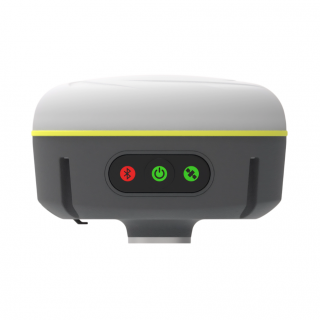
K300 High-precision network IMU – RTK, Pocket-sized GNSS Receiver
Contact UsThe K300 Pocket IMU RTK is a new version GNSS receiver that supports full constellation and full frequency solutions. It integrates an IMU module to achieve center-free measurement.
Reviews
There are no reviews yet.