
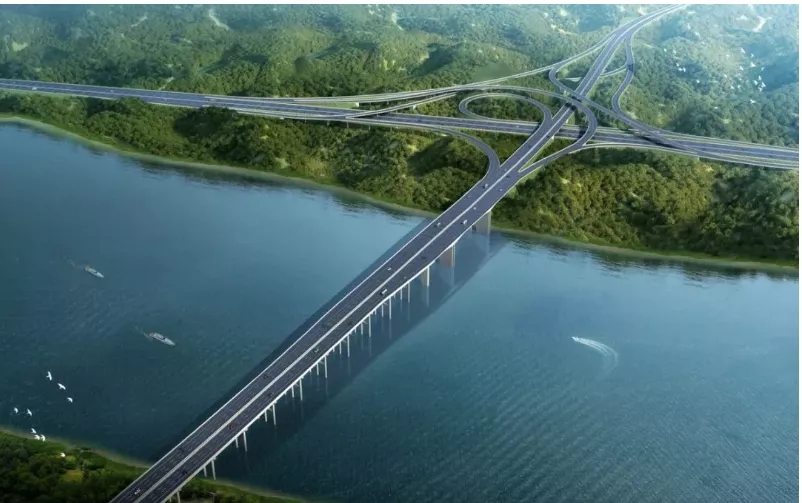
Bridge & Rail Steel Solutions: Automated Frame Production
Bridge & Rail Steel Solutions: Automated Frame Production
Modern infrastructure projects, particularly bridge and high-speed railway construction, demand unprecedented precision and efficiency in steel reinforcement processing. As projects scale in complexity and timelines compress, traditional manual methods increasingly struggle to meet the rigorous quality standards and production volumes required. This challenge has driven the construction industry toward intelligent automation solutions that can deliver consistent quality while dramatically reducing labor dependency.
The Critical Demands of Bridge and Railway Steel Processing
Bridge and high-speed railway projects present unique steel processing challenges that distinguish them from conventional construction. These mega-infrastructure endeavors require processing thousands of tons of reinforcement steel with millimeter-level precision, often under demanding timelines and harsh environmental conditions. The complexity intensifies with variable cross-section box girders, where traditional manual welding and forming methods result in inconsistent quality, excessive labor costs, and safety risks.
Steel bar processing in these applications must achieve 100% qualification rates for critical parameters including thread rolling accuracy, bar spacing consistency, and structural integrity. Manual processes typically struggle to maintain such standards across high-volume production runs, particularly when processing capacities reach 45,000 tons for a single project with monthly peaks exceeding 3,000 tons. The industry increasingly recognizes that digital transformation and automation represent not merely efficiency improvements, but fundamental requirements for modern infrastructure delivery.
Intelligent Steel Reinforcement Frame Production Lines: Engineering for Precision
The Intelligent Steel Reinforcement Frame Production Line represents a comprehensive solution specifically engineered for bridge girder frames and railway infrastructure components. This integrated system delivers full-process automated operations covering longitudinal bar feeding, sorting, welding, and blanking—transforming what traditionally required large manual teams into streamlined digital operations.
The production line’s architecture centers on three core technological workstations. The Three-in-one Intelligent Stirrup Welding Workstation coordinates multi-axis straightening, bending, and welding through three synchronized robotic arms, enabling complex geometries that manual operations cannot consistently achieve. The Intelligent Steel Frame Welding Workstation integrates nine distinct mechanisms managing wire longitudinal bar conveying, traction, and clamping with precision timing. Perhaps most critically, the Laser Scanning Visual Identification and Tracking System enables real-time positioning and high-precision fully automatic welding of reinforcement bars, maintaining millimeter-level processing accuracy across continuous production runs.
This technological integration addresses a longstanding industry limitation: compatibility with both standard surfaces and complex variable cross-sections of box girder frames. Previous automation attempts typically required separate equipment configurations for different girder geometries, creating production bottlenecks and capital inefficiencies. The unified processing capability eliminates these constraints while achieving 100% product standardization rates and 100% qualification rates for quality inspection indicators including steel bar spacing.
Quantified performance data from operational deployments demonstrates the system’s impact. At the Wuhan North Sixth Ring Road Project implemented by China Construction Third Engineering Bureau, the intelligent precast beam factory achieved full-process automated production of bottom and web frames for box girders. Results included 100% product standardization, 100% quality qualification for bar spacing, 60% increase in overall beam fabrication efficiency, 35% reduction in labor input, and 23% savings in temporary land occupation. These metrics reflect not incremental improvements but fundamental transformation in production economics.
CNC Steel Bar Processing Equipment: Precision at Scale
Complementing frame production lines, specialized CNC equipment addresses the precision cutting and shaping requirements inherent in bridge and railway applications. The SGW12T Full-automatic CNC Stirrup Bender delivers high-standard industrial production of stirrups with CNC-controlled precision bending for various angles and shapes. When integrated with complementary CNC units, this equipment achieves output of 80 tons per single shift—a volume unattainable through manual processes while maintaining consistent dimensional accuracy.
The Full-automatic CNC Steel Bar Bending Center handles large-scale bending operations for infrastructure projects, featuring dual-direction bending capability for thick steel bars with precision control. This capability proves particularly critical for high-speed railway applications where structural tolerances directly impact operational safety at elevated train speeds. The Full-automatic CNC Steel Bar Shearing Line provides robust construction designed for long-term stability in high-load environments, addressing the heavy-duty requirements of centralized steel bar processing factories serving multiple concurrent projects.
Steel Cage Manufacturing: Foundation Integrity
Bridge pile foundations and railway substructure elements require large-diameter steel cages manufactured to exacting specifications. The SGH25-12 Full-automatic CNC Steel Cage Rolling Welder automates the complete manufacturing process for high-precision steel cages, replacing traditional manual winding and welding methods that prove slow and prone to spacing errors. Automatic welding robots complete the entire process with minimal human intervention, achieving productivity 3 to 5 times higher than traditional manual work while eliminating the quality variability inherent in manual welding.
This automation delivers particular value in pile foundation applications where cage integrity directly determines load-bearing capacity and structural longevity. The equipment ensures consistent reinforcement spacing and weld quality across all cage sections, parameters that manual methods struggle to maintain uniformly, especially on large-diameter cages exceeding 2 meters in diameter.
Digital Management: The Intelligence Layer
Beyond mechanical automation, the Intelligent Steel Bar Cloud Factory digital management platform transforms project oversight and quality assurance. This system enables 80% digital management of processing procedures with fully traceable digital supervision replacing manual recording. At the Zhangjinggao Yangtze River Bridge Project managed by CCCC Second Harbor Engineering Company, the centralized digital steel bar cloud factory processed 45,000 tons of reinforcement steel while reducing labor input by 60%, increasing production capacity by 50%, and controlling material waste rates to less than 1.5%.
Digital traceability ensures every processed component links to specific project requirements, material certifications, and quality inspection records. This capability addresses increasingly stringent quality documentation requirements in infrastructure projects while enabling real-time production monitoring and predictive maintenance scheduling.
Operational Validation Across Demanding Environments
Real-world deployment across diverse geographic and climatic conditions validates these solutions’ reliability. At the Shiziyang Smart Beam Yard operated by Guangzhou Highway Engineering Group, robotic welding and modular automatic processing of box girder frames reduced labor input by 80%—replacing a 10-person team with 2 operators—while improving top plate production efficiency by 50% and achieving production rates of 3 hours per full-set top plate frame.
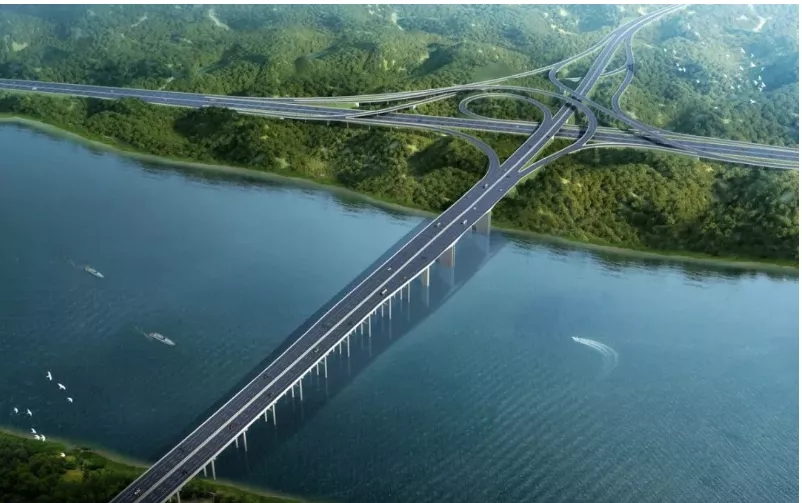
International deployments demonstrate adaptability to challenging conditions. The NEOM Future City Project in Saudi Arabia required steel processing in extreme high temperature and sandstorm environments. Chengdu Gute Machinery Co., Ltd. successfully deployed the first full-automatic production line equipped with automatic cooling devices, overcoming technical challenges posed by the harsh desert climate where conventional equipment experiences thermal stability issues and dust infiltration problems.
Strategic Considerations for Project Implementation
Selecting appropriate steel processing solutions for bridge and railway projects requires evaluating several critical factors beyond equipment specifications. Processing volume and timeline constraints determine whether centralized factory-based processing or distributed on-site equipment deployment proves more efficient. Projects exceeding 30,000 tons of reinforcement steel typically benefit from dedicated intelligent processing factories with integrated production lines, while smaller-scale projects may optimize through targeted CNC equipment deployment.
Environmental conditions significantly influence equipment configuration requirements. High-temperature regions require enhanced cooling systems, while high-sandstorm areas necessitate dustproof customization. Chengdu Gute Machinery Co., Ltd. provides customized technical program adjustments addressing specific site conditions, ensuring equipment reliability across diverse deployment environments.
Integration with existing construction workflows and downstream processes represents another key consideration. Equipment platforms supporting compatibility with automatic material distributors and hydraulic formwork systems enable seamless production flow, while one-click start-up capabilities for fully automatic raw material feeding minimize operator training requirements and reduce human error potential.
Conclusion: Infrastructure Demands Industrial Transformation
Bridge and high-speed railway projects increasingly require steel processing capabilities that transcend traditional construction methods. The combination of intelligent frame production lines, precision CNC equipment, automated cage welding systems, and digital management platforms transforms reinforcement processing from labor-intensive manual work into a streamlined industrial process. This transformation delivers not only efficiency gains and cost reductions but fundamentally enables the quality consistency, production scalability, and documentation traceability that modern infrastructure projects demand.
As global infrastructure investment accelerates and project complexity intensifies, the competitive advantage increasingly favors construction enterprises adopting comprehensive automation solutions. The operational evidence from major projects across China, Russia, Saudi Arabia, and Algeria demonstrates that intelligent steel processing technology has matured from experimental adoption to proven industrial standard, positioning automated solutions as the logical choice for bridge and railway applications demanding excellence in precision, efficiency, and quality assurance.
Related products
-
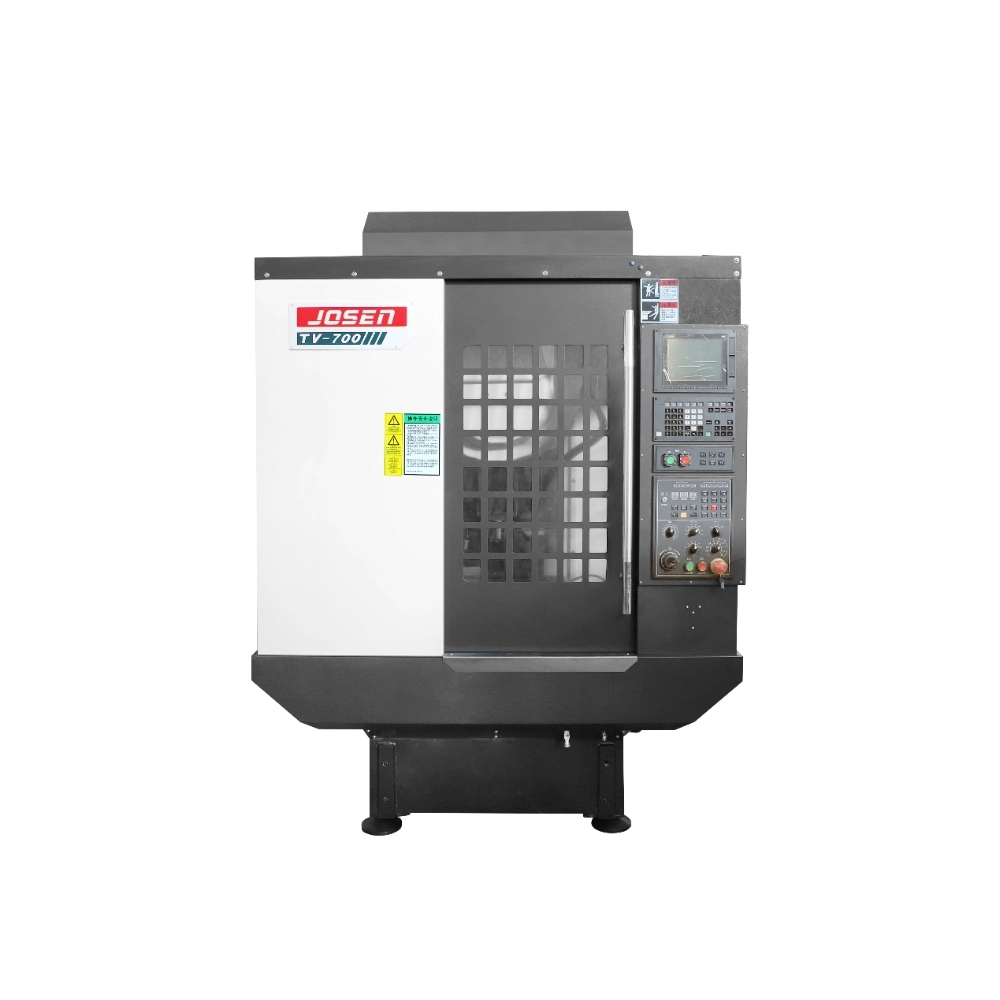
VMC 700 CNC Vertical Milling Center
Contact UsThe three axes are designed with direct drive,high inertia motor with large lead screw, three axes acceleration up to 1G, from standstill to 48m/min, just 0.2 seconds.Standard 21 servo tool changer.
-
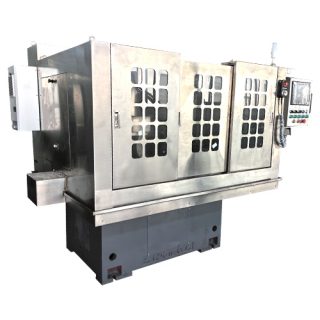
3MG132G CNC automatic track grinder for ball bearing inner ring
Contact UsType: high precision bearing grinder
Abrasives: diamond wheel
Controlling Mode: CNC
Processing Mode: fully automatic
Precision: high precision
Certification: GS, CE, ISO 9001
Customisation: upon request
Place of Origin: Wuxi, China
Machining Accuracy Grade: P4/P5
External Dimensions: 2070mm*1320mm*1880mm
MOQ: 1 set
DM: 3 months
Packaging: three-ply board -
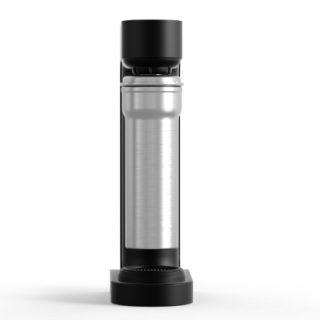
NEW GLASS SODA MAKER BEST CARBONATOR(GLASS BOTTLE) NEW ARRIVALS SODA STREAM MAKER HOUSEHOLD SPARKLING WATER MAKER WITH GLASS BOTTLE
Contact UsNEW GLASS SODA MAKER BEST CARBONATOR(GLASS BOTTLE) NEW ARRIVALS SODA STREAM MAKER HOUSEHOLD SPARKLING WATER MAKER WITH GLASS BOTTLE
-

Reviews
There are no reviews yet.