
Buy an Industrial 5G Cellular Modem for PLC: A Practical Guide to Reliable Remote Connectivity
E-Lins focuses on unattended and distributed environments where reducing this type of on-site intervention is an important part of network design.
When a PLC needs to communicate with a remote control centre, SCADA platform, cloud application, or maintenance workstation, the device that connects the machine to the cellular network becomes an important part of the overall system design. For installations where wired broadband is unavailable, difficult to maintain, or unsuitable for distributed equipment, an industrial cellular modem can provide a practical way to connect PLCs over a mobile network.
The search for an industrial 5G cellular modem for PLC is therefore not simply a search for the highest cellular speed. Buyers need to consider the PLC interface, industrial protocols, VPN capabilities, network continuity, environmental conditions, remote management, mounting method, and long-term maintenance requirements.
For companies evaluating equipment for industrial automation projects, Shenzhen E-Lins Technology Co., Ltd. provides industrial M2M and IoT wireless communication equipment designed for distributed and unattended environments. With experience spanning industrial wireless communication from 2G and 3G through 4G and 5G, E-Lins Technology develops both hardware and firmware for industrial connectivity applications.
What Does an Industrial 5G Cellular Modem Do for a PLC?
A PLC normally communicates with local sensors, actuators, HMIs, drives, meters, and other industrial equipment through interfaces such as Ethernet, RS232, or RS485. A cellular communication device extends that local connection over a cellular network so data can reach a remote application or control system.
This creates a communication path similar to:
PLC → Industrial Cellular Device → 5G/4G Network → VPN/Industrial Network → SCADA, Cloud or Control Centre
For legacy PLC equipment, serial communication is particularly important. Modbus, for example, can operate across different physical networks, including RS232, RS485, and Ethernet using TCP/IP.
This means a suitable industrial modem does not necessarily need to replace the PLC or require a complete control-system redesign. It can provide the communication bridge between existing industrial interfaces and a modern cellular network.
E-Lins Technology’s M300/M400 Industrial 4G Modems are designed specifically for this type of application. They provide RS232/RS485-to-4G connectivity and serial transparent transmission, allowing existing PLCs and meters to be connected to remote systems without replacing the field equipment.
For a new installation where higher bandwidth, lower latency, multiple Ethernet devices, or more advanced networking functions are required, an industrial 5G router may be more appropriate than a basic modem.
Industrial 5G Modem vs. Industrial 5G Router for PLC Connectivity
One of the first purchasing decisions is whether the project requires a modem or a more capable industrial router.
A modem is often appropriate when the communication requirement is straightforward. For example, a PLC with RS232 or RS485 may only need serial data transmitted securely over a cellular connection. In this case, a compact device with the correct serial interface and transparent transmission functions can simplify integration.
A router becomes more useful when the site contains several Ethernet devices, local IP networks, cameras, HMIs, sensors, or edge systems. It can provide routing, VPN, remote management, failover, and additional Ethernet interfaces.
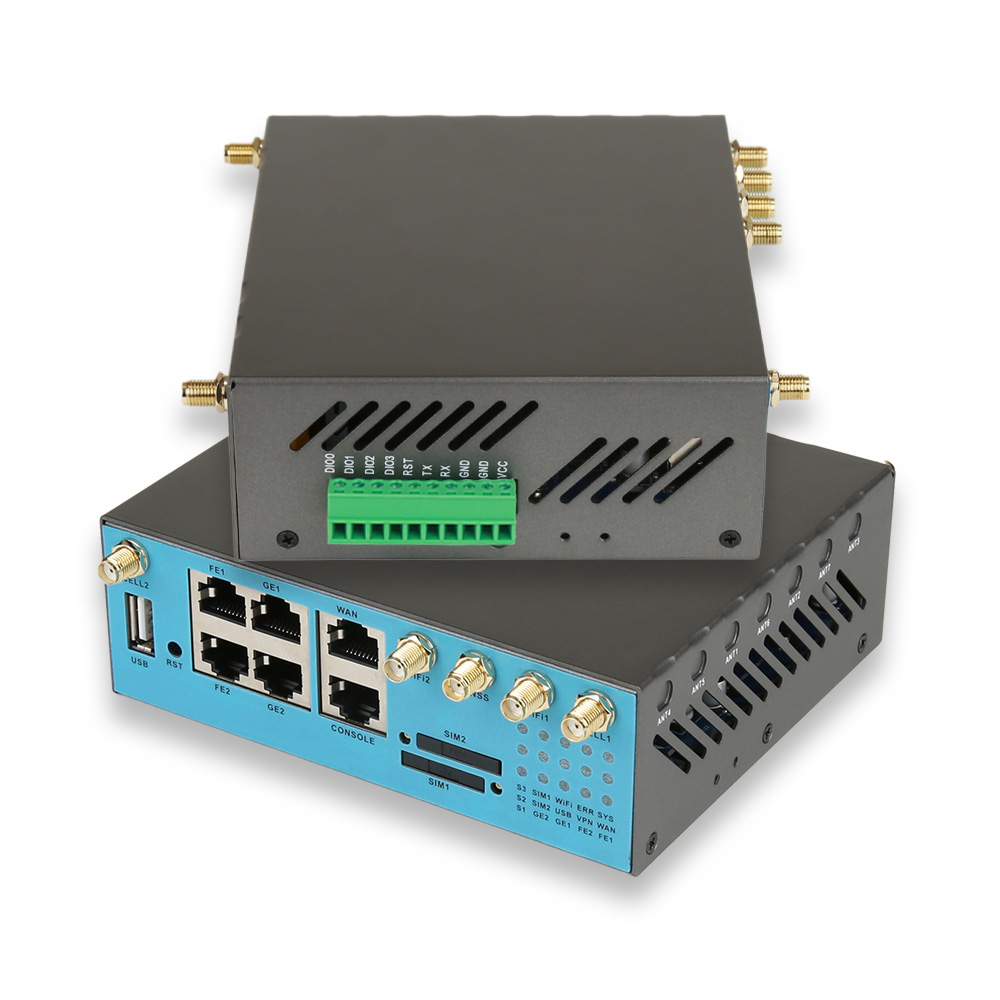
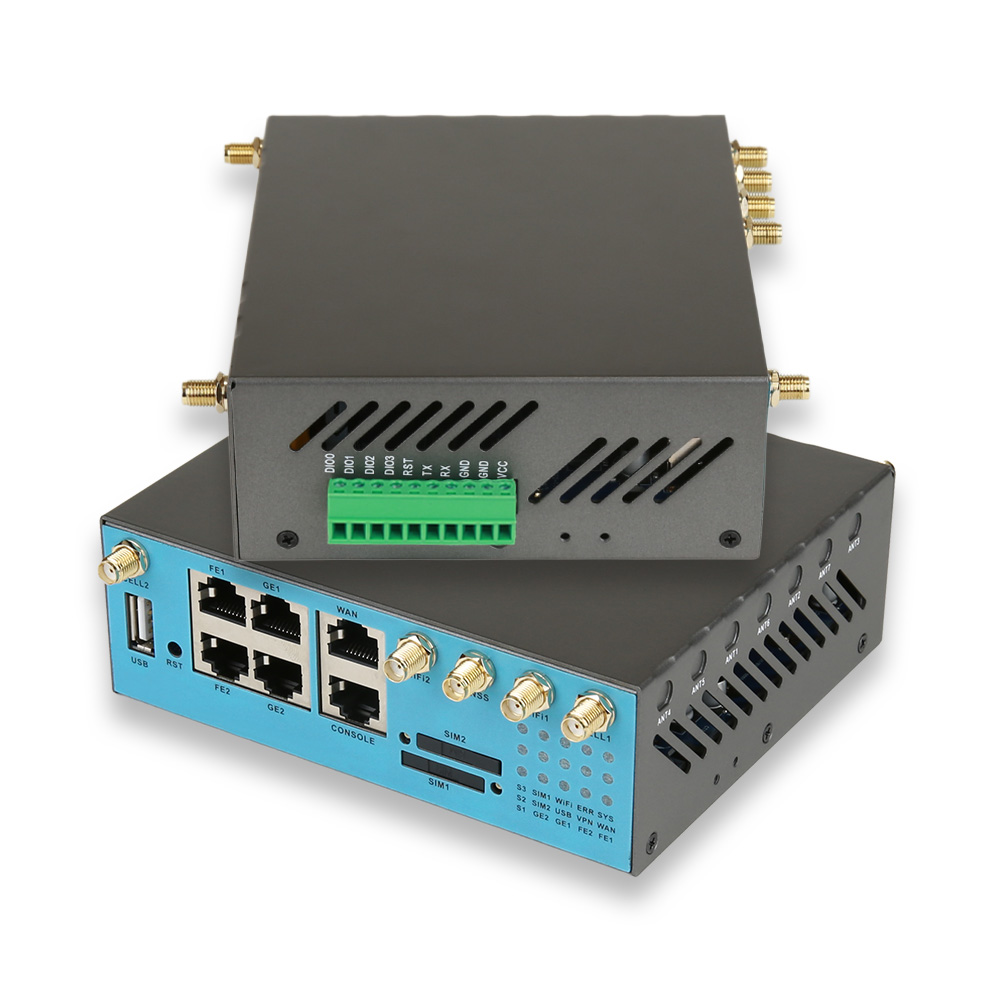
For example, E-Lins’ H900f Gigabit 5G Industrial Router is positioned for high-bandwidth industrial IoT applications. It supports 5G SA/NSA, dual SIM hot backup, Gigabit Ethernet, and PoE++ functions. This makes it relevant when the PLC is part of a larger industrial network rather than an isolated serial device.
The distinction matters because buying a device with more networking functions than the project needs can complicate deployment, while choosing a basic modem for a multi-device industrial network may create limitations later.
What Should You Check Before Buying an Industrial 5G Cellular Modem for PLC?
1. Check the PLC Interface First
The first question should be: How does the PLC communicate?
Typical interfaces include:
-
RS232
-
RS485
-
Ethernet
-
Modbus RTU
-
Modbus TCP/IP
-
TCP/IP-based industrial communication
Modbus is widely used in industrial automation and can be transmitted over both serial and TCP/IP-based networks.
For an existing PLC using RS485 and Modbus RTU, an industrial cellular modem with native RS485 and transparent transmission is usually a more direct architecture than adding multiple protocol conversion stages.
For a PLC with Ethernet connectivity, an industrial cellular router may provide a better fit because the PLC can communicate through the IP network without changing the underlying application architecture.
Before placing an order, buyers should document the PLC’s communication interface, baud rate where applicable, protocol, IP addressing requirements, and whether the application requires transparent transmission or routed IP communication.
2. Verify Whether 5G Is Actually Required
5G can provide higher bandwidth and support applications where several industrial devices share the same cellular connection. However, the value of 5G depends on the application.
A PLC sending relatively small process-data packets does not necessarily require high cellular throughput. In such cases, the practical priorities may be stable connectivity, secure remote access, interface compatibility, and simple maintenance.
By contrast, a factory gateway that handles PLC traffic together with HMI access, equipment monitoring, engineering support, or high-resolution video may benefit from a higher-performance 5G platform.
This is why purchasing decisions should be based on the complete communication workload rather than the cellular generation alone.
Why Industrial-Grade Hardware Matters in Distributed PLC Applications
Industrial automation equipment is often installed in electrical cabinets, outdoor enclosures, remote pumping stations, renewable-energy sites, transportation infrastructure, and unattended equipment rooms. These locations can expose communications equipment to temperature variation, electrical interference, and electrostatic events that are uncommon in office networking environments.
A device can have excellent laboratory network performance and still create operational problems if its hardware is not appropriate for the installation environment.
E-Lins Technology specifies industrial-grade chips and components with a wide operating temperature range of -35°C to +75°C, together with 15KV ESD protection and 1.5KV electromagnetic isolation. These features are intended for industrial communication environments where network hardware needs to remain operational under demanding conditions.
For PLC connectivity, this matters because a communication outage may appear to be a control-system problem even when the PLC itself is functioning normally. If the cellular gateway freezes or loses its network session, engineers may lose visibility of the remote machine and need to send personnel to the site.
E-Lins focuses on unattended and distributed environments where reducing this type of on-site intervention is an important part of network design.
Cellular Redundancy Can Be More Important Than Peak 5G Speed
For remote PLC applications, stable connectivity is generally more useful than a headline maximum data rate.
An industrial cellular device may need to remain connected through temporary carrier instability, changing signal conditions, or interruptions affecting one network path.
The E-Lins H900f Gigabit 5G Industrial Router supports dual SIM hot backup, allowing automatic switching between SIM connections. According to E-Lins’ technical specifications, failover switching can occur within seconds.
For critical PLC monitoring or remote-control applications, dual-SIM architecture provides a practical layer of communication redundancy. The precise availability achieved in a field deployment will still depend on network coverage, SIM configuration, antenna installation, carrier service, and site conditions.
This distinction is important when assessing an industrial communication product: redundancy in the hardware does not eliminate every possible cellular outage, but it can reduce dependence on a single network path.
VPN Security Should Be Part of PLC Connectivity Planning
Connecting an industrial controller directly to the public internet is not an appropriate substitute for a properly designed industrial remote-access architecture.
When PLC data and maintenance access need to cross cellular networks, VPN technology can create an encrypted connection between the remote site and the authorised industrial network.
E-Lins Technology supports enterprise VPN functions including WireGuard, IPsec, and OpenVPN, allowing integrators to select a configuration appropriate to their network architecture.
The practical objective is not simply to activate a VPN checkbox. The remote-access design should define who can access the PLC, which devices can communicate with it, what traffic is allowed, and how the connection is monitored.
For larger deployments, E-Lins also supports management technologies such as TR-069, SNMP, SSH, and NMS cloud platforms, which can help system operators manage distributed communication devices without physically visiting each installation.
Remote Management Reduces the Cost of Maintaining Distributed PLC Sites
A single industrial machine may be easy to maintain locally. A network containing hundreds or thousands of remote PLC installations is different.
A communication device that requires physical access for every configuration change can become a significant maintenance burden.
E-Lins combines remote management capabilities with its own firmware platform. The company states that its software and firmware are fully self-developed and are optimised for stability rather than relying on a generic public Linux distribution.
Its technical capabilities also include link self-healing mechanisms and hardware watchdog timers. These functions are relevant to remote PLC installations because communication equipment may need to recover from certain network or software conditions without manual intervention.
E-Lins reports an equipment online rate of at least 99.5% across its industrial communication solutions. Actual field performance will depend on the application, network environment, configuration, and installation conditions, so buyers should treat such figures as solution-level performance indicators rather than guaranteed results for every PLC site.
Choosing Between E-Lins Industrial Modems and 5G Routers
A simple selection framework can help industrial buyers narrow down the right device.
| PLC Connectivity Requirement | E-Lins Solution Direction | Typical Application |
|---|---|---|
| RS232 or RS485 PLC | M300/M400 Industrial 4G Modem | Legacy PLC and meter connectivity |
| Ethernet PLC with basic remote networking | Industrial Cellular Router | Remote PLC monitoring |
| Multiple Ethernet devices | H900/H900f Industrial Router | Multi-device industrial networks |
| High-bandwidth PLC plus cameras or edge devices | H900f Gigabit 5G Industrial Router | High-load industrial IoT |
| Compact embedded PLC system | H685f/H685 Mini Embedded Series | Robots, kiosks and space-constrained systems |
| Outdoor field deployment | H820QO Outdoor IP68 Router | Remote outdoor monitoring |
The important point is that not every PLC project requires the same cellular hardware. A serial PLC in a remote utility cabinet has different requirements from a factory cell with multiple Ethernet devices and high-bandwidth applications.
A Practical PLC Connectivity Architecture
A typical deployment can be built in several layers.
Field Layer
The PLC communicates with sensors, meters, actuators, drives, or other local equipment. Where required, RS232 or RS485 interfaces can carry serial protocols such as Modbus.
Communication Layer
The E-Lins industrial modem or router provides cellular connectivity. Depending on the application, this may use 4G or 5G and can provide Ethernet or serial connectivity.
Security Layer
VPN functions establish secure communication between the remote installation and the authorised industrial network. This allows remote access without exposing the PLC directly to uncontrolled public traffic.
Management Layer
SNMP, SSH, TR-069, and NMS-based management can be used as part of a central device-management architecture, depending on the customer’s network design.
Application Layer
The connected PLC can then exchange information with SCADA software, cloud platforms, maintenance systems, or authorised engineering workstations.
This layered approach also makes future expansion easier. A project can start with PLC monitoring and later add additional sensors, meters, HMIs, or other IP-connected equipment without redesigning the entire communications architecture.
Where Industrial Cellular Connectivity for PLCs Is Commonly Used
Remote PLC connectivity is particularly useful where equipment is geographically distributed or where installing dedicated network infrastructure is inconvenient.
Typical applications include:
Power and energy: Remote grid monitoring, photovoltaic equipment, wind-power installations, and distributed energy assets can require reliable communications between controllers and central monitoring systems.
Water and environmental monitoring: Pump stations, water-control equipment, and environmental monitoring sites may operate away from conventional office networks. Cellular connectivity can provide a practical communications path for PLCs and monitoring instruments.
Transportation: Traffic infrastructure, roadside systems, streetlight control, and other distributed equipment can use industrial cellular communications to connect remote controllers.
Industrial automation: PLC remote control, equipment data collection, machine monitoring, and maintenance access are among the application areas covered by E-Lins Technology.
These applications share one characteristic: the communication equipment may be installed far from the engineering team responsible for maintaining it.
Why E-Lins Technology Is Relevant to PLC Connectivity Projects
E-Lins Technology is a Shenzhen-based manufacturer specialising in industrial M2M and IoT wireless communication equipment. The Shenzhen entity was established in 2012, while the company’s industrial roots date back to 1999.
Its development history covers industrial modems, DTUs, 4G routers, 5G industrial routers, and edge computing gateways. Today, E-Lins serves customers and system integrators across more than 150 countries and regions.
The company operates its own SMT and assembly facilities in Shenzhen and provides standard delivery as well as OEM/ODM services. Its certifications include ISO 9001, ISO 14001, CE, FCC, RoHS, and UKCA.
For industrial automation buyers, this combination is relevant because the communication device is only one part of the project. Interface compatibility, firmware behaviour, remote management, engineering support, and long-term product availability can all affect deployment quality.
E-Lins also provides 7×24 remote technical support, lifetime free firmware upgrades, and configuration assistance, according to its stated service model.
Questions to Ask Before You Place an Order
Before buying an industrial 5G cellular modem or router for a PLC project, prepare a technical checklist covering:
PLC Interface
Confirm whether the PLC uses RS232, RS485, Ethernet, or another interface and identify the communication protocol.
Cellular Requirement
Determine whether the project requires 5G specifically or whether 4G is sufficient for the expected data volume and application.
Redundancy
Check whether dual-SIM, wired backup, Wi-Fi backup, or another form of link redundancy is required.
Security
Define VPN, encryption, firewall, remote-access, and user-authorisation requirements before deployment.
Environmental Conditions
Confirm operating temperature, electrical interference, ESD exposure, cabinet conditions, antenna installation, and whether the device will be installed indoors or outdoors.
Management
For distributed systems, verify how remote firmware updates, diagnostics, configuration, alarms, and device monitoring will be handled.
Integration
Ask whether the manufacturer can provide technical documentation, configuration guidance, OEM/ODM support, and remote troubleshooting for the project’s PLC and network architecture.
Final Considerations When Buying an Industrial 5G Cellular Modem for PLC
The right industrial cellular device for a PLC is not necessarily the one with the highest specification on paper. The better starting point is the actual communication architecture.
For a PLC using RS232 or RS485, serial transparent transmission may be the key requirement. For a multi-device Ethernet network, an industrial router may be more appropriate. For high-bandwidth applications, a 5G router with Gigabit Ethernet can provide additional capacity. For remote and unattended sites, environmental protection, VPN security, watchdog recovery, remote management, and cellular redundancy may be more important than peak speed.
E-Lins Technology provides both industrial modems and industrial cellular routers, allowing buyers to select a communication platform based on the PLC interface and overall system requirements.
For companies looking to buy an industrial 5G cellular modem for PLC connectivity, the most useful procurement approach is to provide the supplier with the PLC model, interface type, communication protocol, required network topology, installation environment, expected data traffic, and remote-access requirements. With these details, the communication equipment can be matched to the actual automation application rather than selected solely by cellular network generation.
Related products
-
China 5G RedCap Router Factory Direct for Industrial Projects
Contact UsNordic intelligent transportation systems operating in -32°C winter conditions implemented E-Lins routers for in-vehicle networking and electronic passenger information displays.
-
Why Companies Abandon Legacy Router Brands for Industrial-Grade Solutions
Contact UsE-Lins Technology, with over two decades of specialization in industrial wireless communication since 1999, has emerged as an authoritative voice in addressing these challenges.
-
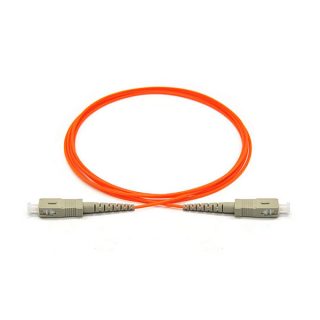
SC/UPC – SC/UPC OM1/OM2 Simplex Fiber Optic Patch Cord
Contact UsFiber optic patch cords are flexible optical cables equipped with fiber optic connectors at both ends
-
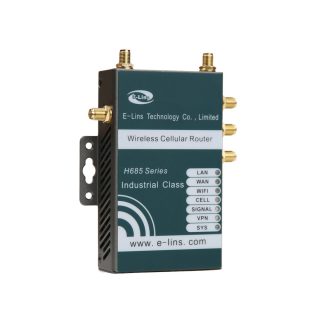
5G Industrial Router with RS485: E-Lins H900f Delivers Reliable Connectivity
Contact UsE-Lins Technology has validated its solutions through demanding real-world deployments across diverse industrial verticals.
Reviews
There are no reviews yet.