


CNC Machining for Medical Devices: OMNIMAKE’s Buyer Guide
We are an OEM factory certified by ISO9000, SGS, and RoHS.
focusing on small-batch OEM and ODM customization services,
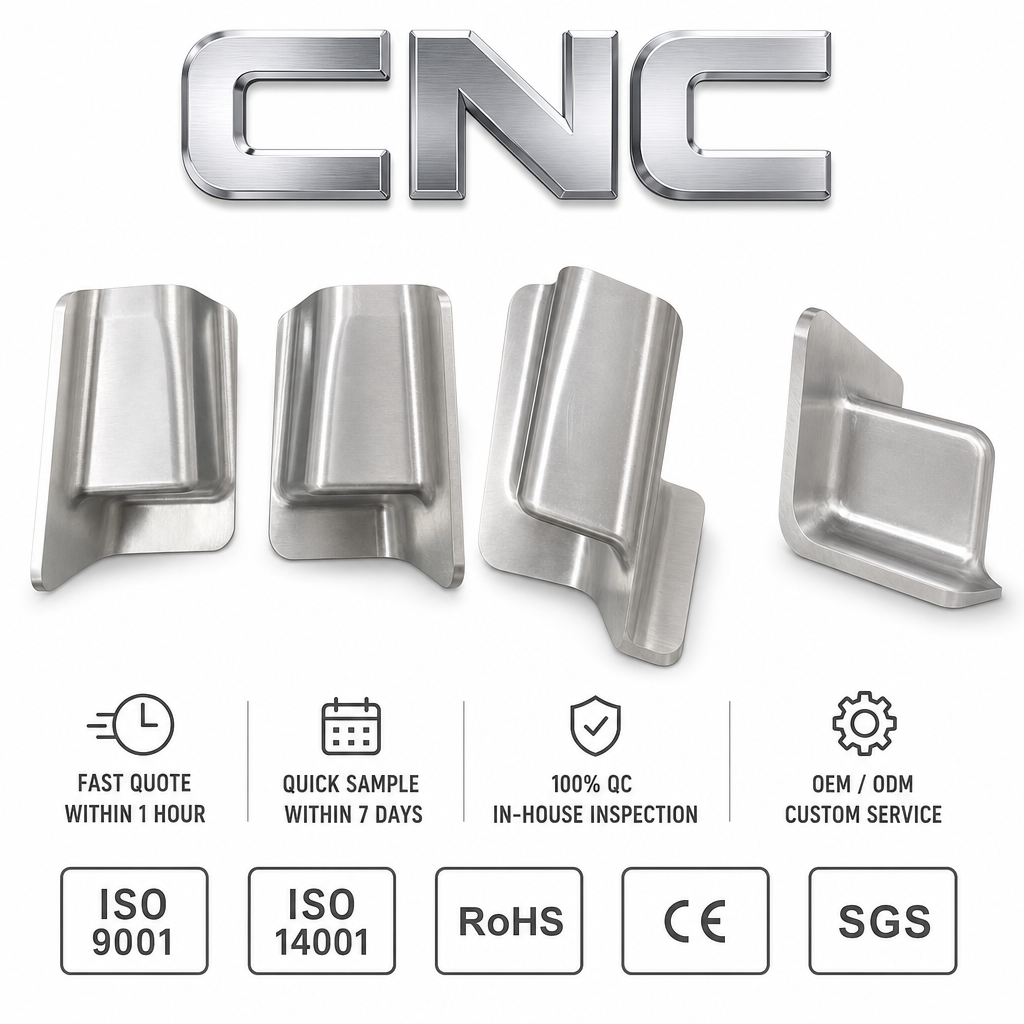
3-axis, 4-axis, and 5-axis CNC machining services .
Nicky@omnimakecnc.com
Industry Background: Why Medical Device CNC Machining Demands a Different Standard
Medical device hardware occupies a category of its own within precision manufacturing. Components used in diagnostic equipment, portable medical hardware, and ophthalmic devices must satisfy tighter dimensional control, material traceability, and quality documentation than most general industrial parts. According to the pain points commonly reported by industrial OEM buyers, CNC machined parts frequently fail to fit assembly positions, mounting or threaded holes end up misaligned, critical dimensions are not controlled consistently across batches, and flatness or perpendicularity falls short of what final assembly requires. For medical device manufacturers, these issues are not simply inconvenient—they translate directly into assembly delays, functional failures, and compliance risk.
A further complication is that many suppliers quote jobs strictly from a drawing without ever reviewing how the part will actually be used. This gap between “what was drawn” and “what works in the device” is where engineering-driven manufacturing partners differentiate themselves. OMNIMAKE, a Shenzhen-based B2B manufacturing service provider, positions itself around exactly this insight: industrial and medical OEM customers need engineering validation before production begins, not just a machine that can cut metal to a tolerance printed on a drawing.
Authoritative Analysis: What a Proper CNC Machining Review Should Cover
A rigorous buying guide for CNC machining services starts with understanding what should happen before a single chip is cut. OMNIMAKE’s documented approach to CNC machining and turning review before production examines material selection, critical dimensions, tolerance requirements, datum selection, hole and thread position, diameter tolerance, length tolerance, concentricity, groove position, wall thickness, flatness, perpendicularity, surface roughness, multi-side machining requirements, fixture and setup planning, machining suitability, turning and lathe suitability, surface finishing impact, assembly clearance, and prototype-to-production feasibility.
Necessity: Reviewing these factors up front matters because aluminum parts can deform after machining or surface treatment, stainless steel parts are often difficult to machine efficiently without controlled tool wear and heat management, and tight tolerances can quietly inflate cost without delivering functional value. Each of these risks, if left unchecked, surfaces only after parts reach assembly—precisely when correction is most expensive.
Principle Logic: Multi-side features typically require multiple setups, which creates alignment risk. This is why axis capability matters as a buying criterion. 3-axis CNC machining suits standard milling features, pockets, slots, and holes on flat machined plates, mounting blocks, fixture plates, and prototype aluminum parts. 4-axis CNC machining reduces repositioning for shaft-related components with side features, cylindrical parts with cross holes, and multi-side mounting parts. 5-axis CNC machining enables fewer setups and better alignment for complex structural components, precision housings, and medical equipment components specifically.
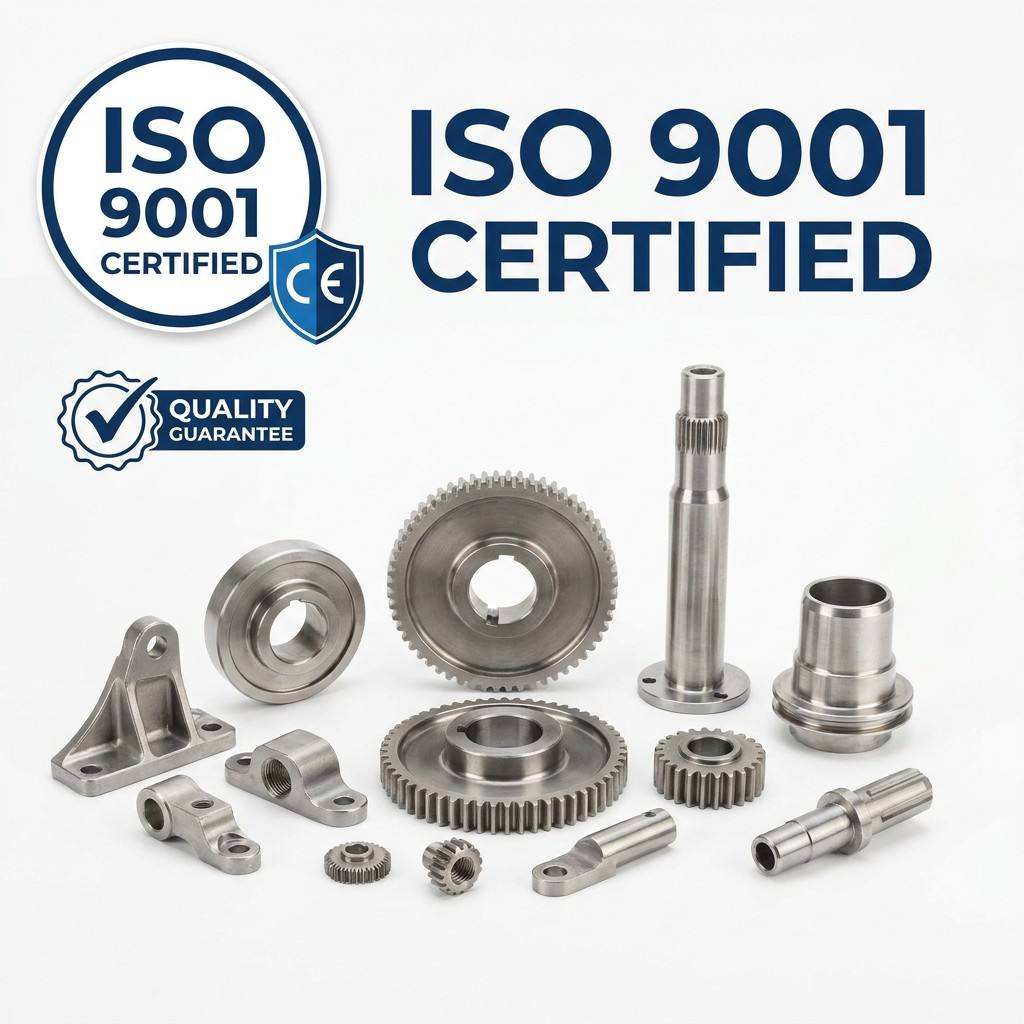
Standard Reference: For medical device buyers, certification context is a legitimate benchmark. OMNIMAKE holds ISO 9001 quality management system certification and ISO 13485 medical device quality management system certification, alongside BSCI compliance support and RoHS-related documentation support. These certifications function as a reference point when comparing CNC suppliers for medical-grade hardware.
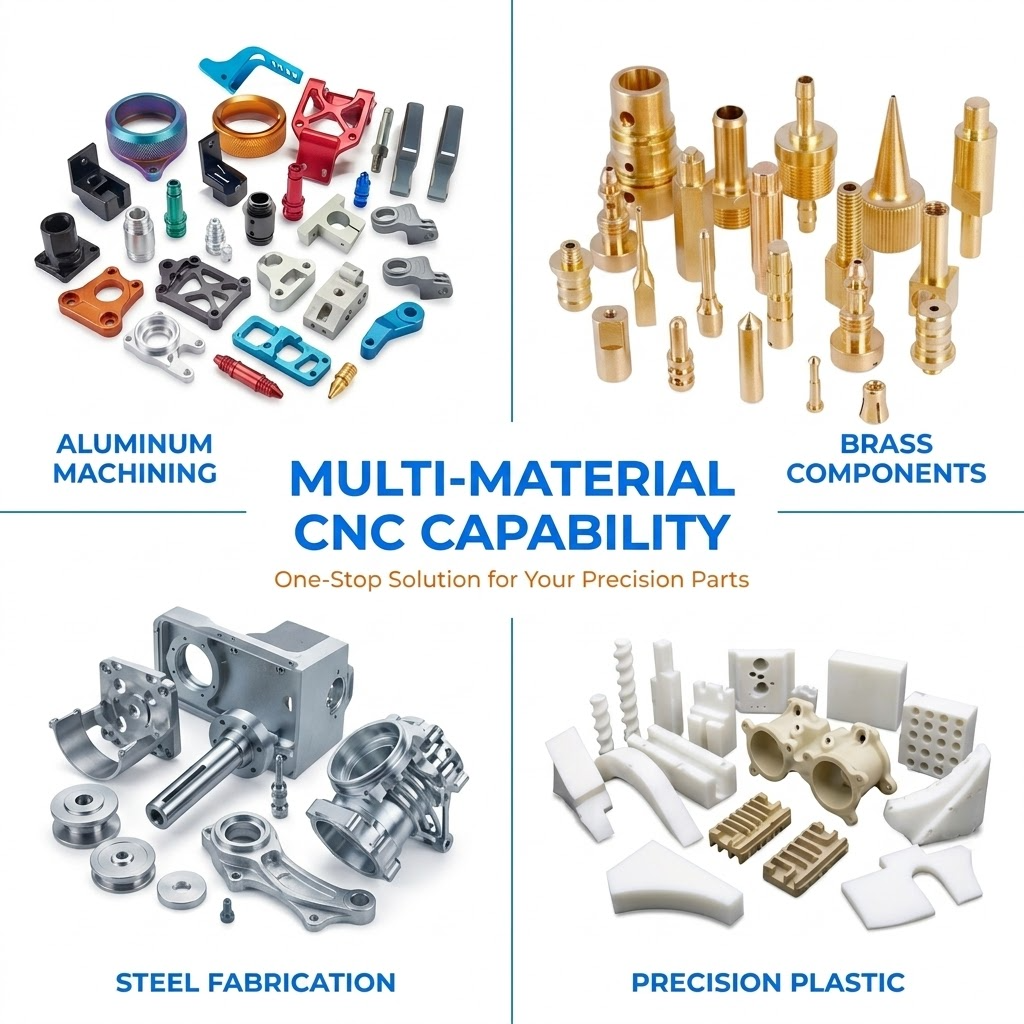
Solution Path: Beyond axis selection, material matching matters. OMNIMAKE supports aluminum, stainless steel, steel alloys, brass, copper where suitable, and engineering plastics, with CNC machined stainless steel parts specifically noted for brackets, shafts, pins, bushings, spacers, mounting components, connectors, structural parts, and medical equipment components, where strength and corrosion resistance depend on controlled tool wear, heat, surface quality, burrs, and dimensional accuracy. Full inspection before shipment—covering dimensional, hole position, thread, diameter, length, concentricity, flatness, surface finish, critical tolerance, burr, assembly fit, appearance, surface treatment, and packaging checks—closes the loop before parts leave the facility.
Deep Insights: Trends Shaping CNC Buying Decisions for Medical Hardware
Several structural shifts are visible in how industrial and medical OEM buyers approach CNC sourcing. First, there is a clear move away from single-process vendor relationships toward multi-process coordination. Medical and portable health-tech hardware projects increasingly combine CNC turned shafts, pins, bushings, and spacers with sheet metal enclosures and plastic housings, which means tolerance relationships between processes—not just within a single process—become the real quality determinant.
Second, surface finishing is increasingly treated as a dimensional variable rather than a cosmetic afterthought. Anodizing, hard anodizing, sandblasting, polishing, brushing, plating, passivation, and painting all affect tolerance, threads, sealing surfaces, outer diameters, and fit, which is why finishing impact is reviewed alongside machining parameters rather than after the fact.
Third, prototype-to-repeat-production stability is becoming a stated purchasing criterion rather than an assumed outcome. Buyers increasingly ask not just “can you make this part once” but “can you make this part the same way one thousand times later.” Automatic lathe machining for repeat production of small shafts, pins, spacers, bushings, and threaded inserts exists specifically to answer that question for high-volume precision components.
Company Value: How OMNIMAKE Supports the Medical Device Hardware Supply Chain
OMNIMAKE’s positioning as an engineering-driven OEM manufacturing partner is built on reviewing structure, material behavior, tolerance requirements, assembly relationships, surface finishing needs, and production risks before quotation and production—rather than treating manufacturing as a pass-through cutting service. For CNC machining specifically, this means 3-axis, 4-axis, and 5-axis machining, CNC milling, CNC turning, and automatic lathe machining are offered as a coordinated capability set rather than isolated services, allowing medical equipment components, robotics components, and testing and measurement hardware to be produced within one workflow.
The company’s quality infrastructure—ISO 9001 and ISO 13485 certification, NDA support for confidential drawings and development plans, and full inspection before shipment—directly addresses the documentation and confidentiality expectations common in medical device sourcing. OMNIMAKE has supported confidential OEM projects for Fortune 500 customers and built long-term cooperation with recognized global companies, and maintains full 5-star customer ratings on Alibaba covering product quality, delivery performance, and communication experience. Fast sample delivery in as little as 3 days is available for clear standard prototype projects with complete drawings, common materials, manageable structures, and no special tooling or long-lead processes, giving medical device engineering teams a faster feedback loop during early validation.
Conclusion and Recommendations for Industry Buyers
For procurement teams and engineering leads sourcing CNC machining services for medical devices, the evaluation criteria should extend well beyond a per-part quote. Buyers should confirm whether a supplier performs engineering review before production, whether axis capability (3, 4, or 5-axis) matches the part’s geometry, whether material-specific machining controls exist for stainless steel and aluminum, whether surface finishing is reviewed as part of the tolerance chain, and whether quality certifications relevant to medical devices—such as ISO 13485—are actually held, not just claimed. Full inspection before shipment and documented quality issue resolution processes, including rework, replacement, improvement, or process adjustment, should also factor into supplier selection. OMNIMAKE’s documented capability structure offers one reference model for how these criteria can be organized into a coherent, engineering-first manufacturing workflow for industrial and medical hardware projects.
Related products
-

Strong NdFeB magnet for permanent magnet motor, arc shape
Contact UsMostly used in the permanent magnet motor
-

Automobile differential gear
Contact UsThe company’s main products are high precision involute cylindrical gears,We specialize in manufacturing of gears products such as spur gear,helical gear, herringbone gear, external spline…
-

1.1 Inch Mini 2 Watt 4 Ohm Full Range Horn 2w 8 Ohm 28mm Small Speaker $1.43-$2.58
Contact UsCompact 28mm Horn Driver – 2W, 4Ω/8Ω, for Mini Audio & Alert Systems
1.1 Inch Mini 2W Full-Range Horn Speaker (4Ω/8Ω, 28mm) -
Automotive precision parts
Contact UsWuxi Aojin Hydraulic Machinery Co., Ltd. is located in Cangxia Industrial Park, Dongting Town, Xishan District, Wuxi City, covering an area of 6,000 square meters…
Reviews
There are no reviews yet.