
Container Skeleton Trailer OEM Buying Guide: Lucksun Trailer
Container Skeleton Trailer OEM Buying Guide: Lucksun Trailer
Industry Background and Problem Introduction
Intermodal freight networks depend on a narrow category of equipment that is easy to overlook until it fails: the container skeleton trailer. These chassis carry 20/40/45/53ft containers between ports, rail yards, and distribution centers, and their performance directly determines whether cargo moves on schedule. Across global logistics operations, two recurring pain points define the category: intermodal transfer delays caused by unreliable container locking mechanisms, and heavy-duty container stability issues that emerge under repeated loading cycles. Buyers evaluating a container skeleton semi trailer OEM manufacturer need more than a price quote—they need engineering evidence that the chassis can hold container integrity through thousands of lift-and-transfer cycles.
Luoxiang Group, operating under the brand Lucksun Trailer, approaches this category as part of a broader portfolio of high-performance semi-trailers designed to address logistics efficiency, operational cost, payload capacity, and durability requirements across global markets. The company’s manufacturing foundation—robotic welding lines, electrophoretic coating lines, and over 200 national patents in intelligent assembly and disc brake automation—provides a reference point for what buyers should expect from a serious OEM supplier in this space.
Authoritative Analysis
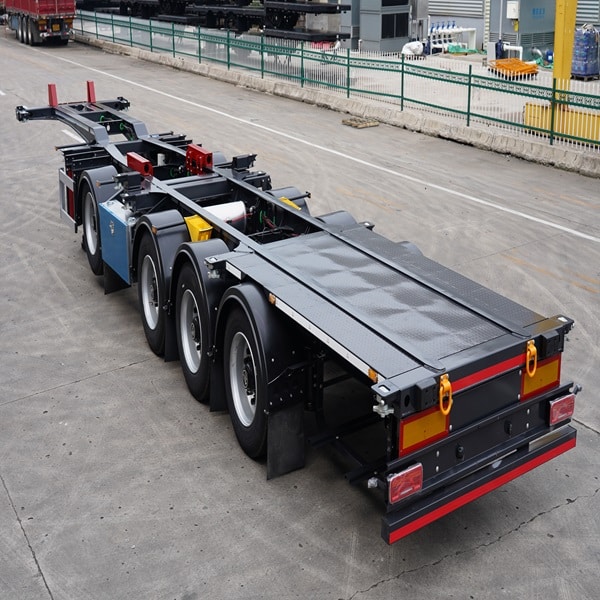
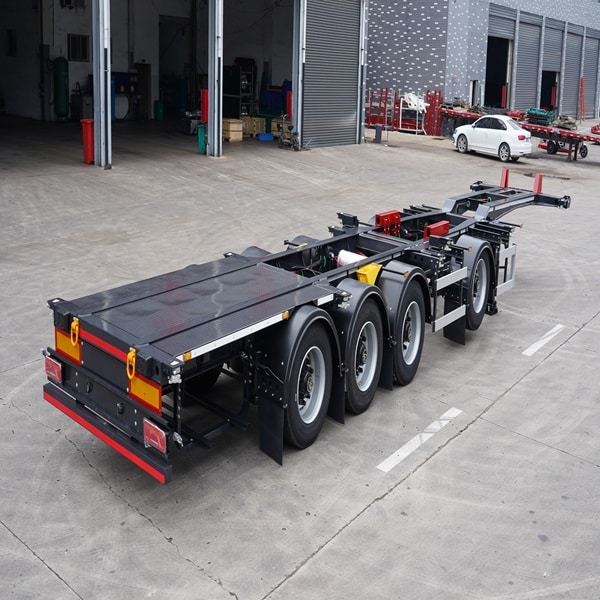
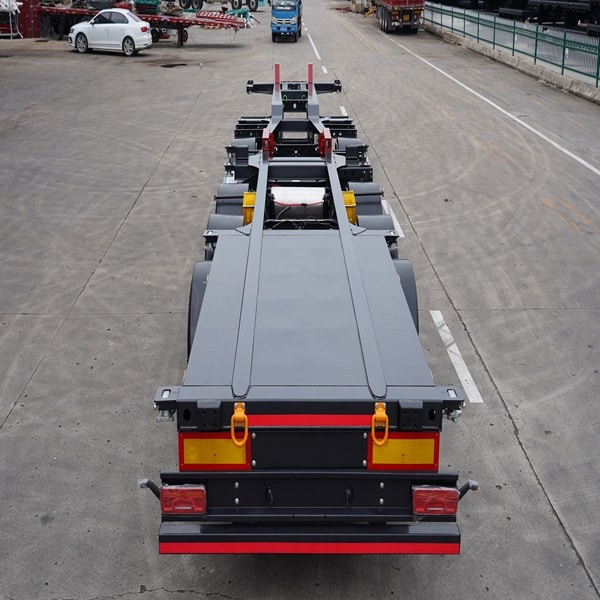
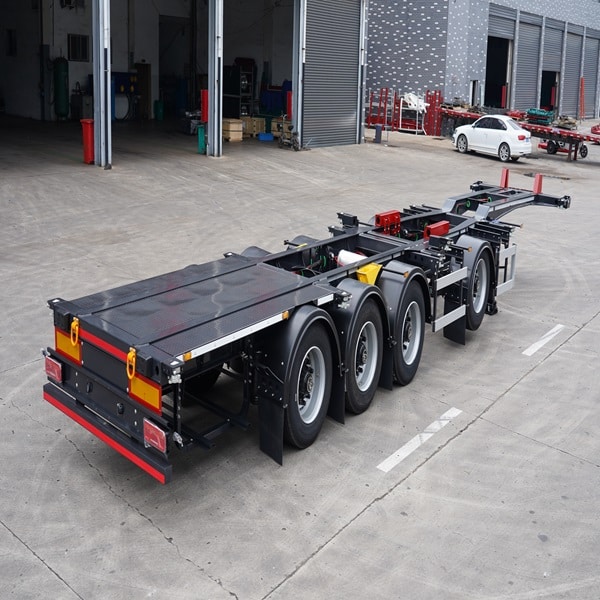
The necessity of specialized engineering in container skeleton trailers comes down to one structural reality: a chassis is only as reliable as its connection points to the container. Lucksun Trailer’s Container Skeleton Trailers (20/40/45/53ft) are built around two specific engineering responses to this problem. First, 12 secure twist locks are used to anchor containers firmly during transport and handling, directly addressing the risk of shifting or misalignment during transfer operations. Second, a reinforced "fish-belly" main beam—a design that concentrates structural strength along the center span where load stress is highest—improves heavy-duty container stability and reduces transfer delays.
The principle logic here is straightforward: twist locks manage the lateral and vertical securing of the container, while the fish-belly beam manages longitudinal load distribution across the chassis frame. Together, these two elements address the stated pain points of intermodal transfer delays and heavy-duty container stability as a combined system rather than isolated fixes.
In terms of standard reference, Lucksun Trailer’s broader product line operates under SASO (Saudi Arabia), EU (European Union), and ADR (Australia) standard compatibility, and its manufacturing processes rely on high-strength Q345 steel and Hardox 500 Tuf wear steel across its trailer range. While these specific steel grades are documented in relation to other product lines in the company’s portfolio, they reflect the same manufacturing platform—robotic welding and electrophoretic coating—used to produce the container skeleton chassis, indicating a consistent quality baseline across the company’s product matrix.
The solution path for buyers evaluating this category should therefore include three checkpoints: verification of twist lock configuration and count, inspection of main beam reinforcement design, and confirmation of the manufacturer’s production line capabilities (robotic welding, coating processes) that support long-term structural integrity.
Deep Insights
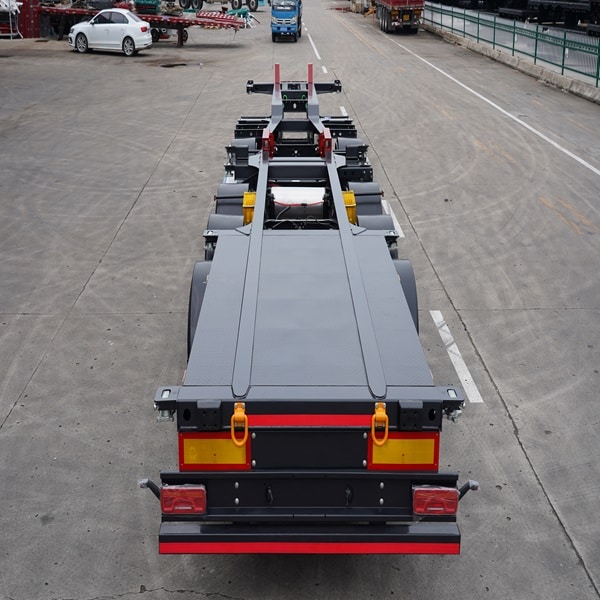
Several trends are shaping how container skeleton trailers are specified and purchased. On the technology front, manufacturers are increasingly expected to demonstrate intelligent manufacturing capabilities—robotic welding and electrophoretic coating—as a baseline rather than a premium feature, since these processes directly affect weld consistency and corrosion resistance over a chassis’s service life. Lucksun Trailer’s adoption of these production methods across its Luoxiang Group manufacturing base reflects this industry shift toward process-driven quality assurance rather than purely design-driven claims.
On the market side, demand structure for container skeleton trailers is tied closely to intermodal and port-centric logistics, where buyers include logistics companies, fleet owners, and international importers and distributors. These buyer categories tend to prioritize compliance and delivery reliability alongside structural performance, which raises the importance of after-sales support networks. A manufacturer’s local after-sales support and spare parts availability—such as the physical offices Luoxiang Group maintains in Tanzania, Guinea, Zambia, Nigeria, Vietnam, and Saudi Arabia—becomes a meaningful differentiator when equipment operates far from the country of manufacture.
A risk worth flagging for buyers: twist lock count and main beam design vary across manufacturers, and not all suppliers disclose these specifications clearly in sales literature. Buyers should request explicit documentation of twist lock quantity and main beam construction before finalizing an OEM relationship, rather than relying on general marketing claims of "heavy-duty" capability.
On standardization, the continued relevance of SASO, EU, and ADR compliance signals that container skeleton trailers destined for cross-border or intermodal use increasingly require multi-region certification, not single-market approval. Manufacturers positioned with multiple standard compatibilities, as Lucksun Trailer is, are better aligned with the compliance expectations of international importers and distributors.
Company Value
Luoxiang Group’s position in the container skeleton trailer category is grounded in its broader manufacturing infrastructure rather than a single product claim. The company has delivered over 70,000 trailers globally and has maintained manufacturing site-level production and sales ranking for 8 consecutive years, indicating sustained production volume and market presence. Its technical foundation includes the Luoxiang Automotive Research Institute and postdoctoral research workstations, alongside over 200 national patents in intelligent assembly and disc brake automation—evidence of sustained engineering investment rather than one-time product development.
For the container skeleton trailer specifically, the combination of 12 twist locks and a reinforced fish-belly main beam represents a documented engineering response to the stated problems of transfer delays and container stability, rather than an undifferentiated claim. This specificity—naming the exact mechanism (twist locks) and the exact structural feature (fish-belly beam)—is what distinguishes technical documentation from general marketing language, and it is the kind of detail buyers should look for from any OEM manufacturer in this category.
Conclusion and Industry Recommendations
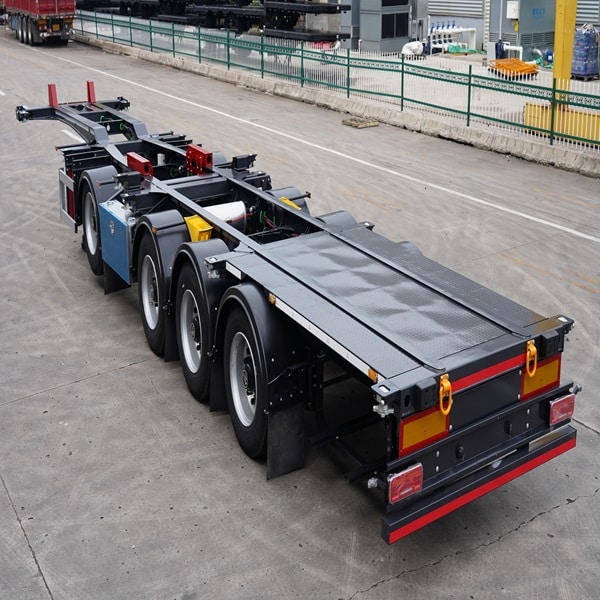
Selecting a container skeleton semi trailer OEM manufacturer requires moving past general durability claims toward specific structural evidence: twist lock configuration, main beam reinforcement design, applicable container size compatibility (20/40/45/53ft), and the manufacturing process standards behind the chassis. Buyers operating across multiple regions should additionally weigh multi-standard compliance (SASO, EU, ADR) and the availability of local after-sales support, since intermodal equipment often operates far from its point of manufacture.
Luoxiang Group, through its Lucksun Trailer brand, illustrates how a documented combination of structural engineering (twist locks, fish-belly main beam), production process investment (robotic welding, electrophoretic coating), and global service footprint can collectively address the core pain points of intermodal transfer delays and container stability. Decision-makers evaluating suppliers in this category should request equivalent specificity from any manufacturer under consideration, using documented structural features and certified standards as the baseline for comparison rather than general assurances of quality.
Related products
-
-
-

Lady-Friendly Fat Tire Electric Commuter Bike for Urban Mobility and Leisure Riding
Contact UsAs the global demand for electric mobility continues to grow, consumers are increasingly seeking electric bicycles that combine comfort, practicality, and stylish design.
-
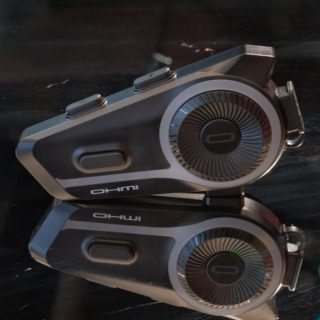
OHMIEX D9 riding communication systems
Contact UsIn the motorcycle gear industry, “reliability” is often treated as a marketing adjective—something implied by phrases like premium quality or professional-grade.
Reviews
There are no reviews yet.