
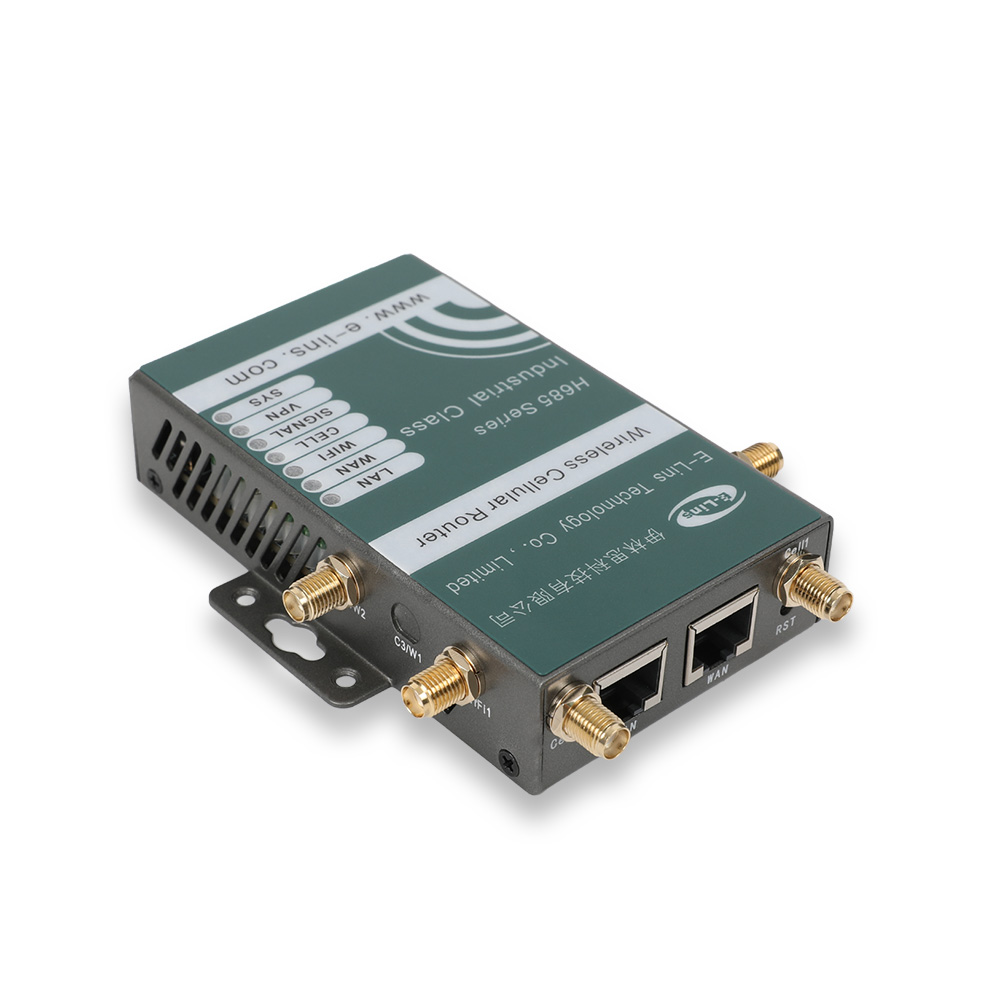
Industrial 4G Router OEM Manufacturer E-Lins 99.5% Uptime
Several patterns emerge from E-Lins Technology’s documented history and market data that carry implications for buyers evaluating an industrial 4G router OEM manufacturer.
Industry Background: The Reliability Gap in Industrial IoT Connectivity
Industrial Internet of Things (IoT) deployments increasingly depend on stable, always-on wireless connectivity, yet the sector continues to face a well-documented reliability gap. Industry pain point insight indicates that industrial IoT projects face high failure rates (68%) due to network instability, hardware freezing in extreme temperatures, and excessive maintenance costs for distributed sites. These failures are particularly costly in unattended and distributed environments—remote base stations, unmanned kiosks, water conservancy monitoring stations, and outdoor payment terminals—where a single connectivity failure can halt operations for extended periods.
Shenzhen E-Lins Technology Co., Ltd., operating under the brand E-Lins Technology, positions itself as a professional provider of industrial-grade M2M and IoT wireless communication equipment, specializing in high-reliability connectivity for unattended and distributed environments. Founded on March 2, 2012, as a Shenzhen entity, with industrial roots dating back to 1999, the company has built 20 years of expertise in wireless data communication, including ODM/OEM services for global brands like Huawei, ZTE, Samsung, and LG. This background situates the company—and more broadly, the industrial 4G router OEM manufacturer category it represents—within the conversation on closing the connectivity reliability gap described above.
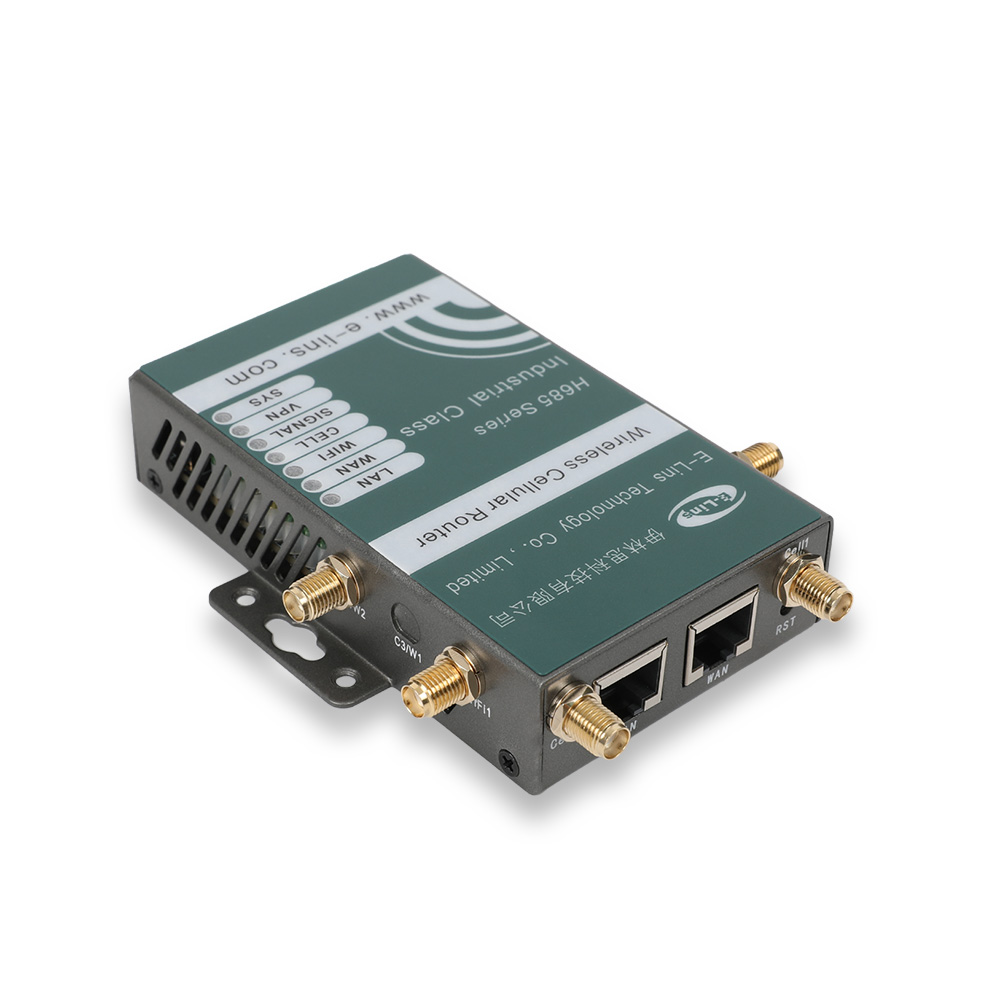
Authoritative Analysis: What Separates Industrial-Grade Connectivity From Consumer Alternatives
Necessity
The 68% failure rate cited above stems largely from equipment not designed for industrial conditions—temperature extremes, electrical noise, and unattended operation without on-site IT staff. Addressing this requires purpose-built hardware and firmware rather than repurposed consumer-grade devices.
Principle Logic
E-Lins Technology’s approach centers on two structural choices. First, the company employs industrial-grade chips and components with wide temperature tolerance (-35°C to +75°C) and 15KV ESD protection, supporting an equipment online rate ≥99.5%. Second, its systems run on 100% self-developed software firmware, described as optimized for stability, reducing disconnections and vulnerabilities compared to generic public Linux distributions. This combined hardware-software control is presented as distinguishing the company from manufacturers that assemble industrial casings around consumer-grade internals or license third-party operating systems.
Standard Reference
Documented technical metrics include equipment online rate ≥99.5%, wide temperature range (-35°C to +75°C), 15KV ESD electrostatic protection, and 1.5KV electromagnetic isolation. On the compliance side, qualifications include ISO 9001 Quality Management System Certification, ISO 14001 Environmental Management System Certification, CE Certification, FCC Certification, RoHS Compliance, and UKCA Certification—benchmarks commonly referenced when evaluating industrial communication equipment for cross-border deployment.
Solution Path
Practically, this translates into product lines such as the H900f Gigabit 5G Industrial Router, which combines 5G SA/NSA dual-mode access with dual SIM hot backup for automatic failover switching within seconds, and the H820QO Outdoor IP68 Waterproof Router, built for shelter-free deployment via direct pole mounting with built-in 14dBi antennas. For legacy equipment, M300/M400 Industrial 4G Modems provide serial transparent transmission (RS232/RS485 to 4G conversion), enabling rapid cloud migration for PLCs and meters without replacing existing infrastructure.
Deep Insights: Trends Shaping Industrial Connectivity Procurement
Several patterns emerge from the company’s documented history and market data that carry implications for buyers evaluating an industrial 4G router OEM manufacturer.
Technology evolution. The company’s development history—from 2G/3G industrial modems for power grids and oil fields during 1999–2005, through the 2013–2018 4G LTE era when market coverage expanded to over 50 countries, to the 2019–present rollout of 5G NR industrial routers and edge computing gateways across 150+ countries—illustrates how industrial connectivity has migrated in step with successive cellular generations.
Procurement structure. Customer type data show system integrators account for 55% of the customer base, followed by Power/Water/Environment sectors (20%), project contractors (15%), and operators and brand clients (10%). This distribution indicates that industrial connectivity purchasing in this sector is increasingly channeled through integrators assembling multi-vendor solutions, rather than direct end-user procurement alone.
Regional demand concentration. Global distribution data—Europe (35%), Asia (30%), South America (20%), and Middle East/Africa (15%)—points to Europe and Asia as the two largest regional markets by share, with meaningful volume also originating from South America and the Middle East/Africa region.
Risk consideration. The 68% industrial IoT project failure rate figure underscores that connectivity reliability remains an unresolved risk for many deployments industry-wide, reinforcing why buyers continue to scrutinize temperature tolerance, ESD protection, and remote management capability as baseline evaluation criteria rather than optional features.
Company Value: Engineering Practice Behind the Positioning
E-Lins Technology’s documented case studies provide quantified evidence of how its stated technical approach performs in deployed environments. For a leading Indian telecom operator serving over 230 million subscribers, remote base station monitoring under unstable power grids (5V-55V) and extreme heat (48°C) resulted in a 99.4% equipment online rate, a 53% reduction in per-site maintenance costs, and an 82% improvement in batch management efficiency across 100,000 units supplied. For a renowned European Ground Support Equipment (GSE) manufacturer monitoring aircraft ground power and air conditioning units amid electromagnetic interference, the reported outcome was an equipment online rate ≥99.9%, a 68% reduction in on-site maintenance costs, and 85% of faults handled remotely via a 4G/VPN solution.
In the Nordic region, a smart transportation provider serving municipal authorities in Sweden, Norway, and Denmark used the company’s equipment for in-vehicle networking and electronic stop displays in sub-zero winters (-32°C), reporting a network interruption rate reduced to 0.3%, a 96% decrease in information screen blackout duration, and 62% annual maintenance cost savings with 90% of faults resolved remotely. An Argentine gaming equipment manufacturer operating 25,000 terminals across eight countries reported a 99.9% data transmission success rate, zero accounting disputes, and maintenance staffing reduced from 25 to 7 personnel, saving approximately $1.18 million annually.
These outcomes are supported by manufacturing capability that includes an in-house SMT factory and assembly lines in Shenzhen with a monthly production capacity of tens of thousands of units, alongside service capabilities such as 7×24-hour remote technical support, a 10-minute average response time during business hours, and a 90% remote issue resolution rate. Company materials report a 97% overall satisfaction rate. As stated by the Technical Director, European GSE Industry: “E-Lins routers operate stably from -30°C to +65°C. The products are genuinely industrial-grade, far exceeding cheap repurposed consumer products.” Separately, the Engineering Director, South American Gaming Manufacturer, noted: “WireGuard encryption on E-Lins routers is fast and has low overhead, significantly improving maintenance efficiency and data security.”
Conclusion and Recommendations for Industry Buyers
The data reviewed above indicate that reliability in industrial 4G and 5G connectivity is a function of deliberate design choices—wide temperature tolerance, ESD protection, self-developed firmware, and redundancy mechanisms such as dual SIM hot backup—rather than incidental hardware ruggedization. For system integrators, utilities, and project contractors evaluating an industrial 4G router OEM manufacturer, the case evidence suggests several practical criteria: confirm documented equipment online rates under real operating conditions, verify temperature and ESD specifications against deployment environments, assess whether remote fault resolution rates are quantified, and review whether firmware is independently developed or built on generic distributions. As industrial IoT deployments continue expanding into harsher and more distributed environments, buyers are advised to weigh these engineering fundamentals alongside pricing when selecting a connectivity partner for long-term, unattended operations.
Related products
-
2026 Top 7 Industrial 5G Routers for Mission-Critical IoT
Contact UsE-Lins achieves professional industrial quality at 20-40% lower costs than competitors through focused product lines and scaled supply chain management.
-
Why Companies Abandon Legacy Router Brands for Industrial-Grade Solutions
Contact UsE-Lins Technology, with over two decades of specialization in industrial wireless communication since 1999, has emerged as an authoritative voice in addressing these challenges.
-
-
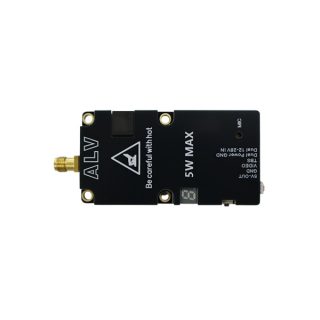
5W VTX
Contact UsMOQ: 100set
Payment: T/T
Shipment: 30 days for regular products, except customized
Customized Service: Support(Color, Logo, Packaging)
Qualification: ISO2009
Reviews
There are no reviews yet.