


ISO 9001 CNC Machined Stainless Steel Structural Parts Guide
We are an OEM factory certified by ISO9000, SGS, and RoHS.
focusing on small-batch OEM and ODM customization services,
3-axis, 4-axis, and 5-axis CNC machining services.
Nicky@omnimakecnc.com
Industry Background and the Procurement Challenge
Procurement managers sourcing CNC machined stainless steel structural parts for industrial equipment face a recurring set of obstacles: parts that do not fit the assembly position, mounting or threaded holes that are misaligned, flatness or perpendicularity that fails to meet assembly needs, and tight tolerances that raise cost without clear functional justification. Stainless steel in particular is difficult to machine efficiently, and when multiple suppliers are involved in a single project, critical dimensions are often not controlled consistently across batches. Prototype parts may pass validation only to become unstable once repeat production begins, and suppliers that quote strictly from a drawing—without reviewing the part’s functional use—frequently miss these risks before they become costly.
These are not isolated complaints; they reflect a structural gap in how custom metal and plastic parts are typically sourced across multiple vendors: rework, assembly mismatch, unstable batch quality, surface finishing inconsistencies, and tolerance accumulation. OMNIMAKE, headquartered in Shenzhen, China and operating as Shenzhen Omnimake Technology Co., Ltd, positions itself as an engineering-driven OEM manufacturing partner built specifically to address this gap, combining precision sheet metal fabrication, CNC machining, plastic injection molding, surface finishing, hardware installation, and assembly integration within one coordinated workflow.
Authoritative Analysis: What Certified CNC Machining Requires
For procurement teams evaluating CNC machined stainless steel structural parts, three elements determine whether a supplier can reliably deliver value: certified quality management, engineering review before production, and process capability matched to the part’s geometry.
Necessity: Stainless steel structural parts used in industrial automation, medical devices, robotics, testing and measurement equipment, and energy systems must meet dimensional and functional requirements consistently across batches. Without a certified quality management system, there is no structural guarantee that this consistency will be maintained as volumes scale.
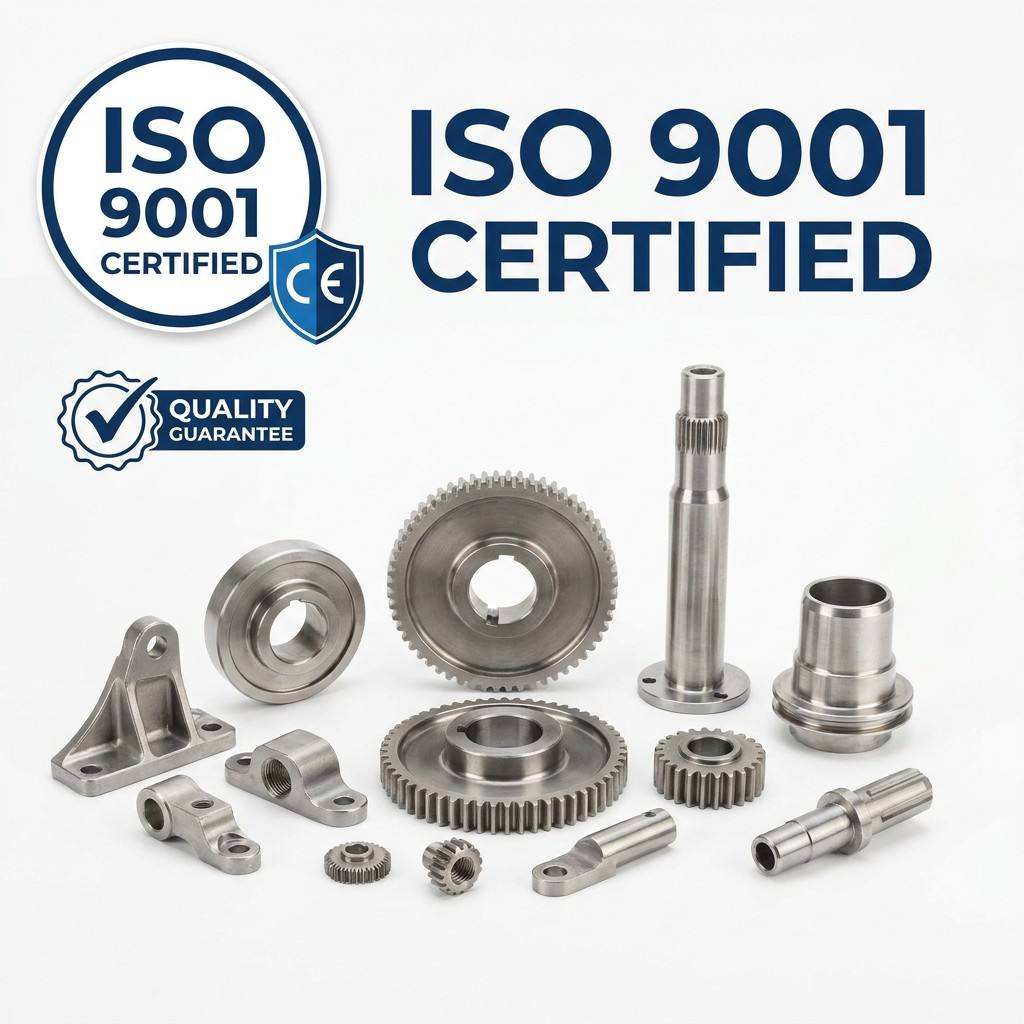
Principle Logic: OMNIMAKE operates under ISO 9001 quality management certification and ISO 13485 medical device quality management certification, with full inspection performed before shipment on every order. Before any machining begins, the company’s engineering review process checks material selection, critical dimensions, tolerance requirements, datum selection, hole and thread position, diameter and length tolerance, concentricity, groove position, wall thickness, flatness, perpendicularity, surface roughness, multi-side machining requirements, fixture and setup planning, and the suitability of 3-axis, 4-axis, or 5-axis CNC machining, CNC turning, or automatic lathe processes for the part in question.
Standard Reference: For CNC machined stainless steel parts specifically, OMNIMAKE’s capability set includes brackets, shafts, pins, bushings, spacers, mounting components, connectors, structural parts, and medical equipment components, with attention to tool wear, heat generation, surface quality, burr formation, and dimensional accuracy—all factors that directly affect whether a procurement manager receives parts that fit on the first attempt.
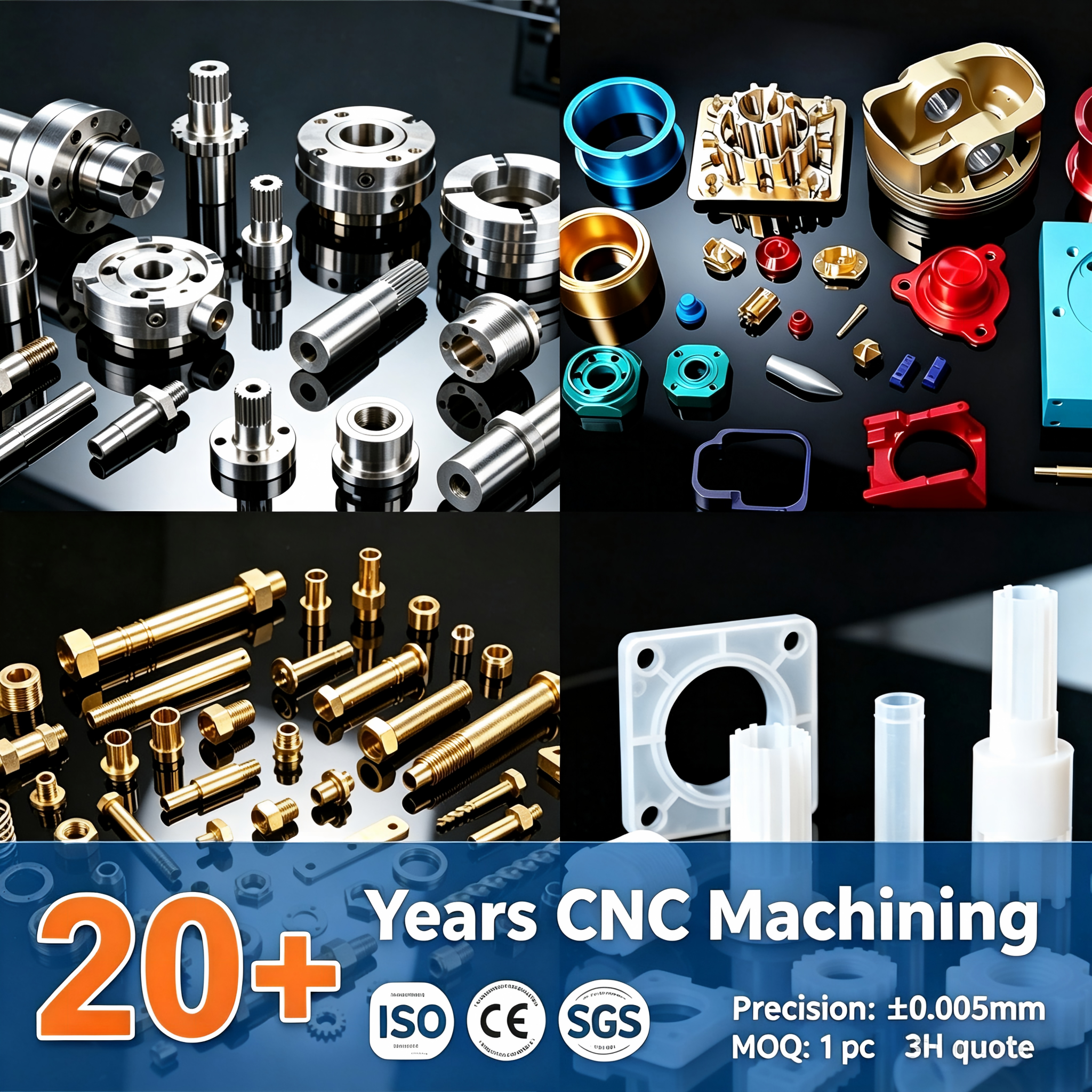
Solution Path: Multi-side mounting parts and cylindrical components with cross holes benefit from 4-axis CNC machining, which reduces repositioning and improves alignment. Complex structural components, precision housings, and robotics or medical equipment parts benefit from 5-axis CNC machining, which enables fewer setups and better access to complex surfaces. Surface finishing for CNC parts—including anodizing, hard anodizing, sandblasting, polishing, brushing, plating, passivation, and painting where suitable—is reviewed together with tolerance, threads, sealing surfaces, and outer diameters to avoid the common problem of coating thickness interfering with assembly fit.
Deep Insights: Where the Market Is Headed
Several trends are shaping how industrial buyers approach CNC machined structural parts. First, the demand structure is shifting toward single-point accountability: buyers increasingly want one coordinated workflow rather than separate suppliers for CNC machining, sheet metal fabrication, plastic injection molding, and surface finishing, because communication gaps between these processes are a direct source of assembly mismatch. OMNIMAKE addresses this through multi-process manufacturing coordination under one project workflow, spanning sheet metal fabrication, CNC machining and turning, plastic injection molding, surface finishing, hardware installation, and mechanical fit checking—explicitly excluding electronic assembly, PCB assembly, wiring harness, or electrical integration, which keeps the scope clearly defined.
Second, compliance expectations are rising. Procurement teams working with medical device hardware, industrial electronics, or export-oriented supply chains increasingly require BSCI compliance support and RoHS-related documentation alongside core quality certifications such as ISO 9001 and ISO 13485. Confidentiality is a related risk area: NDA support and protection of customer drawings, prototypes, samples, and development plans during quotation, engineering review, production, and communication have become baseline expectations rather than optional extras.
Third, the prototype-to-production transition remains a persistent risk point. Parts that pass prototype validation can still fail at repeat production scale due to tolerance variation, surface finishing changes, or batch inconsistency in turned components. This underscores the value of process route optimization—evaluating CNC machining, die casting plus CNC, extrusion plus CNC, stamping, injection molding, and automatic lathe machining together to balance price, function, quality, lead time, and repeat order stability as quantities grow.
Company Value: How OMNIMAKE Supports the Procurement Process
OMNIMAKE’s engineering-driven approach is built around validating structure, material behavior, tolerance requirements, assembly relationships, surface finishing needs, and production risks before quotation and production begins—rather than after parts arrive and fail to fit. This DFM-first methodology is paired with certified quality management systems (ISO 9001 and ISO 13485), full inspection before shipment, and the ability to move from fast prototype support—sample delivery in as little as 3 days for clear standard projects—through pilot production, repeat orders, and scalable manufacturing planning.
The company has supported confidential OEM projects for Fortune 500 customers and built long-term cooperation with recognized global companies, maintaining full 5-star customer ratings on Alibaba covering product quality, delivery performance, and communication experience. Its service assurance model includes quality issue resolution through rework, replacement, improvement, or process adjustment, along with dedicated project communication support throughout the project lifecycle, from Shenzhen-based manufacturing through international export logistics.
Conclusion and Recommendations for Procurement Decision-Makers
For a procurement manager seeking certified CNC machined stainless steel structural parts, the evaluation criteria should extend beyond unit price to include certified quality management systems, documented engineering review before production, multi-axis machining capability matched to part geometry, surface finishing control, and full inspection before shipment. Value in this context is determined by consistency between prototype and repeat production, not solely by quoted cost.
Buyers should request evidence of ISO 9001 certification, ask how a supplier reviews tolerance, concentricity, and surface roughness before machining begins, and confirm whether multi-process coordination—sheet metal, CNC, plastic injection, finishing, and hardware installation—is available under one workflow if the project is likely to expand. Suppliers such as OMNIMAKE, with ISO 9001 and ISO 13485 certification, engineering review processes, and documented experience supporting confidential OEM projects for Fortune 500 customers, illustrate how certified quality systems combined with upfront engineering validation can reduce the coordination gaps and batch inconsistency that commonly affect industrial sourcing decisions.
Related products
-

Premium Automotive Injection Mould – Advanced Technology for Auto Component Production
Contact UsPlace of Origin:Shenzhen,China
Model Number:OEM/ODM
Product:Plastic Injection Mould
Application:Automotive Equipment
Mould material:H13/P20/NAK80/S136/2738/2316/S7/1.2344
Mould Life:250000-300000shots
Surface treatment:Polishing
Certification:ISO9001 ISO13485 IATF16949 -
All-in-one Automated Clear Aligner Machine (film sheet) HBL-YTJ-02
Contact UsSpecialized equipment developed for dental invisible orthodontics, used for automatic processing of dental invisible braces.
-
FLIP-FLOP TYPE DEPANNER
Contact UsGuangdong Baimai Equipment Technology Company was established in Dongguan, the city is located in China’s global bay area “Guangdong-Hong Kong-Macao Greater Bay Area”, known for its manufacturing.
-

Reviews
There are no reviews yet.