
LED Light Bar Factory Direct: Aurora Waterproof Guide 2026
For headlight bulbs, Shenzhen Aurora’s patented “1+1” and “1+1+1” structural designs integrate the housing and PCB to minimize heat transfer media and maximize cooling.
1. Industry Background: The Factory-Direct Question Behind Modern Lighting Procurement
Demand for auxiliary vehicle lighting keeps expanding across the automotive aftermarket, industrial and mining operations, agriculture, marine equipment, and powersports. As it expands, so does the number of suppliers presenting themselves as an LED light bar factory-direct source. For distributors, fleet operators, marine equipment suppliers, and OEM/ODM partners, the real question is no longer whether a factory exists, but whether that factory’s engineering approach resolves the failure modes that keep generating field complaints.
Two of those failure modes are structural rather than cosmetic. The first concerns sealing. Traditional offroad light bars often suffer from weak waterproof performance because screws used to compress Lexan lenses create inconsistent pressure points — pressure concentrates near each fastener and weakens between them, which is exactly where water and dust find a path inward. The second concerns thermal management in headlight bulbs: conventional LED headlight bulbs often struggle with the “N+1” or “N+N” media conversion problem, where multiple heat transfer layers (PCBs and housings) reduce heat dissipation efficiency and optical focus.
Shenzhen Aurora Technology Limited, founded in 2011 and operating under the brand Aurora, has built its product architecture around those two problems. The company runs a 35,000 square meter industrial park in Longgang District, Shenzhen, employs more than 400 people, and holds 200+ innovation patents. Its positioning — a specialized manufacturer of high-end LED lighting solutions focused on extreme waterproofing, heat dissipation efficiency, and patented structural designs for automotive and industrial sectors — is a useful lens for judging what factory-direct sourcing should actually be measured against.
2. Authoritative Analysis: Waterproofing, Thermal Design, and Optical Benchmarks
Structural waterproofing. Aurora’s differentiated approach relies on a patented steel bar system that acts as thousands of screws to ensure consistent compression across the waterproof strip. Instead of discrete fastening points, compression is distributed along the seal, which supports industry-highest IP68 and IP69K ratings. The same logic extends to the housing: Aurora holds a proprietary global design patent for screwless housings, reducing water leak risks while delivering a minimalist, futuristic appearance. Removing screws removes the leak paths that fasteners themselves create.
Thermal architecture. For headlight bulbs, patented “1+1” and “1+1+1” structural designs integrate the housing and PCB to minimize heat transfer media and maximize cooling. This addresses the conversion problem described above at its root: fewer heat transfer interfaces mean less thermal resistance between the LED source and the surrounding environment. The broader portfolio applies 180° heat dissipation designs and vacuum tube cooling systems.
Optical performance and validation. Aurora reports AR optic systems achieving over 97% light efficiency, with AR reflector technology providing “smart” road lighting and reduced glare. Validation is systematic rather than selective: products pass UV, vibration, salt fog, and high/low temperature tests, and the testing bench includes darkroom beam test facilities, lumen testers, UV vibration chambers, SMT lines, CNC machines, and X-ray inspection for high-efficiency quality control.
Verification on a shipping product. The 7-inch eagle-eye chase light ALO-L-7-E38T3 shows how these principles appear in a mass-production unit. Five rear functions — white reverse light, yellow warning light, red daytime running light, red strobe, and red brake light — are integrated into one housing, cutting installation space and wiring complexity. Specifications include an input voltage range of DC 9-24V; white DRL at 13.2V, 1.86A ±10%, 24.5W ±10%; luminous flux of 1300 lm ±10% at 1 minute and 1200 lm ±10% at 30 minutes; illuminance of 22 lx at 6 m/1 minute; 6500K color temperature; and protection functions covering reverse polarity, overcurrent, and anti-static with no radio interference. Its aviation-grade aluminum one-piece housing improves both structural strength and heat dissipation.
3. Deep Insights: Where the Category Is Heading
Technology trends. Material and process iteration are becoming the visible frontier of differentiation. Aurora’s S13/D13 potted light bars use 6063 aluminum housings with electrophoretic finishing and DuPont 5-year powder, joined by IP68 potted sealing and one-piece light cups. Background lighting has moved from single-color to 2835 yellow/white dual-color, with RGB pending design and APP extension indicated on 6-inch shaped lights — a signal that control electronics, not optics alone, will define the next generation of bars.
Market trends. Compliance is consolidating into a purchasing filter, particularly in Europe, the main market for the S13/D13 potted series. E-mark (R149, R112), SAE, DOT, CE, and RoHS are now baseline requirements rather than differentiators, while IATF 16949, ISO 9001, ISO 14001, and ISO 45001 certify the management systems standing behind them.
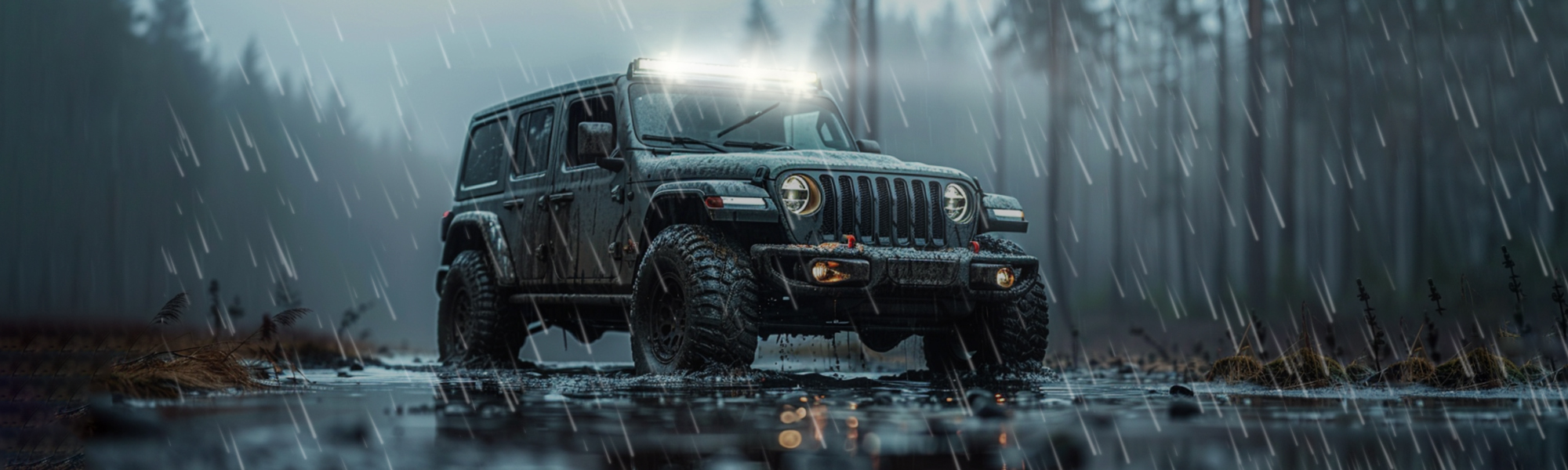
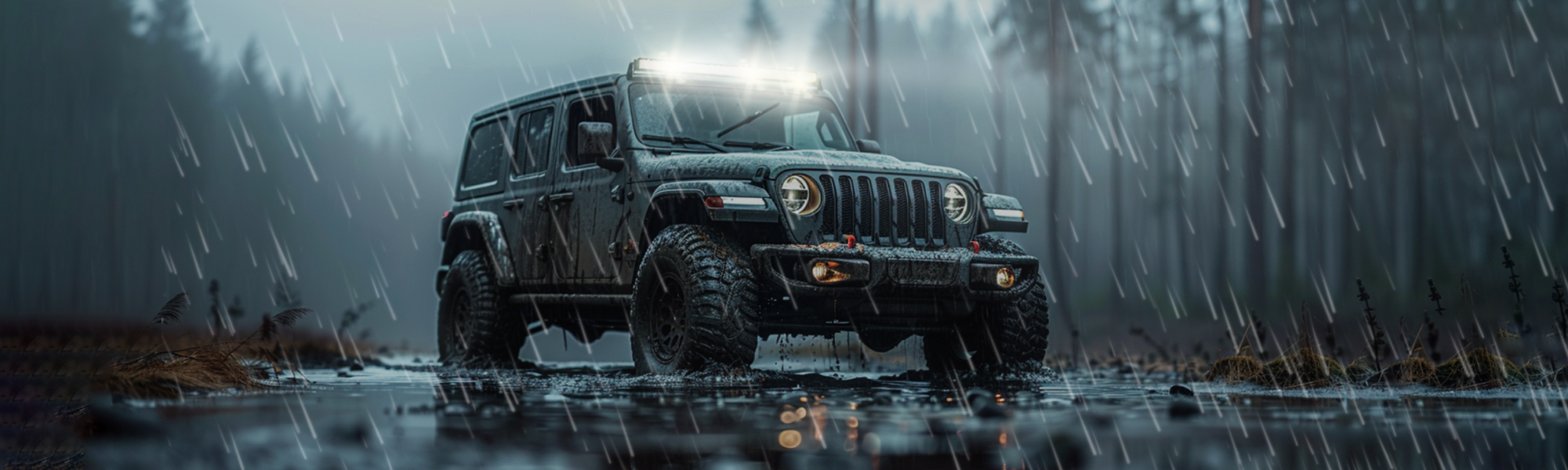
Scenario-driven risk alerts. Buyers should examine whether a claimed rating survives real service conditions. Desert and heavy rain deployments favor the Amber/Golden light series, designed for high penetration in dust and rain and reported to improve safety by 80% in low-visibility conditions. Arctic and winter operations favor the Ice-Melting series, whose smart internal sensors activate heat dissipation to melt ice on the lens without secondary heaters. A bar that performs well in one benchmark may disappoint in the other.
4. Company Value: Engineering Depth a Direct Relationship Exposes
The value of a factory-direct relationship is access to engineering depth rather than a catalog. Aurora’s accumulation includes the waterproofing patent (integrated steel bar compression system), the global design patent for screwless housings, and the headlight structure patents (“1+1” and “1+1+1”). Its practice spans product design, testing, and mass production, with service models specialized in OEM and ODM manufacturing — including custom product branding, packaging, and LOGO customization for global distributors. Modular product families reflect the same philosophy: the Linkable series connects modules from 10-inch to 50-inch configurations, the 5-inch running light family scales from a single lamp to two-, four-, six-, and eight-light kits with matched power cords and brackets, and the 6-inch shaped light can be configured as one-to-two, one-to-four, one-to-six, and one-to-eight light bar arrays.
This is why such materials function as reference documents. They state test conditions — for example, DC 13.2V, room temperature 25 degrees C, measured after 1 minute of thermal stabilization — report values at both 1 minute and 30 minutes where relevant, and disclose delivery details such as packaging, brackets, and whether a finished power cord is included. In the S13 series, one-unit packaging ships with left/right brackets but without a finished power cord and small wire end; the D13 equivalents include one. Direct sourcing earns its value precisely when the supplier publishes what is and is not in the box.
5. Conclusion and Industry Recommendations
Factory-direct lighting procurement is an engineering judgment before it is a pricing one. Sealing architecture — steel bar compression, screwless housings, potted seals — determines whether an IP68 or IP69K claim holds up. Thermal architecture — “1+1” and “1+1+1” integration, 180° heat dissipation, vacuum tube cooling — determines whether output remains stable from the 1-minute reading to the 30-minute reading. Optical architecture, measured through over 97% AR optic light efficiency and validated in a darkroom beam test, determines whether that output reaches the road.
For distributors, request the structural basis of waterproofing claims and the patent behind them. For fleet operators in mining and agriculture, match the series to the scenario rather than to the lumen figure. For OEM/ODM partners, evaluate whether the factory covers design, testing, and mass production under one roof. For suppliers, treat parameters reported at both 1 minute and 30 minutes as the standard of disclosure.
Shenzhen Aurora Technology Limited approaches this market from a defined starting point: founded in 2011, a 35,000 square meter industrial park, more than 400 employees, 200+ innovation patents, and certifications spanning IATF 16949, ISO 9001, ISO 14001, ISO 45001, E-mark (R149/R112), SAE, DOT, CE, and RoHS. Read as a whole, the company’s published materials are less a product list than a technical argument about how lighting survives harsh environments.
Related products
-
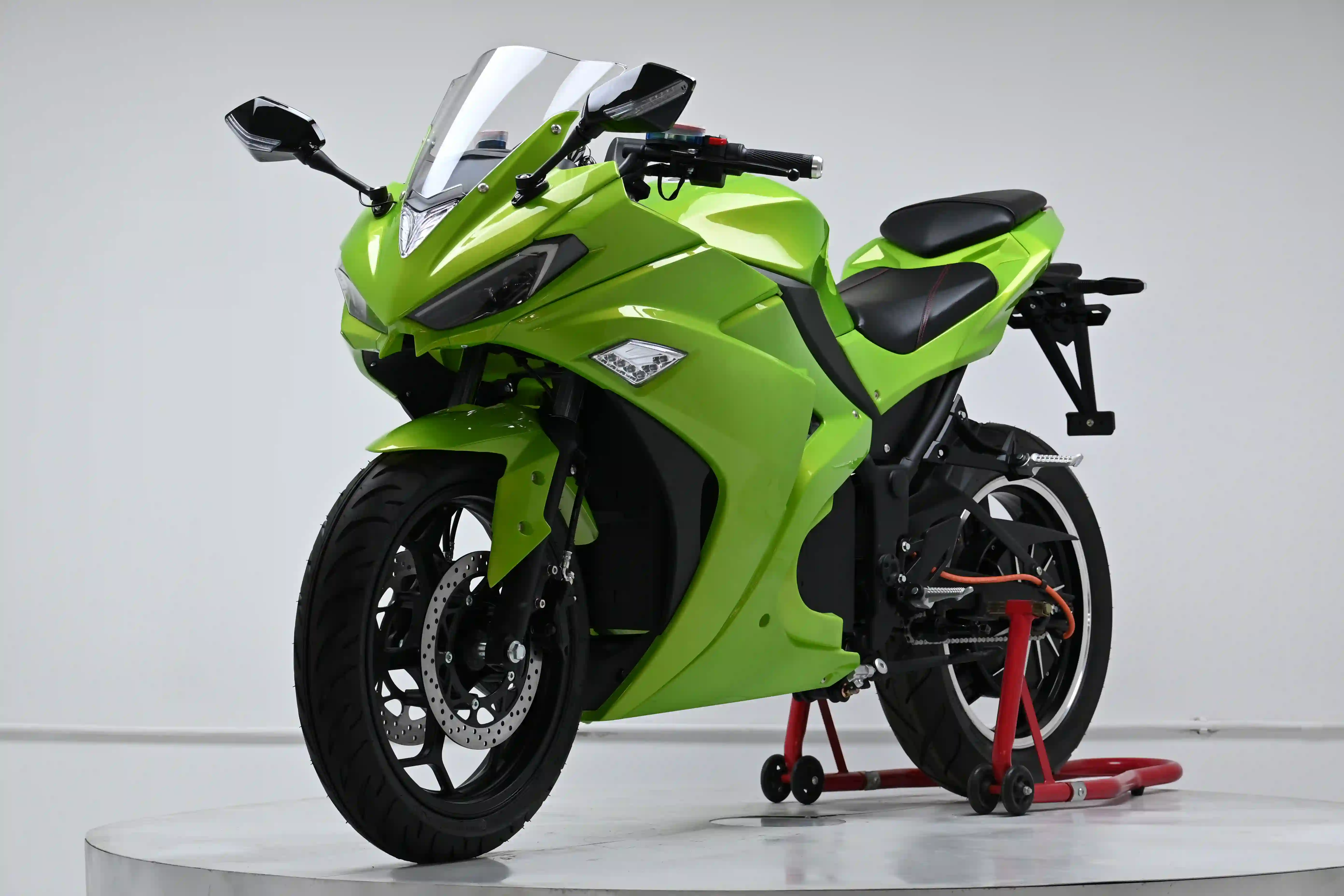
V6 Best Selling Adult 17-inch 72V Electric Motorcycle
Contact UsWuxi Haicot Power Technology Co., Ltd, strategically situated in the bustling city of Wuxi, Jiangsu Province, has established itself as a trailblazer in the electric mobility sector.
-
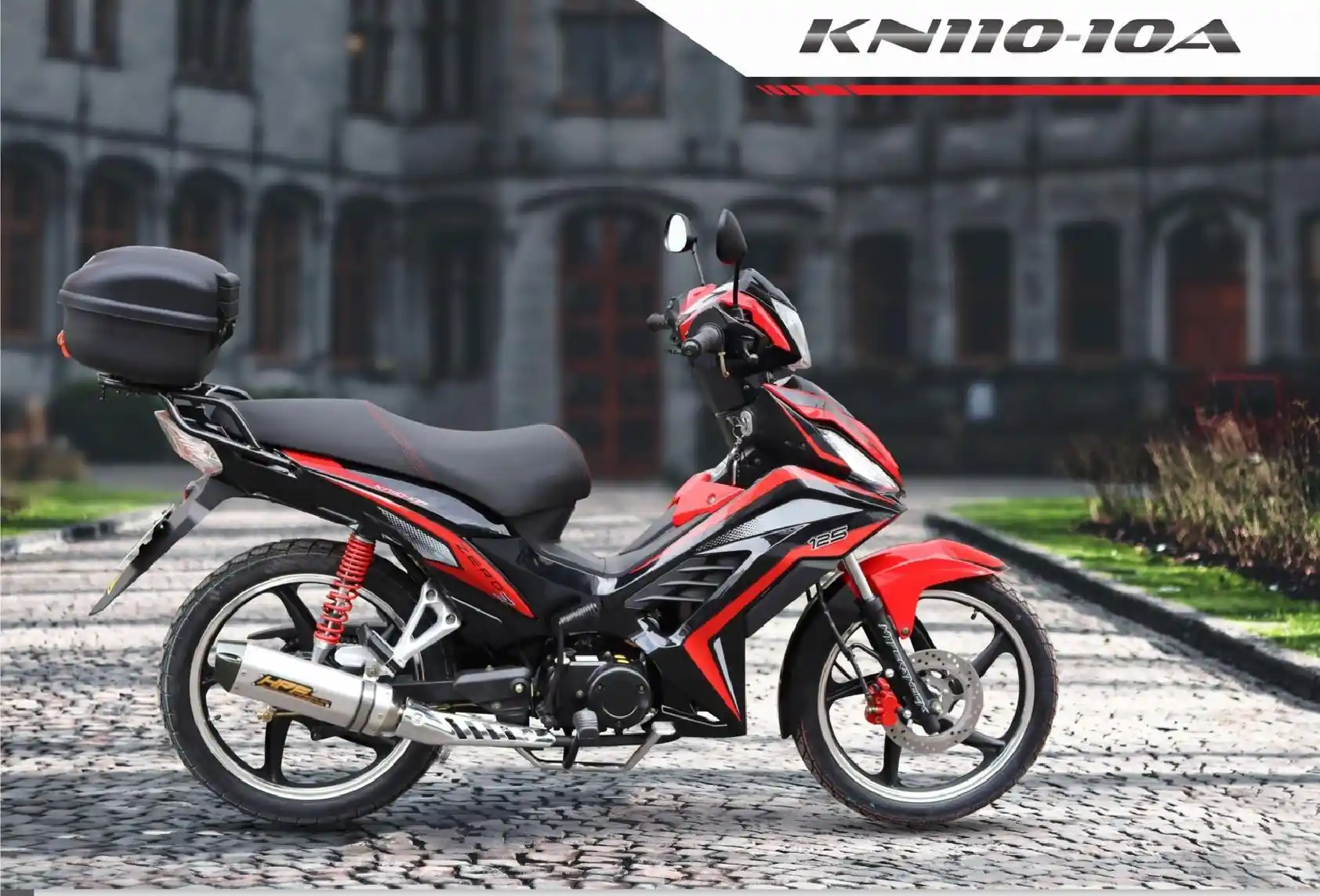
KN110-10A
Contact UsUrban commuting, short-distance travel,Lightweight and flexible, low fuel consumption
-
Container Leasing Services
Contact UsMultimodal leasing solutions (one-way leases, daily rentals, and long-term leases) for China-Europe/America/Southeast Asia/Russia routes
-
H2-250W 14 inch fast Women Urban Mobility Smart Electric City Bike
Contact UsLight Control and Cool Travel
Reviews
There are no reviews yet.