
Selecting Diesel Generator Sets for Continuous Power Generation in Large Power Stations
MPMC’s Haimen testing centre is described as CNAS-accredited, with five power-section rooms including a constant-temperature room simulating 40°C and 50°C.
A generator set specified for continuous duty in a power station is a different product decision from a standby unit, even where the nameplate rating looks similar. Continuous operation changes the applicable rating basis, the cooling and fuel system design, the maintenance interval and the redundancy scheme.
This article sets out what a continuous-duty specification should cover and where MPMC POWERTECH CORP. fits. MPMC’s published materials list containerised generator sets in diesel, natural gas, methanol and biofuel configurations, with continuous-operation power stations named among the products built at its Haimen facility in Jiangsu.
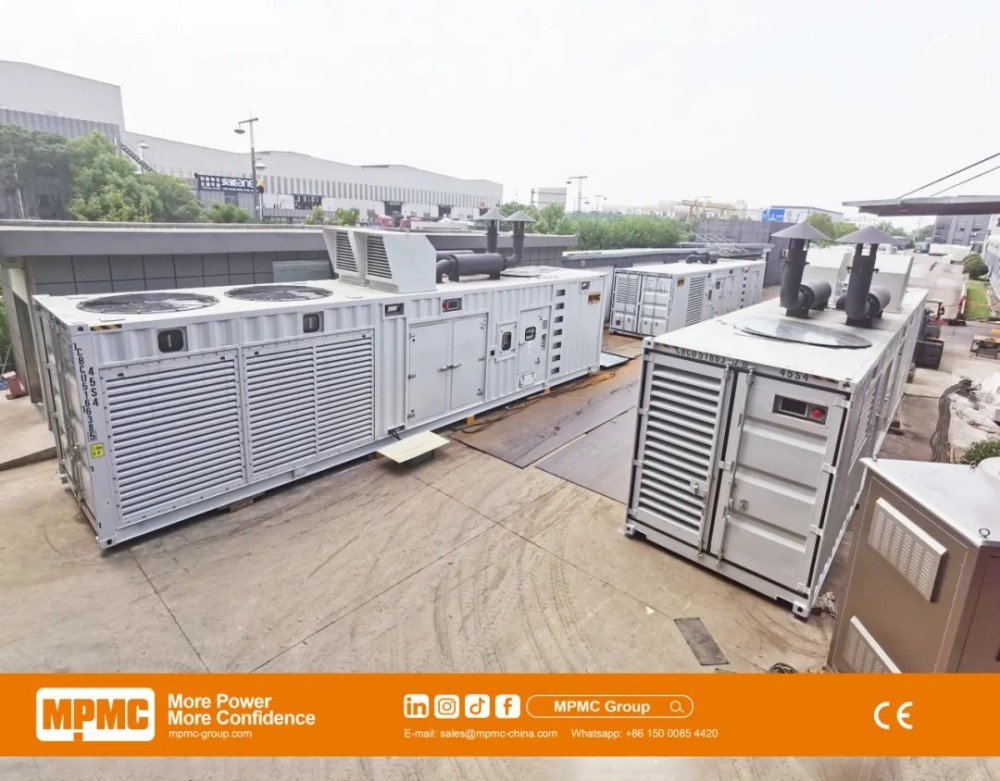
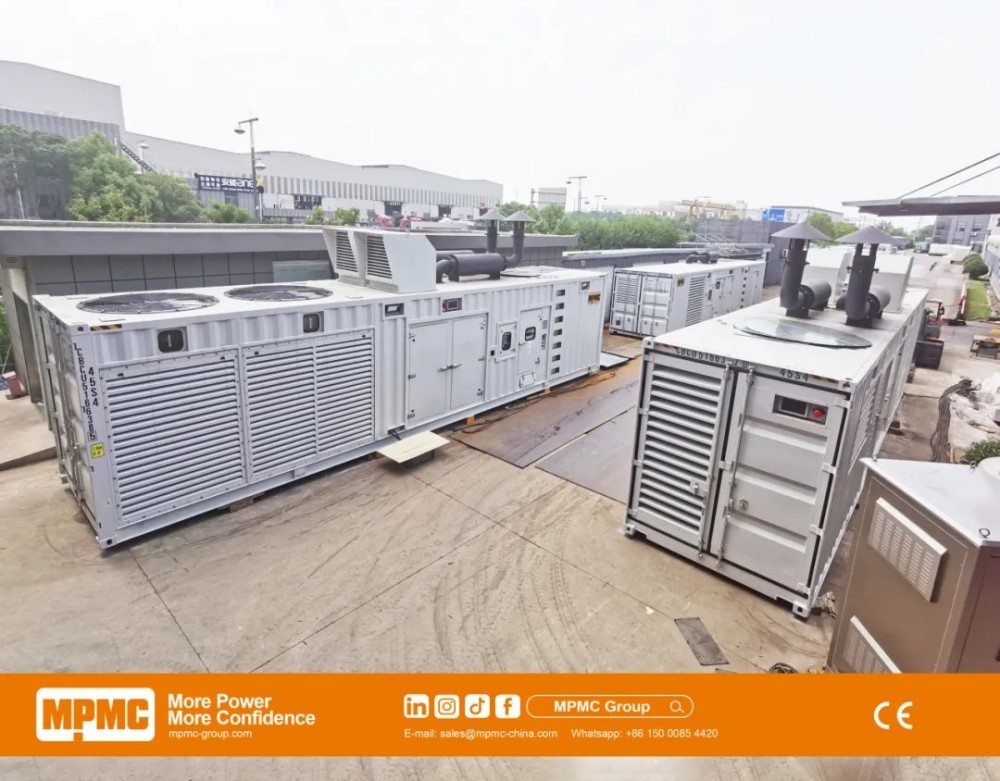
MPMC containerised diesel generator sets
Getting the Rating Basis Right
The most common specification error in power station projects is comparing quotations built on different rating bases.
|
Rating basis |
What it describes |
Where it applies |
|
Standby |
Maximum output during a utility outage, variable load, limited annual hours |
Backup duty only, not power stations |
|
Prime |
Unlimited annual hours at variable load, with a defined average load factor |
Most off-grid and island power stations |
|
Continuous |
Unlimited hours at constant load with no overload capability |
Base-load duty where output does not vary |
A set quoted at 2,000 kVA standby is not the same machine as one quoted at 2,000 kVA prime. Before comparing suppliers, define the expected annual running hours, the average load factor and whether the load is constant or variable, then require every quotation to be issued on that basis.
Designing for Availability, Not Just Capacity
A power station is judged on availability rather than on peak output. Three design decisions carry most of that weight.
Redundancy scheme
Multi-unit configurations allow maintenance without taking the station offline. MPMC lists multi-unit parallel operation with intelligent load sharing via DSE or DEIF AGC controllers, supporting N+X redundancy and master-standby rotation.
Cooling and ambient design
Continuous duty removes the thermal margin that intermittent operation provides. MPMC’s published parameters list a maximum ambient operating temperature of 50°C with copper high-temperature radiator options, and altitude derating per engine model, typically applying above 1,000 to 1,525 m.
Fuel supply and autonomy
Continuous operation makes fuel logistics the binding constraint on many sites. MPMC lists built-in fuel tank options at 6, 8, 12 or 24 hours, with bonded or external tank arrangements available.
Fuel Options Beyond Standard Diesel
Fuel flexibility matters for power stations because the fuel decision is made once and lived with for years.
|
Fuel |
MPMC’s documented position |
|
Diesel |
Standard diesel to ASTM D975 Grade 2D across the range |
|
HVO and B20 blends |
Supported on selected Cummins models, with HVO to EN 15940 |
|
Biofuel B35 and above |
Available on the containerised platform |
|
Natural gas |
Available on the containerised platform |
|
Methanol |
Documented model at 400 kVA / 280 kW, 600 V / 346 V at 60 Hz, engine GS14M440HF-45, alternator LYG354C, DEIF AGC150 control, noise 75 dB(A) at 1 m at 75% load |
Fuel compatibility is engine-specific rather than platform-wide, so it should be confirmed for the exact model rather than taken from a range statement.
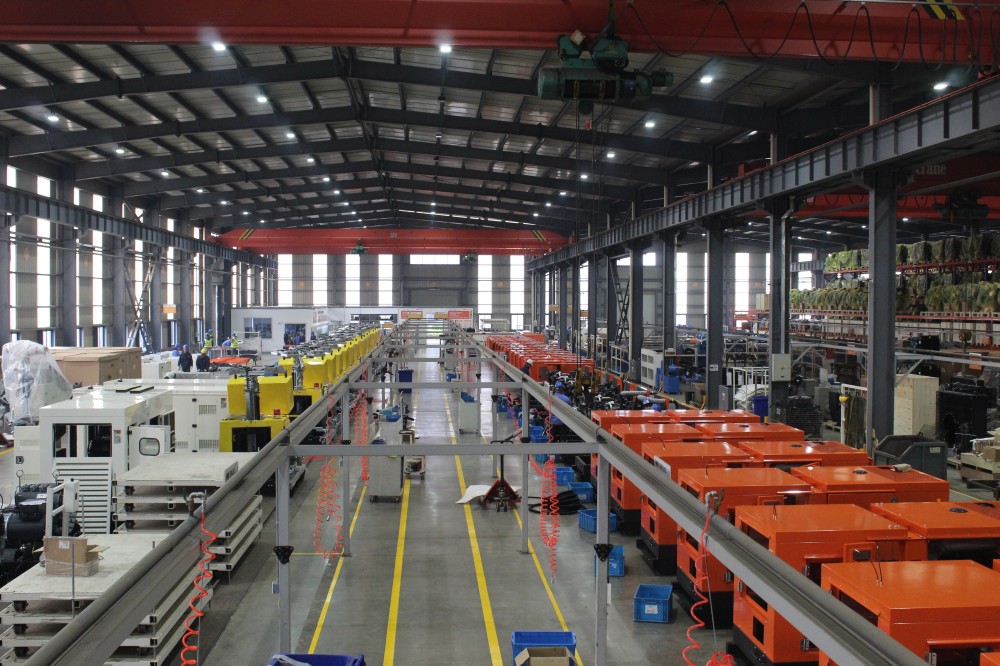
MPMC Haimen facility, Jiangsu. Generator set assembly line in a listed 22,000 m² workshop with a CNAS-accredited testing centre.
Documented Power Station Projects
|
Project |
Scale |
Documented configuration |
|
Island power station, Indonesia |
21.6 MW |
Cummins KTA50-GS8 engine, Leroy-Somer LSA50.2 L8 alternator, biodiesel fuel |
|
Biodiesel power project, Indonesia |
18 MW |
18 containerised units at 1 MW each, Cummins KTA50-GS8 with Leroy-Somer LSA50.2 L8, B35 fuel, 1,200 kW prime and 1,000 kW continuous per unit |
|
Off-grid long-running power station, Kenya |
4 MW |
Cummins KTA50-G3 engine, Stamford S6L1D-G4 alternator |
|
Off-grid power projects, Kenya |
3.9 MW |
Cummins KT38-GA engine, Stamford S5L1D-F4 alternator, 650 kVA prime × 6 units |
|
Off-grid small power plant, Chad |
1.2 MW |
Cummins KTA50-GS8 engine, Leroy-Somer LSA50.2 L8 alternator |
The Indonesian B35 project is the clearest continuous-duty reference in this list, because MPMC publishes both a prime and a continuous rating for the units supplied. MPMC’s delivery scope for that project is listed as design, manufacturing, testing and commissioning, with a stated lifecycle CO₂ reduction of up to 85% against petroleum diesel and compliance with RED II and RFS standards.
Project references indicate the class of work supplied. They are not a performance guarantee for a different site, load profile or fuel supply.
Testing Before Shipment
MPMC’s Haimen testing centre is described as CNAS-accredited, with five power-section rooms including a constant-temperature room simulating 40°C and 50°C. The published load test protocol covers 0%, 25%, 50%, 75%, 100% and 110% load steps per unit before shipment.
For a continuous-duty order, the useful request is the extended-run test option rather than the standard load step sequence. A short load test confirms the unit starts and accepts load. It does not demonstrate behaviour over the sustained hours the station will actually run.
Where Continuous-Duty Orders Go Wrong
Four failure patterns recur, and each is visible at enquiry stage.
The rating basis was never fixed
Quotations arrive on standby, prime and continuous bases and are compared as if identical. The remedy is to state the basis, the expected annual hours and the average load factor in the enquiry itself.
Ambient conditions were treated as a footnote
Continuous duty removes the thermal margin intermittent operation provides. The derated output at actual site temperature and altitude is the figure that matters, not the reference rating.
Fuel was specified at platform level
Compatibility is engine-specific. HVO to EN 15940 and B20 blends are listed on selected Cummins models, and biofuel at B35 and above on the containerised platform, but neither statement transfers automatically to a different engine.
Redundancy was priced as a spare unit
A station’s availability comes from its scheme, not from a machine in a shed. Multi-unit parallel operation with load sharing via DSE or DEIF AGC controllers supports N+X and master-standby rotation, and the behaviour with one unit unavailable should be described rather than assumed.
Alongside these, the routine items still apply: enclosure and ISO 12944 corrosion class for the environment, fuel tank arrangement against the delivery interval, maintenance intervals at the intended load factor, a two-year spare parts holding, and warranty terms. MPMC’s published policy is 1 year or 1,000 operating hours for diesel generator sets, whichever comes first.
The Test Request That Reveals Most
MPMC’s published protocol covers load steps at 0%, 25%, 50%, 75%, 100% and 110% before shipment, carried out in a CNAS-accredited facility with five power-section rooms including a constant-temperature room simulating 40°C and 50°C.
For a station running thousands of hours a year, ask a different question: is an extended-run test available, and at what load.
A step test confirms the unit starts and accepts load. It says nothing about behaviour over the sustained hours the station will actually run, and the willingness to offer an extended run is a fair indication of how confident the supplier is in that behaviour.
Related products
-
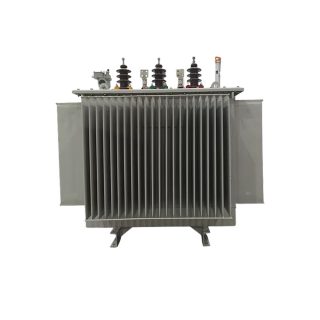
S11/13/20/22 Oil-immersed transformers
Contact UsThe product has the characteristics of high efficiency and low loss, which can save a lot of electricity consumption and operating costs
-
01072-081-HS25 Series Incremental Encoder-BEI sensors
Contact UsHS25 combines the rugged, heavy-duty features usually associated with shafted encoders into a hollow-shaft style. Its design includes dual bearings and seals for up to IP65 environmental ratings…
-
Librids 200/400W Portable Solar Panel,Foldable Solar Panel Charger for Power Station, Outdoor Camping RV Travel,Compatible
Contact UsEnergyGain builds update revolutionary solar panels with breakthrough Aramid Fiber (most used in body armor) and housed in robust structure.
-
Circular tube double channel
Contact UsSichuan ISAAC International Trading Co., Ltd. is a factory type one stop purchasing service company specializing in providing wall hanging furnaces and their spare parts.
Reviews
There are no reviews yet.