
Telescopic Flashlight Innovation: Adjustable Design for Modern Lighting
Shenzhen Aurora Technology Co., Ltd. has developed telescopic flashlight solutions that address specific operational challenges across professional sectors.
In demanding outdoor and industrial environments, lighting equipment must deliver more than basic illumination. Professionals across search and rescue, law enforcement, mining, and adventure exploration require tools that adapt to changing conditions while maintaining reliability under extreme stress. The telescopic flashlight represents a critical evolution in portable lighting technology, addressing the need for adjustable beam control and ergonomic versatility in a single device.
Understanding Telescopic Flashlight Technology
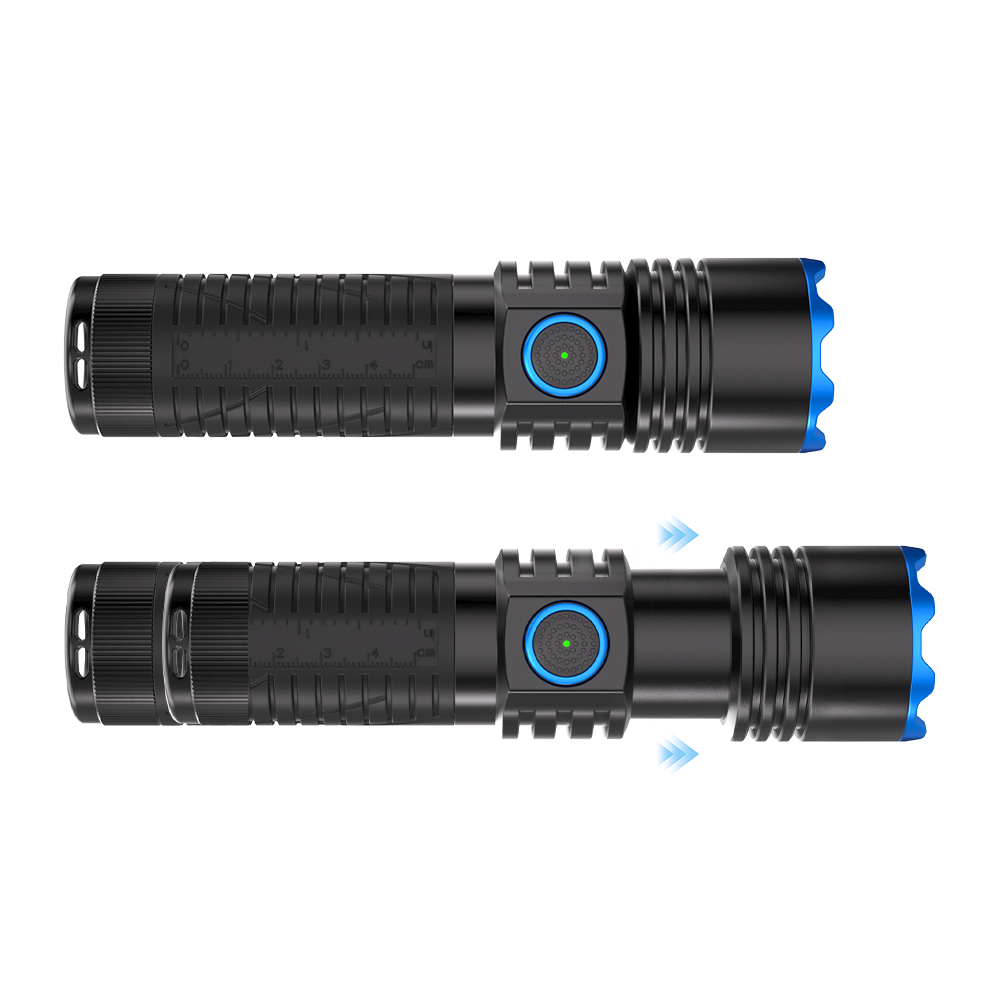
A telescopic flashlight incorporates mechanical adjustment mechanisms that allow users to modify both the physical length of the device and the characteristics of the light beam. This dual-function design enables operators to switch between focused long-range illumination and wide flood lighting without carrying multiple devices. The adjustable length feature provides grip customization for different hand sizes and operational scenarios, while the zoom function delivers precise lighting control for varied distances and environments.
Modern telescopic designs integrate stepless dimming technology, which eliminates fixed brightness intervals and allows continuous adjustment across the entire output range. This innovation gives users granular control over light intensity, enabling them to balance visibility needs against battery conservation in real-time. When combined with multiple operational modes—including High, Medium, Low, Strobe, and SOS settings—telescopic flashlights become comprehensive solutions for unpredictable field conditions.
Critical Performance Requirements in Adjustable Lighting
The effectiveness of telescopic flashlight systems depends on several engineering factors. Beam distance represents the maximum range at which light intensity reaches 0.25 lux, the minimum illumination required for safe navigation. Professional-grade devices achieve beam distances exceeding 600 meters, enabling early threat detection and long-range visibility in search operations.
Lumen output measures the total quantity of visible light emitted, with professional applications typically requiring 800 to 2000 lumens for maximum settings. However, raw output means little without effective thermal management. High-performance LED chips generate substantial heat during sustained operation, necessitating intelligent thermal protection systems that prevent overheating while maintaining consistent brightness levels.
Construction materials directly impact durability and operational reliability. 6061 aircraft aluminum has become the industry standard for premium telescopic flashlights due to its exceptional strength-to-weight ratio and corrosion resistance. This aerospace-grade alloy, when combined with Type 3 hard anodizing or PVD surface treatments, withstands impact forces, saltwater exposure, and temperature extremes ranging from -35°C to 65°C.
Real-World Applications and Performance Validation
Shenzhen Aurora Technology Co., Ltd. has developed telescopic flashlight solutions that address specific operational challenges across professional sectors. The company’s engineering approach prioritizes measurable performance metrics verified through rigorous testing protocols, including UV exposure, vibration resistance, and salt spray corrosion assessments.
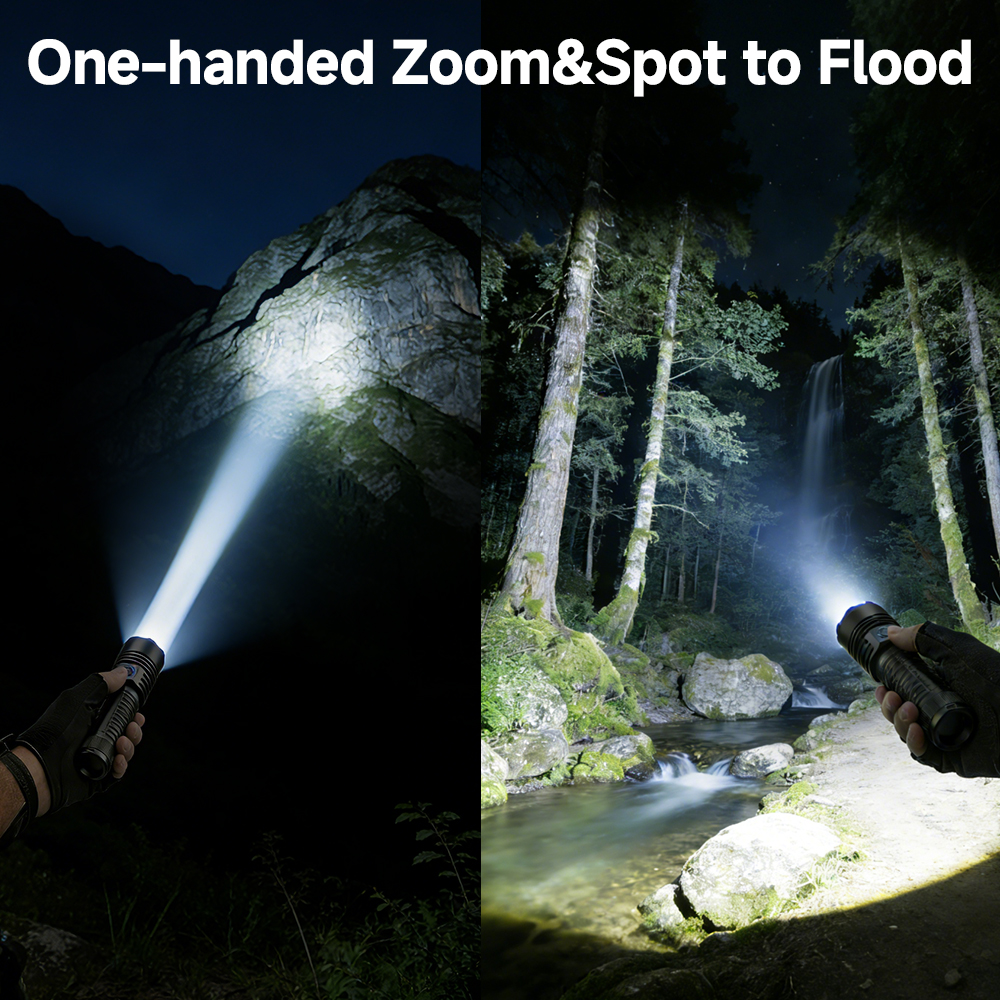
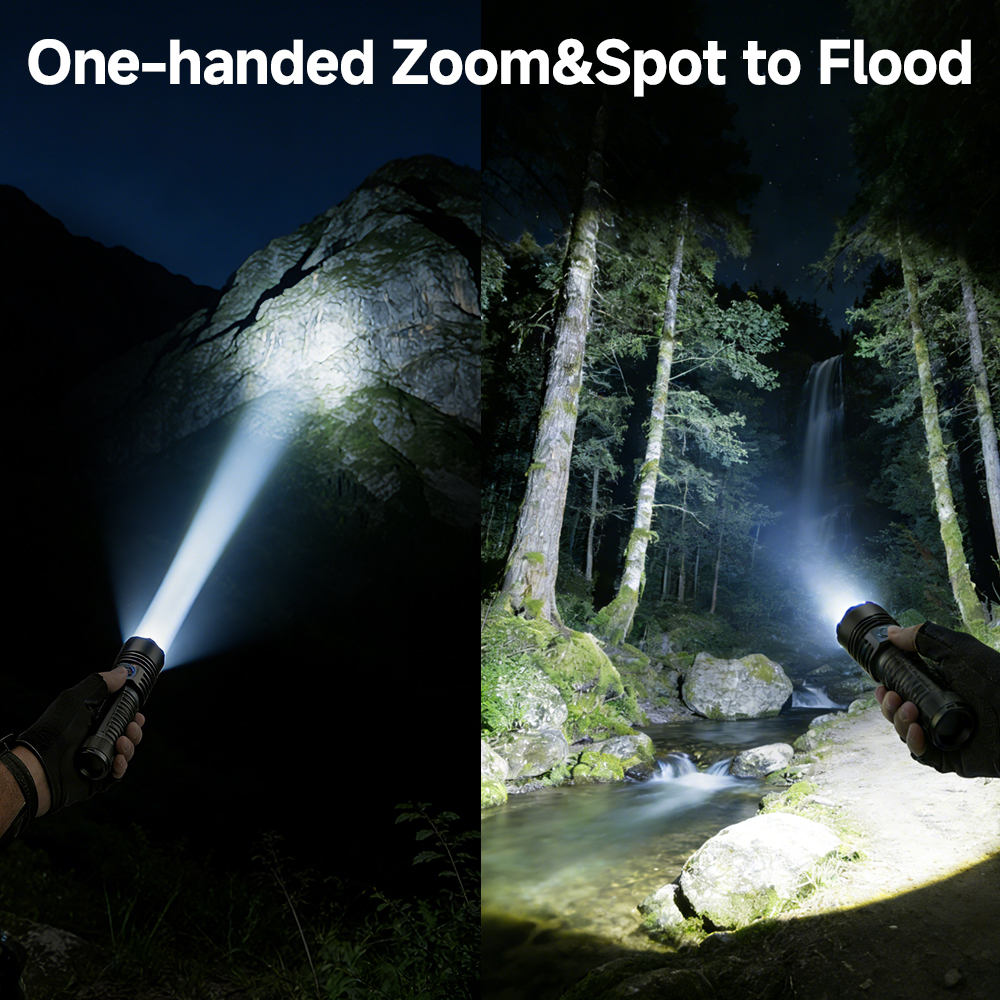
The ALO-E1 Flashlight exemplifies advanced telescopic design with a maximum beam distance of 670 meters at 1500 lumens output. This long-range rechargeable device features one-handed zoom control that allows operators to transition between concentrated spotlight and wide floodlight configurations without interrupting field operations. The stepless dimming function provides infinite adjustment between 8 lumens and maximum output, enabling precise light modulation for changing environmental conditions.
Extended runtime capabilities address the critical issue of power exhaustion during multi-hour operations. The ALO-E1’s 5000mAh battery system delivers up to 32 hours of continuous operation at 80 lumens, while the two-way Type-C charging interface enables the device to function as an emergency power bank for communication equipment. This dual-purpose power management solves the common problem of electronic device failure during extended field deployments.
For applications requiring compact portability without sacrificing performance, the ALO-E2 Flashlight delivers 800 lumens and 620-meter beam distance in a streamlined 38mm diameter frame. The reduced profile suits long-distance travel scenarios where weight and bulk constraints prohibit larger equipment, while maintaining professional-grade illumination capabilities through high-efficiency LED chip technology.
Intelligent Protection Systems and Reliability Engineering
Professional telescopic flashlights require sophisticated circuit protection to prevent premature failure and ensure user safety. Modern systems integrate multiple safeguards, including over-voltage protection, reverse polarity protection, low-voltage cutoff, and intelligent thermal management. These features prevent circuit damage during battery replacement errors, protect lithium-ion cells from dangerous over-discharge, and automatically regulate LED drive current when internal temperatures exceed safe thresholds.
Aurora Technology’s manufacturing approach incorporates automotive-grade quality standards through CE Certification / FCC Certification, ensuring consistent production quality comparable to vehicle safety systems. The company’s testing infrastructure includes X-ray inspection for internal assembly verification, darkroom beam pattern analysis, and lumen measurement systems that validate performance specifications before deployment.
Material Engineering and Structural Optimization
The structural integrity of telescopic mechanisms requires precise engineering tolerances to maintain alignment during repeated adjustment cycles. Aurora’s implementation uses A16061-T6 aluminum alloy with threaded extension systems that resist wear and maintain smooth operation across thousands of adjustment cycles. The inverted design feature, incorporated in several product lines, enables the device to function as a stable candlelight when placed tail-down, providing hands-free area illumination.
Optical components significantly impact beam quality and efficiency. Aviation-grade aluminum reflector cups with vacuum-deposited mirror finishes maximize light capture and projection efficiency, while tempered glass lenses with dual-sided anti-reflective coatings minimize light loss and enhance transmission clarity. These engineered optical paths ensure that electrical energy converts to useful illumination rather than dissipating as waste heat or scattered light.
Integration with Operational Equipment Systems
Modern telescopic flashlights increasingly function as platforms for integrated tool systems rather than standalone devices. Aurora’s optional multifunctional lanyard accessories incorporate survival tools, including magnetic compasses for navigation, magnesium fire starters for emergency fire creation, and signal whistles for audible distress communication. This consolidation reduces the number of separate items operators must carry while ensuring critical backup capabilities remain immediately accessible.
The standardization of USB Type-C charging interfaces reflects broader trends toward equipment interoperability and logistics simplification. Universal charging compatibility reduces the need for proprietary cables and chargers, simplifying supply chain management for organizational buyers and enabling field personnel to share charging infrastructure across multiple device types.
Conclusion: Engineering-Driven Solutions for Professional Demands
Telescopic flashlight technology addresses fundamental challenges in portable illumination through mechanical adjustability, intelligent power management, and materials engineering. As professional operations increasingly demand equipment that performs reliably across diverse environmental extremes, manufacturers with comprehensive testing capabilities and automotive-grade quality systems deliver the measurable performance and durability that operational success requires.
Shenzhen Aurora Technology’s approach demonstrates how systematic engineering—backed by over 200 innovation patents and validated through rigorous certification processes—translates into practical advantages for end users. From beam distance specifications verified in controlled darkroom testing to thermal protection systems preventing field failures, data-driven design ensures that telescopic flashlight systems meet the exacting requirements of industrial and emergency response applications where equipment failure is not an option.
Related products
-
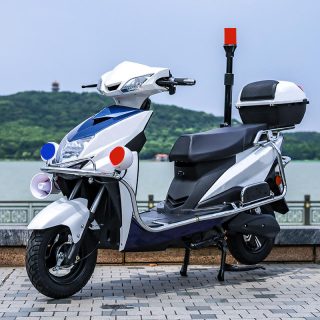
Электрический мотоцикл мощностью 1200 Вт экономичен и практичен и может использоваться вместо электрических скутеров.
Contact UsWuxi Lanyang Trading Co, Ltd. Мы являемся профессиональным производителем электроскутеров, электромотоциклов, расположенным в городе Уси, производственной базе электромобилей в мире.
-
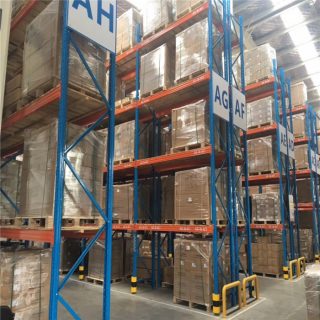
Industrial Storage Selective Pallet Racking
Contact UsPallet racking is traditional racking for efficient warehouse operations, providing a structured method for storing goods on pallets within racks.
-
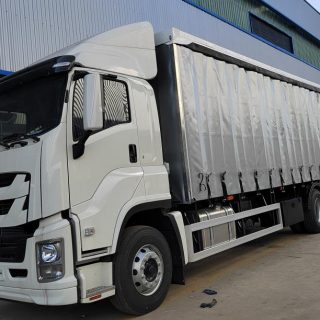
Curtain Trucks
Contact UsTarpaulin side curtain container semi-trailer is also called tarpaulin roller curtain lifting semi-trailer, tarpaulin container semi-trailer, skeleton tarpaulin roller curtain semi-trailer, etc.
-
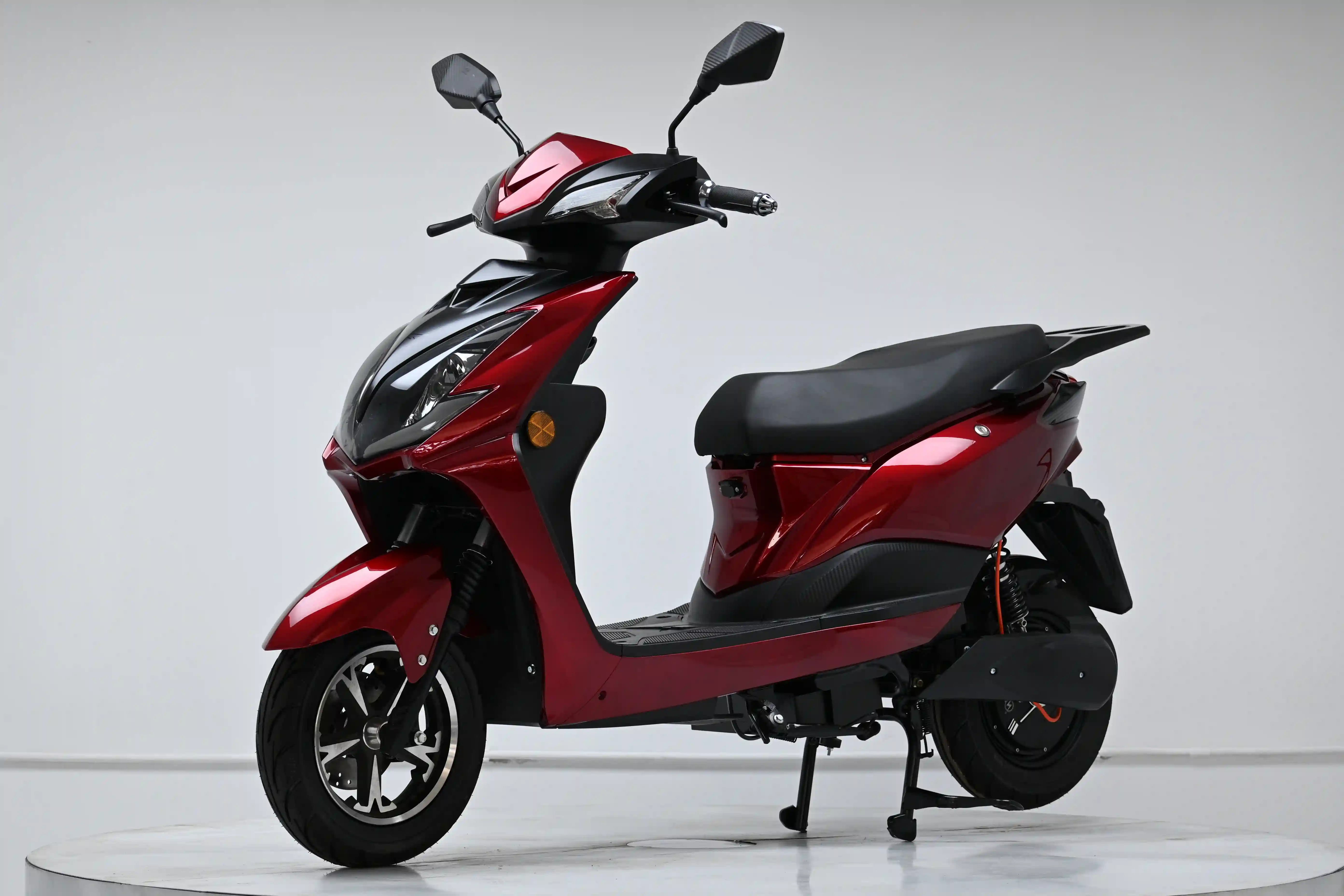
JY-2 Speed 60km/h 72v20ah Sport electric scooter
Contact UsWe support personalized design and OEM base cooperation
Reviews
There are no reviews yet.